Tsukahara Mitsuo opens his autobiography not with triumph but with catastrophe. Rather than beginning with his eponymous vault or the dismount that made him famous, or with any of his five Olympic gold medals, he begins in February 1980, when he sustained a cervical spine injury, which effectively ended his bid for a fourth consecutive Olympic Games.
The excerpt translated here follows him through the accident itself, the frustrating weeks of rehabilitation, his increasingly desperate attempt to recover in time for Japan’s Olympic trials, and the painful realization that his competitive career had come to an end. They also reveal a personality familiar from the earlier chapters of this autobiography: a gymnast whose greatest strength was often indistinguishable from his greatest weakness. Again and again, he acknowledges that his determination to finish routines no matter the circumstances and his willingness to accept risks others would avoid had become both the source of his success and the cause of his injuries.
One aspect of the accident is worth noting. The skill that caused Tsukahara’s injury was a roll-out skill: an Arabian 1¾. Only months later, Elena Mukhina would be paralyzed attempting a more difficult version of the skill. Roll-out skills have since been banned from FIG competition.
The excerpt below is Tsukahara’s account of how that ending unfolded.
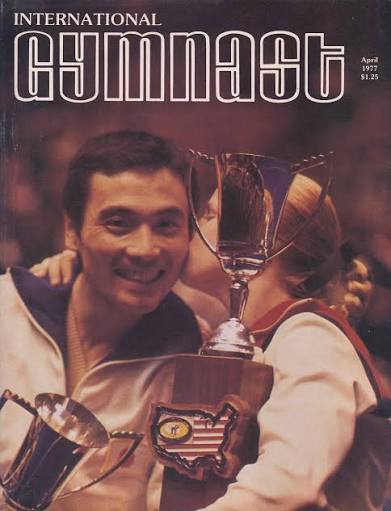
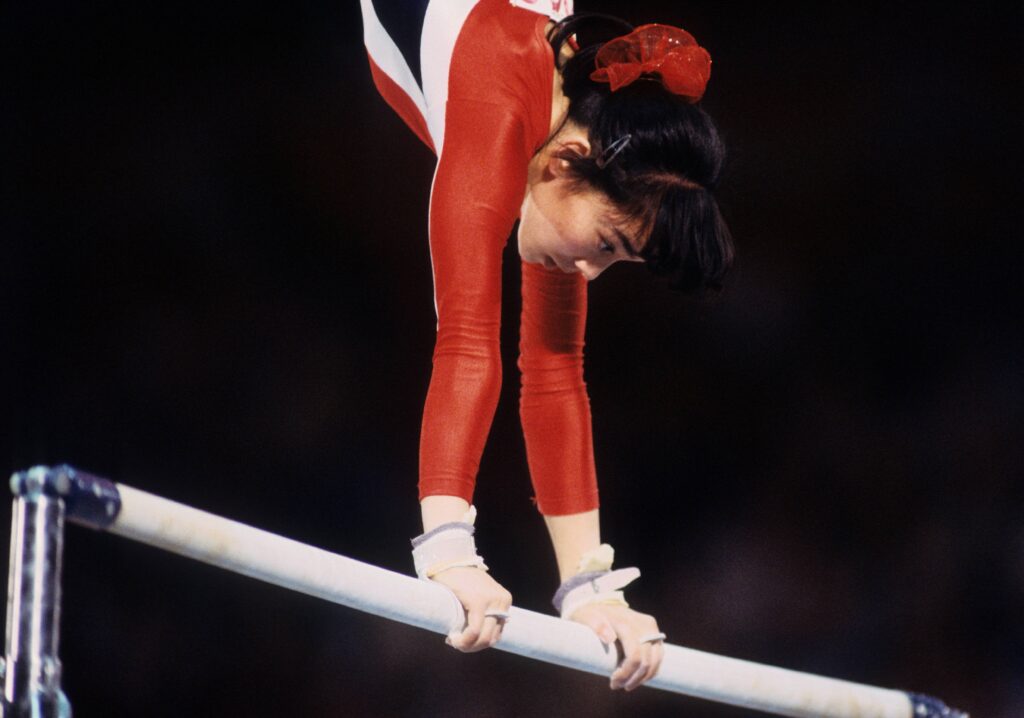
Tsukahara Mitsuo and Kathy Johnson, 1977 American Cup
In the spring of 1980, Canada’s gymnasts were preparing for what many believed would be a breakthrough Olympic Games. The men’s and women’s teams had both qualified for Moscow, experienced veterans stood alongside rising young stars, and several athletes were realistic contenders for international success. Then Canada joined the American-led boycott of the Moscow Olympics. The decision emerged from a complex mixture of diplomacy, political pressure, and financial leverage, but its consequences were felt most directly by the athletes themselves. Some retired soon after the boycott was announced. Others spent four more years chasing an Olympic opportunity that never came. Below, you can find their stories.
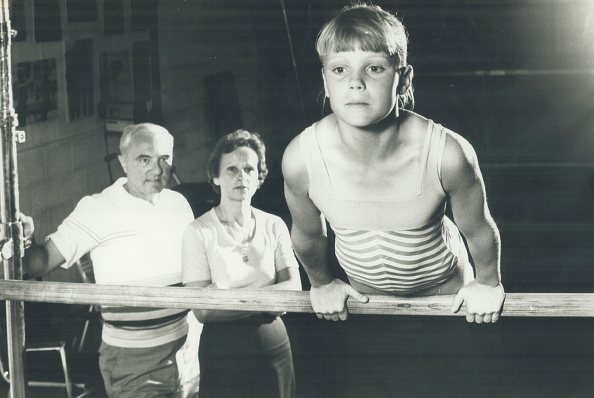
Elfi Schlegel (Photo by Doug Griffin/Toronto Star)
When the Soviet Union invaded Afghanistan in December 1979, governments across the Western alliance were forced to decide whether to support the American-led boycott of the Moscow Olympics. Most Western European countries ultimately found ways to send their athletes to the Games, often under the Olympic flag rather than their national colors. West Germany was different. As one of the largest and most influential countries in Western Europe, it joined the boycott.
That decision has usually been told as a story of Cold War diplomacy: alliance politics, relations with Washington, and the struggle to balance political principles against Olympic ideals. But for the athletes whose careers had been built around Moscow, the boycott was something far more personal. Olympic opportunities vanished, training cycles lost their purpose, and years of preparation suddenly led nowhere.
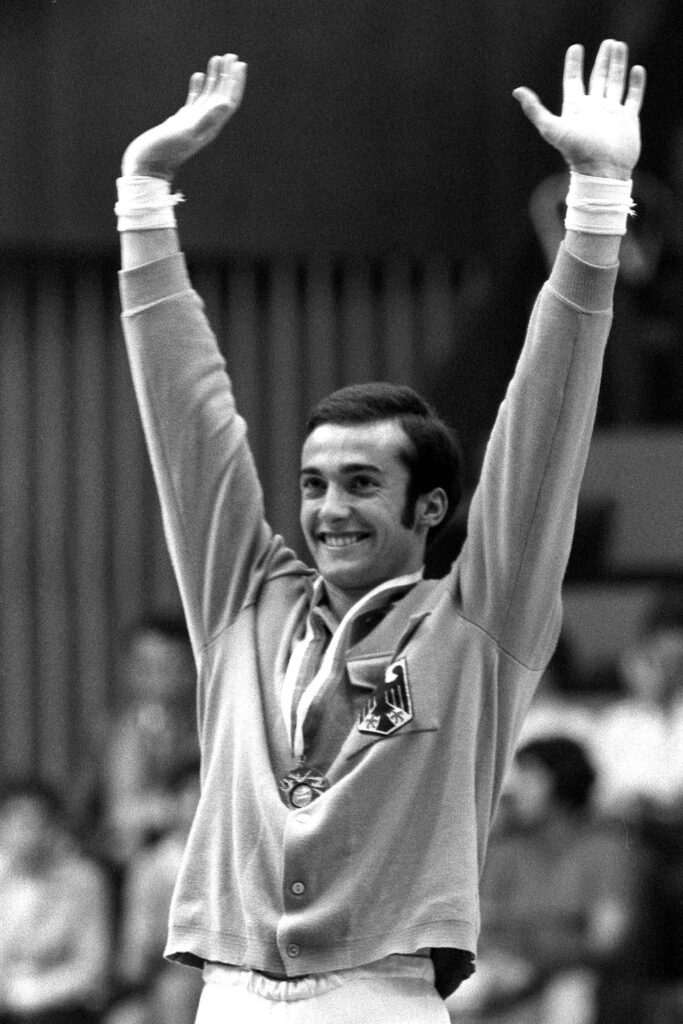
Among those affected were members of West Germany’s gymnastics team. Below, we’ll look at the reactions of Eberhard Gienger and Volker Rohrwick.
In Japan, athletes selected for the 1980 Moscow Olympics are sometimes described as maboroshi no orinpian—”phantom Olympians.” The phrase is remarkably apt. A phantom occupies a liminal space between presence and absence: real enough to leave traces, yet impossible to grasp; gone, yet somehow still there.
For years, thousands of people had organized their lives around a single, concrete destination. Athletes qualified. Teams were selected. Training camps began. Then, weeks before the opening ceremony, politics intervened. The Games went on without them, but the Olympic future they had spent years building toward vanished. What remained was an absence that would linger for decades.
Most histories of the 1980 boycott focus on diplomacy—the Soviet invasion of Afghanistan, the Carter administration’s campaign for international support, and the calculations of governments caught between alliance politics and Olympic ideals. Those stories matter. But they cannot fully explain the haunting. They cannot explain why Moscow continues to linger in the memories of so many who never competed there.
More than four decades later, many of those athletes still speak about Moscow in the language of loss, regret, and unfinished business. This is the story of what politics looks like to the people whose lives it has disrupted.
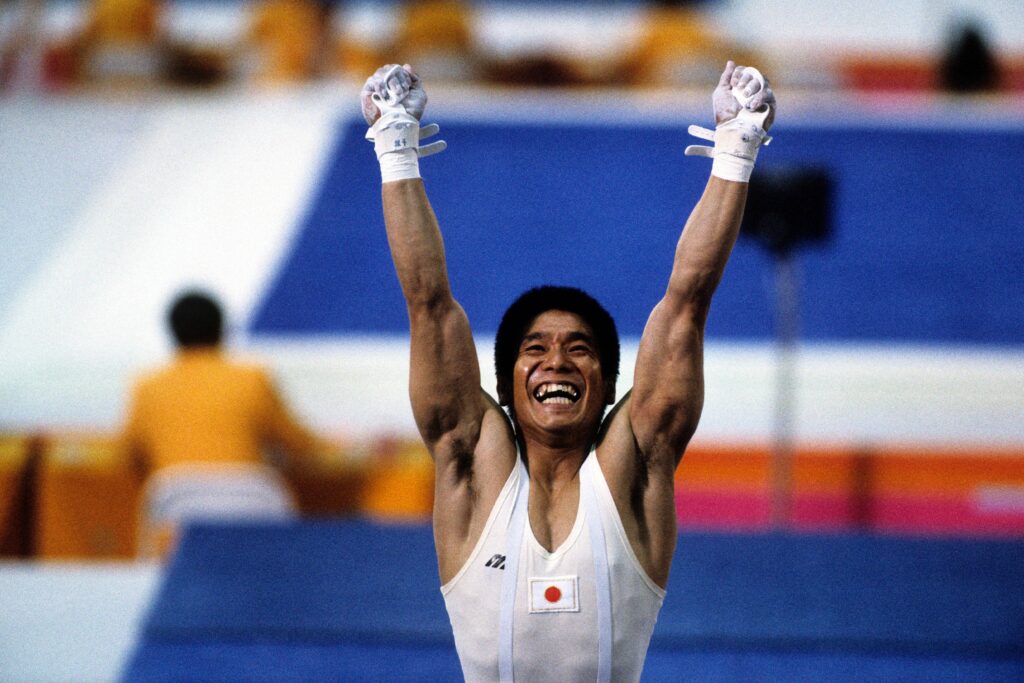
Gushiken Kōji, 1984 Olympics, Copyright: imago/Sven Simon
In 1978, the People’s Republic of China rejoined the FIG. A year later, at the World Championships in Fort Worth, Texas, Ma Yanhong tied East Germany’s Maxi Gnauck for the uneven bars title, becoming the first Chinese gymnast to reach the top of the world podium. Her success fueled hopes that China would make a strong showing at the 1980 Olympic Games, the country’s first Summer Olympics since its return to the Olympic movement. The optimism was evident in the pages of PLA Daily, the newspaper of the Chinese military:
During the competition, news arrived of China’s restoration of its seat at the Olympic Games, and Ma Yanhong was overjoyed beyond measure. She resolved to break through still more difficult movements and win even greater honor for her motherland. On the eve of her imminent participation in the Olympics, we wish to offer Ma Yanhong a line from Tagore: “Just keep walking forward — there is no need to pause and gather the flowers to preserve them, for along the way, the flowers will keep blooming.”
Tagore refers to Rabindranath Tagore (1861–1941), the Bengali poet, novelist, philosopher, and educator who became the first non-European to win the Nobel Prize in Literature in 1913.
Yet those expectations for Moscow would never be realized. Three months after the article’s publication, in April 1980, the Chinese Olympic Committee officially joined the boycott of the Moscow Games. For gymnasts such as Ma Yanhong, Cai Huanzong, and Li Yuejiu, the decision meant the loss of an opportunity that many had spent years awaiting. This article examines the political circumstances behind China’s boycott and how athletes, coaches, and the Chinese media responded to a moment that reshaped the careers of an entire generation.
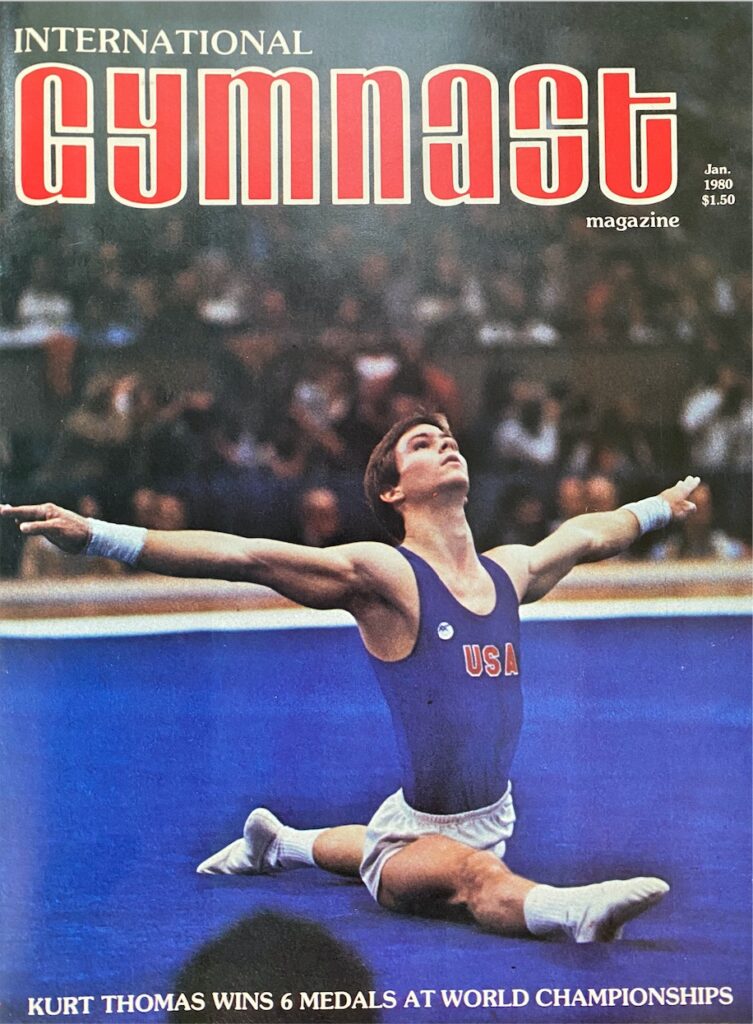
In 1978, at the World Championships in Strasbourg, France, Kurt Thomas became the first American man to win a world title. The achievement was all the more remarkable because Thomas, then twenty-two, had discovered gymnastics only eight years earlier after wandering into a gym in Miami. A year later, he surpassed even that breakthrough, collecting six medals at the 1979 World Championships, including gold on floor exercise and high bar and silver in the all-around.
By 1980, Thomas was one of the best gymnasts in the world, and the Moscow Olympics, scheduled to open on July 19, were supposed to be the culmination of nearly a decade of work.
But the opportunity never came. On April 21, 1980, President Jimmy Carter formally announced what he had threatened since January: the United States would boycott the Moscow Games. For Thomas—and for dozens of other American gymnasts at different stages of their careers—the Soviet invasion of Afghanistan had suddenly become something more than a distant geopolitical crisis. It had become the reason they would never compete in the Olympics they had spent years preparing for.
Nellie Kim’s memoir, The Smell of Melon (Zapakh Dyni), was serialized in the Soviet sports newspaper Sovetsky Sport in February 1983, three years after the Moscow Olympics. It traces her journey from childhood in Chimkent (now Shymkent, Kazakhstan) to the pinnacle of international gymnastics.
By then, Kim was already one of the sport’s most decorated athletes: a five-time Olympic gold medalist across the 1976 and 1980 Games, the 1979 world all-around champion, and a key contributor to multiple Soviet team victories at World Championships and other major international competitions.
The Smell of Melon does not focus solely on Kim’s triumphant moments. In fact, it devotes considerable attention to uncertainty, self-doubt, and the long process of becoming an elite athlete. Kim writes candidly about difficult training sessions, conflicts with coaches, homesickness, injuries, and the emotional highs and lows that accompanied her rise through the Soviet gymnastics system. The memoir is also rich in portraits of the people who shaped her career, including her parents, coach Vladimir Baydin, Larisa Latynina, Olga Korbut, Ludmilla Tourischeva, Maria Filatova, and even Nadia Comăneci.
The translation below follows the original 1983 newspaper serialization as it appeared in Sovetsky Sport.
In 1970, the Women’s Technical Committee set the competitive age limit at 14, arguing that elite gymnastics was endangering children through uncontrolled, overly intensive training that treated them as “competitive animals” rather than developing athletes. Raising the minimum age was meant to ensure a slower, pedagogically sound progression that protected gymnasts’ physical and psychological development.
A decade later, the FIG voted again, this time raising the age limit to 15. Once more, the decision aimed to protect young girls. Here’s what the FIG Bulletin recorded at the time.
In July 1980, on the eve of the Moscow Olympics, 20-year-old Soviet gymnast Elena Mukhina attempted a new tumbling pass that went fatally wrong, leaving her paralyzed from the neck down. Once one of the brightest stars in world gymnastics — a world all-around champion and a rival even Nadia Comăneci feared — she would spend the next twenty-six years confined to her bed, sustained by the devotion of a few extraordinary friends.
This article, drawn from the recollections of those who cared for her, traces the quiet heroism of a woman whose body was broken but whose spirit never was — a story not only of tragedy, but of endurance, grace, and the humanity that surrounded her until the very end.
“Let’s do this without any sensationalism,” Elena Mukhina said in her 1989 interview with Sovetsky Sport. “I’m tired of sensationalism. I live like any other disabled person, and there’s nothing sensational in such a life.”
In the nine years that had passed since her accident—nine years since that summer when she was twenty and the Olympics opened without her—urban legends had grown like weeds: about the tumbling pass, about the coaches, about a miracle recovery. She knew them all, and she knew they weren’t true. “So much has been said,” she remarked.
The article that follows takes those urban legends one by one, stripping them down to their core. Legend One asks who was to blame: the coach who pushed too hard, the head coach who couldn’t stand his ground, or the gymnast herself, who had tried to speak but was not heard. It considers the diuretic that may have stripped calcium as ruthlessly as the system stripped agency, and the silence that followed. Legend Two turns to Valentin Dikul, the rehabilitation specialist whose name became shorthand for salvation, and to Mukhina’s refusal of treatment—born not of despair but of realism about her own body, already worn thin. Legend Three dismantles the rumor mill that insisted “Mukhina walks,” a myth that traveled across the globe.
What she offered instead of myth was testimony, calm and unsentimental. “You can’t trample over someone’s individuality for the sake of a medal,” she said. Her words came not as an indictment shouted from a podium but as the lived truth of someone who had already paid the price. In the wake of her injury, she described the sense of release: “Immediately, I felt freedom. Freedom from a coach’s dictatorship, freedom from everything. It was an extraordinary, almost joyful feeling.” That joy, however, was short-lived, and harsh realities followed. Yet out of that reckoning emerged a different kind of clarity. “I began to value human decency as a great gift,” she said. “Unfortunately, it is rare.”
What follows is a translation of her 1989 interview with Sovetsky Sport. Decades later, it remains as poignant as ever. As her interviewer, Natalia Kalugina, wrote in closing: “When I look at today’s champions, I think: God, may nothing happen to these girls! May their coaches hear them and understand them!”
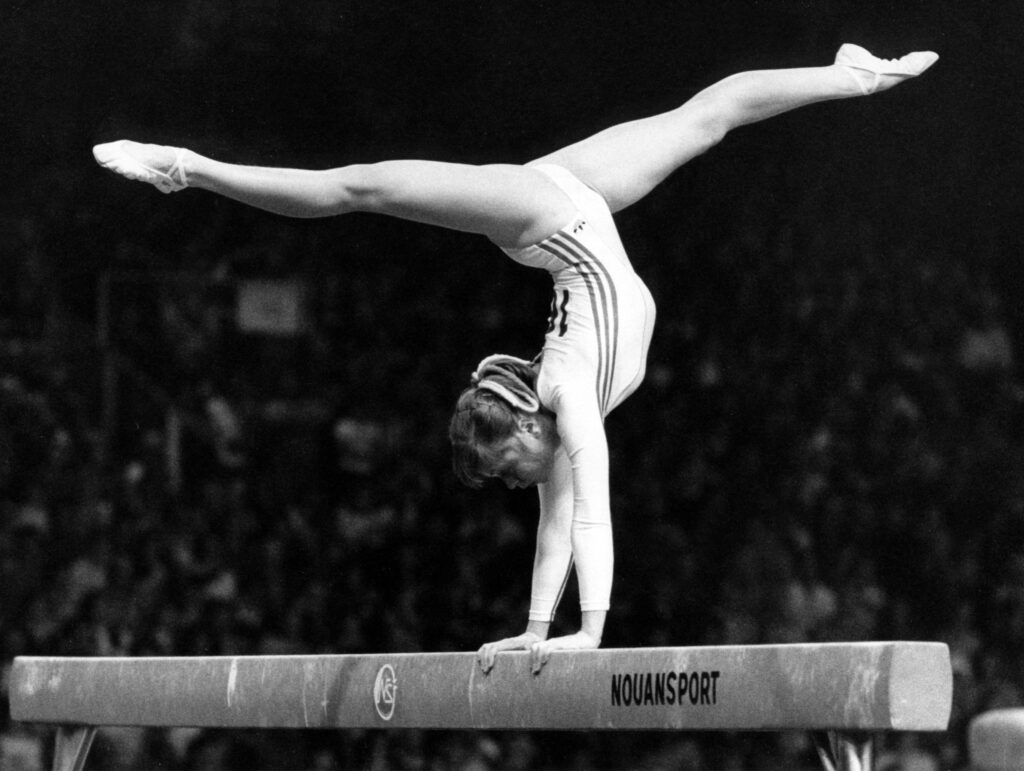
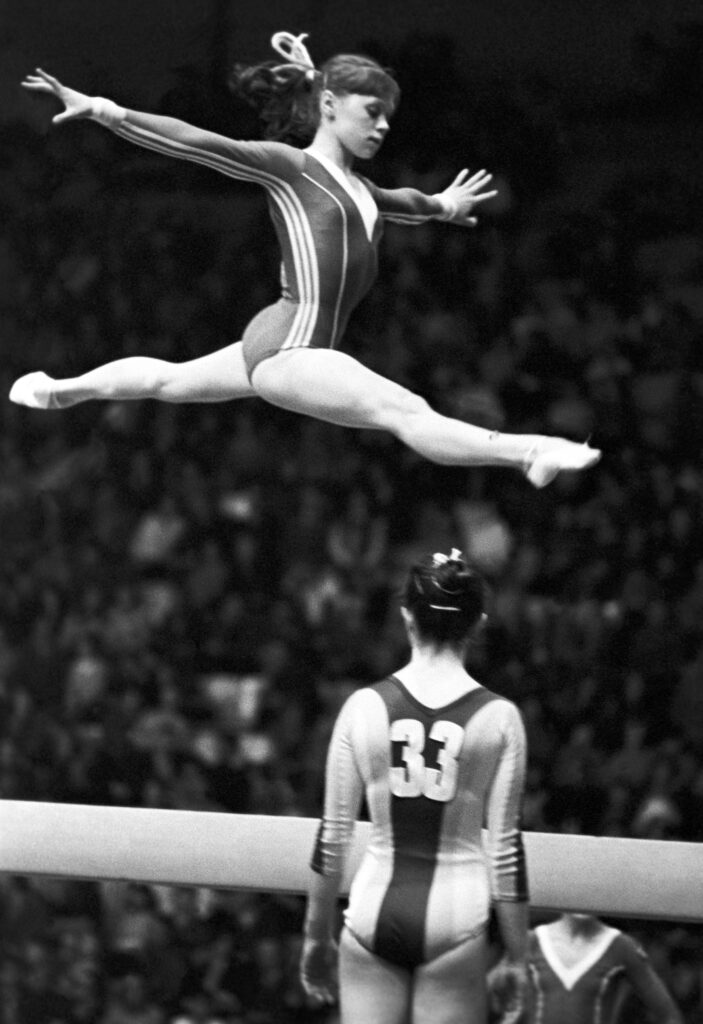
Moscow, USSR. April 26, 1978. Soviet gymnast Yelena Mukhina performs on the balance beam at Moscow News. Igor Utkin, Alexander Yakovlev/TASS
Note: In my translation, I’ve preserved the bold typeface from the original publication.