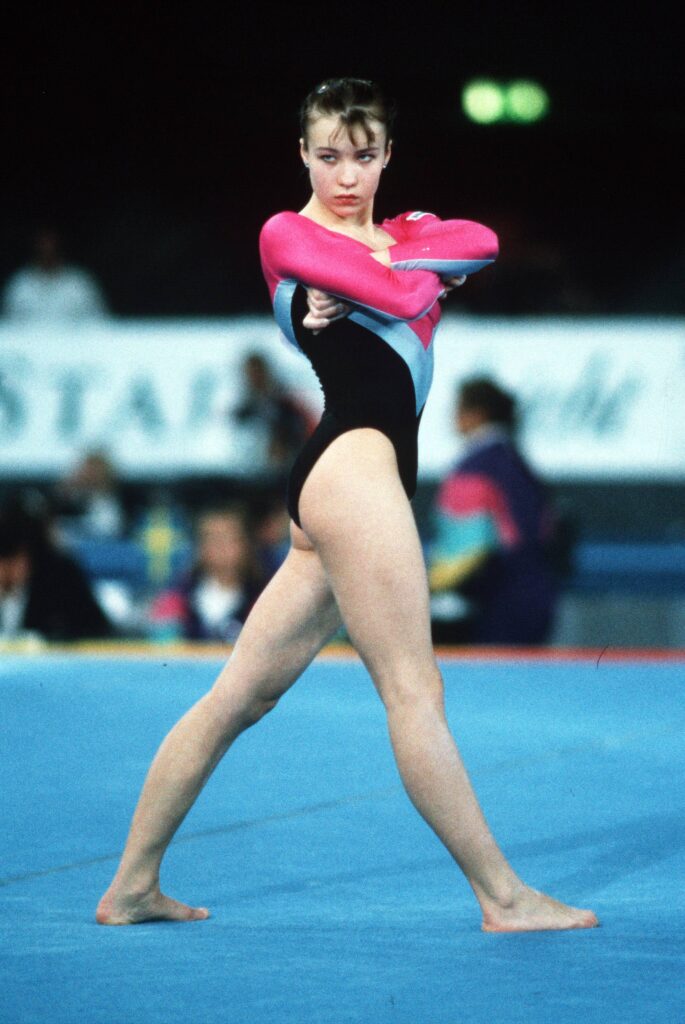
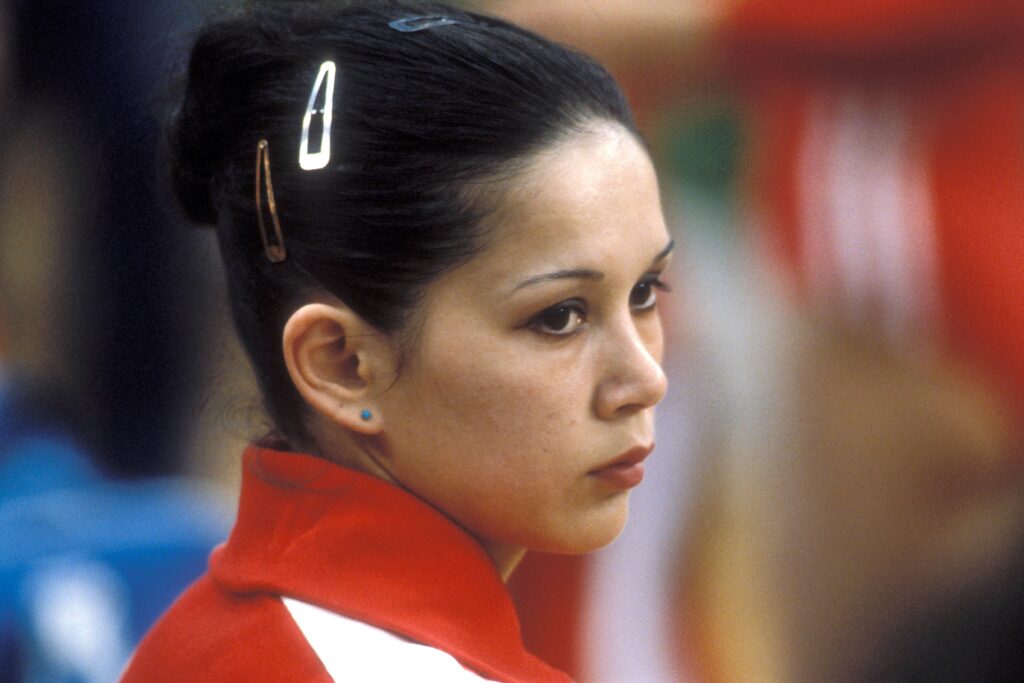
“They call her the Goddess of Gymnastics.”
If you grew up in the United States watching gymnastics in the 1980s and 90s, lines like these are seared into your brain. NBC routinely bestowed nicknames on gymnasts. The Belarusian Swan. The Painted Bird of Odessa. The Goddess of Gymnastics. But have you ever wondered if those monikers actually existed in the athletes’ home countries or if they were fabrications of NBC commentators or the playful inventions by Soviet officials amusing themselves at American credulity?
One of these nicknames, at least, was genuine. Svetlana Boginskaya really was called “The Goddess” by her teammates and coaches in the Soviet press—sometimes “Sveta the Goddess,” sometimes “The Goddess of Gymnastics.” The nickname was a play on her surname: Богиня (Boginya) means “goddess” in Russian, while her last name is Богинская (Boginskaya). What seemed to Western audiences like pure tribute was also clever wordplay that any Russian speaker would have caught immediately.
But as these contemporaneous Soviet articles reveal, the nickname had complicated connotations. It was one part admiration for her elegance and dominance, and one part wariness about a gymnast who refused to smile on command, who demanded favorable treatment, who “loved to take charge,” and who had a “complex character.” She was incomparable—and she knew it. That combination made her both indispensable and unsettling.
What follows are three articles that give context to one of her nicknames: the “Goddess of Gymnastics.”