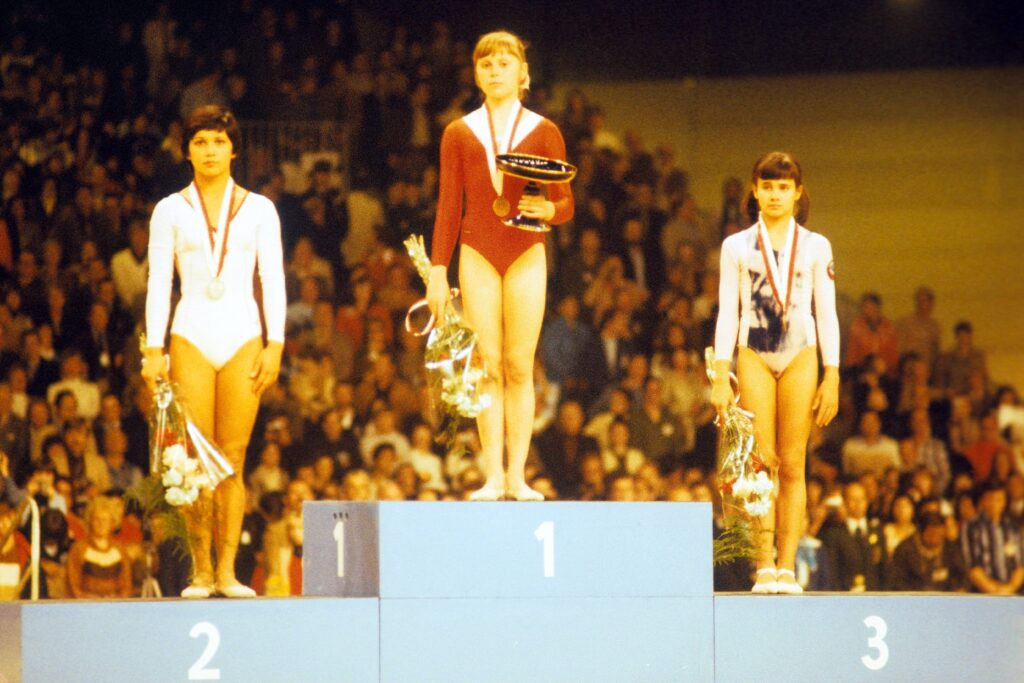
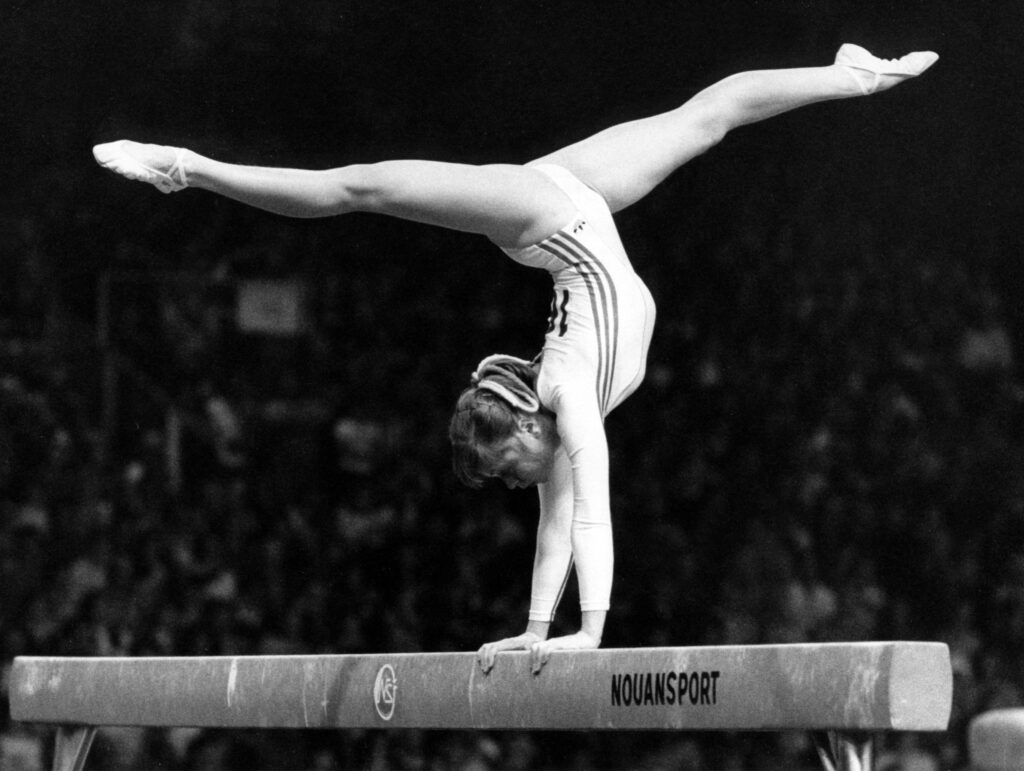
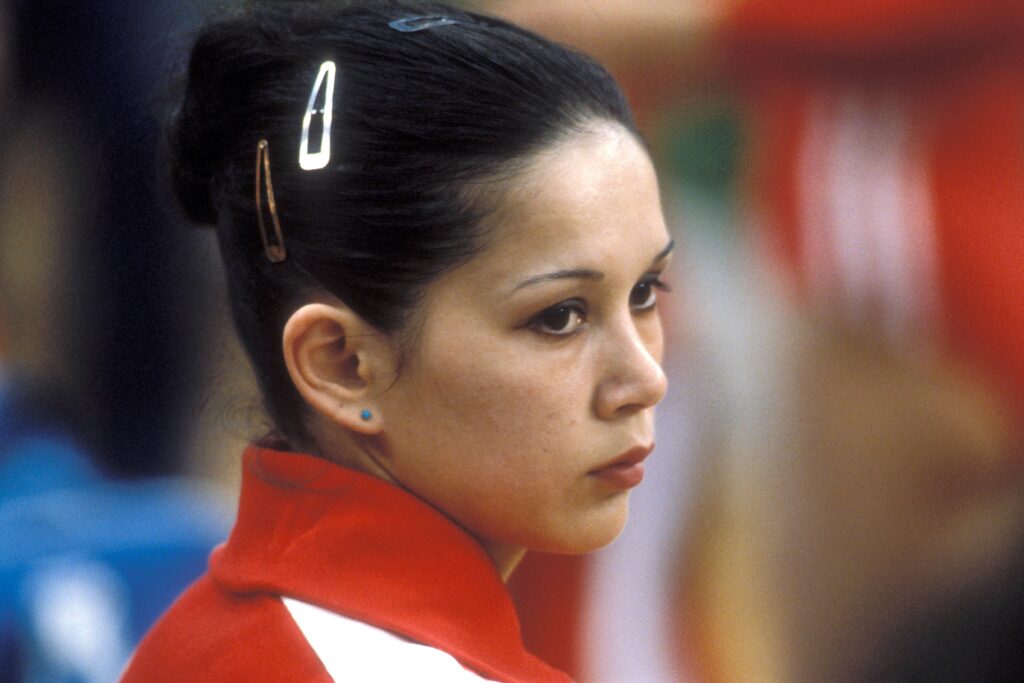
On July 3, 1980, inside the Minsk Sports Palace, Elena Mukhina attempted a skill she had never mastered. “The injury was inevitable anyway,” she would say in her first interview after her accident. “Not necessarily on that day. It seems to me they would have carried me away from the competition floor sooner or later because I just couldn’t do that element.” Her coach was out of town. The home Olympics were days away. And the doctors wouldn’t protect her because, as she insisted, they “don’t serve health, they serve sport.”
Mukhina described running laps on a leg that hadn’t healed to shed weight, arriving at the gym two hours early, exhausting herself before training even began. “I was stupid. I really wanted to justify their trust, to be a heroine.” When she fell for the last time, her first thought was relief: “Thank God, I won’t make it to the Olympics.”
She came to see her story less as a personal tragedy than as evidence of a culture that exploited children’s small vision of the world. “If only we started doing sports at sixteen or eighteen, when a person can already consciously choose their path, and not at nine or ten, when we see nothing around us except sports—an interest so artfully stoked. It seems to us that this is some kind of special world. We don’t yet know how narrow this three-dimensional space is—gym, home, training camps.”
Even in paralysis, the discipline lingered. “In the first years after the injury, when I was just lying there, it felt wild to me that nothing was required of me. I so needed this feeling of at least some kind of overcoming that I started to starve myself, just like that. To torment myself. A habit…”
And yet, Mukhina refused to frame herself as a martyr or her coaches as villains. Instead, she blamed a pervasive lack of agency and silence. “There are such notions as the honor of the club, the honor of the team, the honor of the national team, the honor of the flag. They are words behind which you can’t see the person. I don’t condemn anyone and don’t blame anyone for what happened to me. Not Klimenko, and even less the then national-team coach, Shaniyazov. I feel sorry for Klimenko—he’s a victim of the system. I simply don’t respect Shaniyazov. And the others? I was injured because everyone around me maintained neutrality, kept silent. They saw that I wasn’t ready to perform this element. But they were silent. No one stopped the person who, forgetting everything, rushed forward—come on! Come on! Come on!”
What follows is a translation of “Grown-up Games,” which ran in Ogonyok in July of 1988 — eight years after her accident.
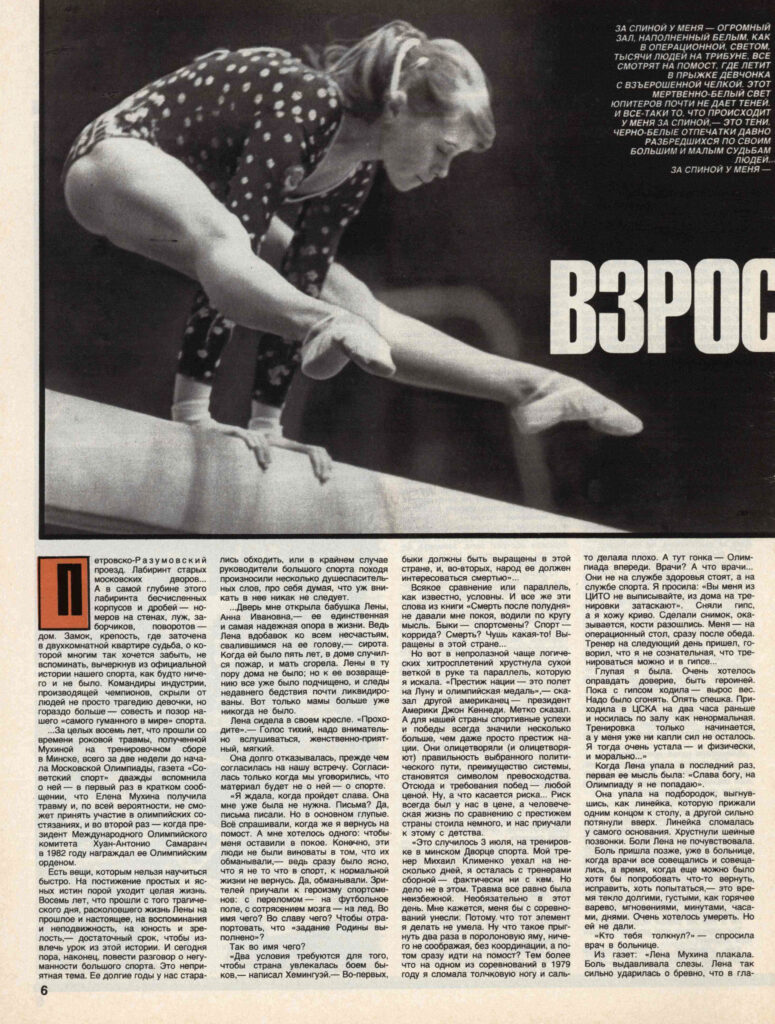
Note: I have placed the quotes from Mukhina in italics, even though they aren’t highlighted in the original. It’s easy to read this piece and confuse Mukhina’s first-person statements with the author’s.
Note #2: This is the third post in a four-part series. I’d recommend first reading
- Part 1 (What the Soviet Union Printed about Mukhina’s Accident)
- Part 2 (What the Rest of the World Printed about Mukhina’s Accident).
After reading this interview, you can read a 1989 interview with her, as well. (Elena Mukhina Addresses the Myths in “After Fame, After Tragedy”)