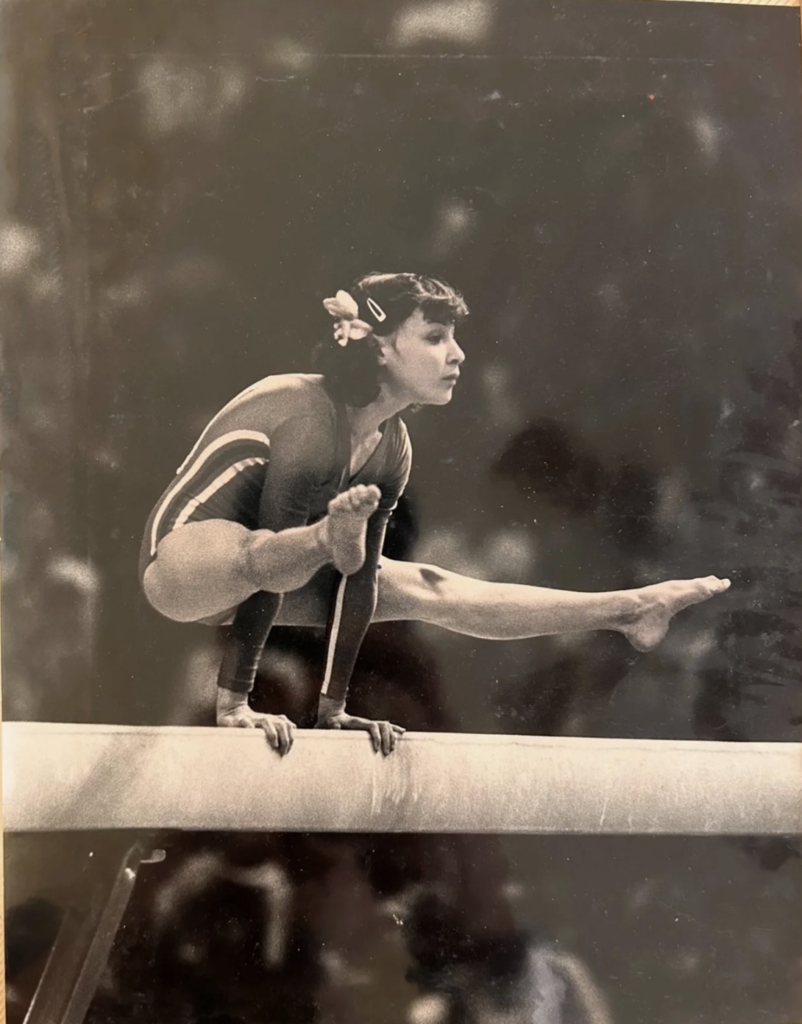
In October 1978, gymnasts gathered in Strasbourg, France, for the XIX World Artistic Gymnastics Championships. Among the Bulgarian women was Krassimira Toneva, who, like many gymnasts in the sport’s history, was technically too young to be there. She was born in 1965.
In November 1978, Western gymnastics officials charged that Eastern Bloc programs were using drugs to delay puberty in young female gymnasts, deliberately keeping athletes small to secure a competitive advantage.
The accusations emerged during the World Championships in Strasbourg, France, where officials remarked on the striking physical disparities between Eastern and Western competitors. Dr. Robert Klein, the meet’s chief medical examiner, reported having seen photographs of a Soviet gymnast showing what he described as a “steady regression of breast development” over a four-year period. Danish federation president Niels Peter Nielsen voiced broader suspicions, warning, “We see small girls, who I suspect are being controlled by drugs… they are being stopped from becoming women.” Even Nadia Comăneci, the sport’s reigning star, expressed astonishment at the child-like proportions of some competitors, remarking that she could not believe the 17-year-old Maria Filatova was actually older than herself.
There were many explanations for what Westerners were seeing. The onset of puberty varies from individual to individual. The sport itself favored smaller bodies, particularly in an era when the uneven bars were set closer together. Chronic overtraining and disordered eating almost certainly affected physical maturation, as well. More consequentially, age falsification distorted Western observers’ assumptions about normal pubertal timelines: gymnasts listed as fourteen or fifteen were sometimes several years younger in reality, and their bodies appeared pre-pubescent because they were, in fact, still pre-pubescent.
The historical irony of this moment is especially sharp. We now know that East Germany did, in fact, operate a systematic doping program for young athletes, and that one explicit aim of that program was premature growth-plate fusion—precisely the outcome Western officials feared in 1978, though they lacked proof at the time. The accusations were therefore simultaneously unsubstantiated, given the evidence available to the accusers, and eerily prescient, given what was occurring behind closed doors in at least one Eastern Bloc sports system.
The two articles that follow capture this moment of accusation and denial. The first, an Associated Press report, presents the Western claims with striking specificity, detailing suspected mechanisms and targets. The second, drawn from the FIG’s official bulletin, is a categorical rejection that combines legitimate scientific argumentation with institutional defensiveness and, in hindsight, a troubling underestimation of what state-run sports programs were capable of concealing.
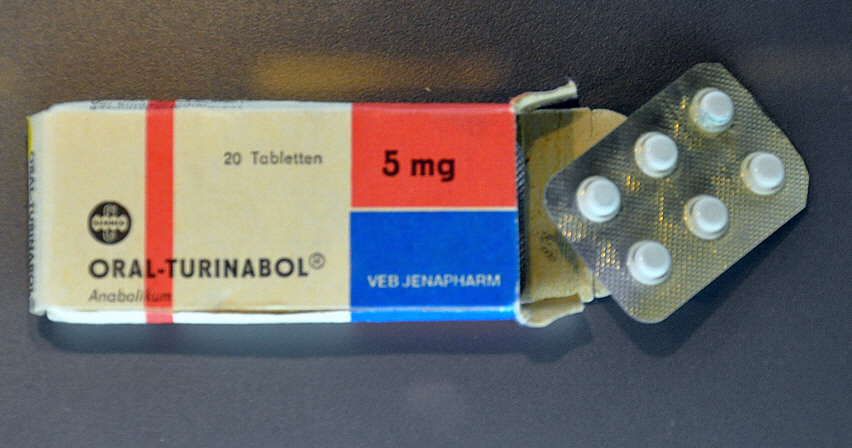
Oral-Turinabol, the steroid that formed the basis of the East German doping program.
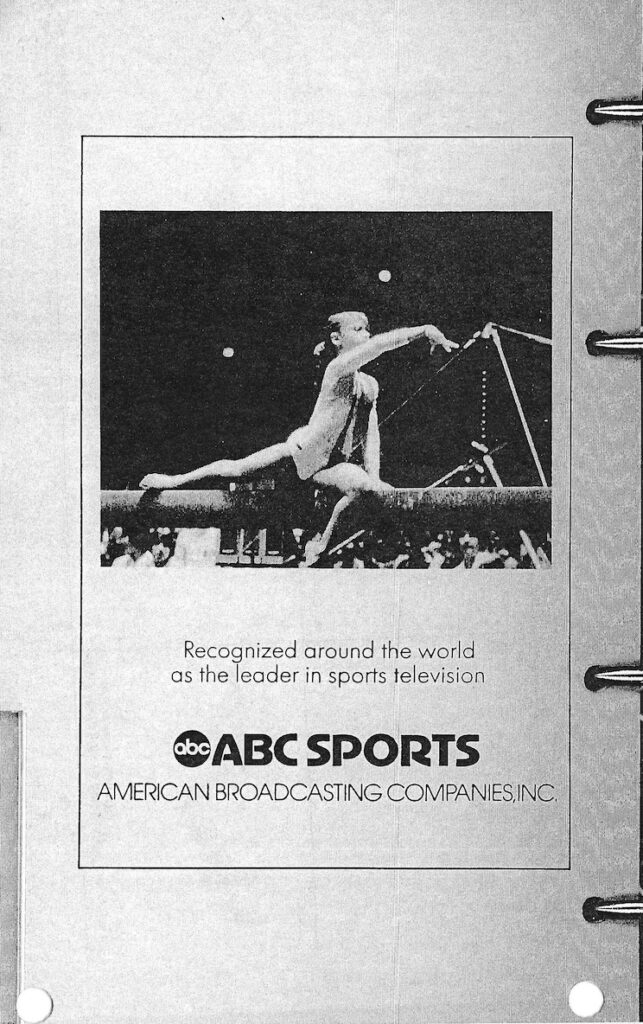
If you’ve ever flipped through old Codes of Points, you might have noticed something. The old tomes are typically filled with ads from equipment manufacturers like Janssen & Fritsen and Spieth. However, the 1979 edition introduced a newcomer: a full-page advertisement from ABC, the U.S. television network. This addition was no coincidence; it came on the heels of a $1.5 million deal between ABC and the Fédération Internationale de Gymnastique (FIG).
How did this partnership materialize? And in the landscape of sports contracts, was $1.5 million a significant investment? To unravel the story behind this pivotal moment in gymnastics broadcasting, let’s examine the details and draw comparisons to other agreements ABC negotiated during the 1970s. But first, let’s set the stage…
Where were China’s gymnasts in the 1970s? Why did they suddenly appear again at the 1979 World Championships, where Ma Yanhong tied for gold on uneven bars?
The answer has to do with the People’s Republic of China’s status with the FIG. Sounds kind of dull, right? But I don’t know that you can call delegations storming in and out of an FIG meeting “dull.” At any rate, unless you were a gymnastics fan in the 1970s, you might not know the story of China’s readmittance to the FIG because little has been written in English about the subject.
To be sure, this story touches upon the relationship between China and Taiwan, which, to state the obvious, is a complicated one. I am not about to dive into centuries of Chinese and Taiwanese cultural and sports history. Instead, this story will be told primarily through the FIG’s very own minutes — with a little IOC history sprinkled in for context.