Categories
1969 European Championships Romania WAG

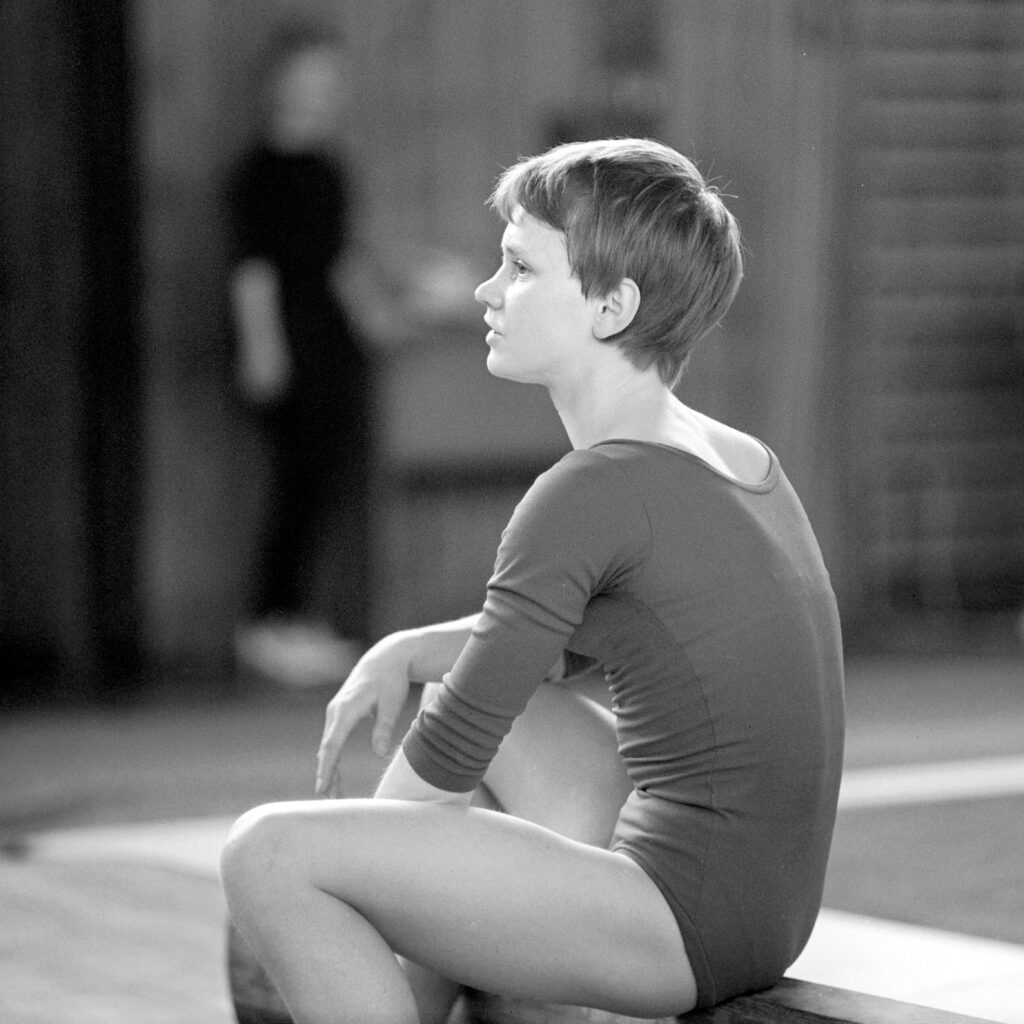
1969: Romania’s “Re-Launch” after Skipping the Mexico City Olympics

In 1968, Romania didn’t send any gymnasts to the Olympic Games ostensibly out of fear of poor performance. In a column for the Romanian newspaper Sportul, Elena Leușteanu, a three-time Olympic bronze medalist in gymnastics, explained that the decision was both a “discreet gesture” and a “diplomatic tactic.”

Our non-participation in gymnastics was actually a discreet gesture and a diplomatic tactic. Discreet gesture — because, by not participating, we were acknowledging, in a way, that the value of our opponents is higher than ours and would have not suited us to make it official, especially in a competition in which a kind of opinion is developed that can be harmful for us for at least two years, if not four years, before the next Olympic competition. Diplomatic tactic — because although we have genuine assets, recognized even at the “Olympic Hope Competition,” their maturation is planned for the next 3-4 years. I think this is the reason that would suit us best and explain our intention to return to the arena of major competitions only when we have a team that can and knows how to keep and conquer new positions aimed at raising the prestige of our gymnastics.

Sportul, March 7, 1969

Neprezentarea noastră la gimnastică a fost de fapt un gest discret și o tactică diplomatică. Gest discret — pentru că prin neparticipare recunoșteam, într-un fel, că valoarea adversarilor este mai bună decît a noastră și acest lucru nu ne-ar fi convenit să-l oficializăm mai ales într-o competiție în care se formează un fel de opinie care ne poate fi dăunătoare cel puțin doi ani înainte, dacă nu patru ani, pînă la viitoarea întrecere olimpică, tactică diplomatică , pentru că deși avem valori autentice, recunoscute chiar la „Concursul speranțelor olimpice“, maturizarea lor este planificată în următorii 3—4 ani. Acesta cred că este motivul care ne-ar prinde cel mai bine și explica de fapt intenția de a reveni în arena marilor concursuri numai atunci cînd vom avea o echipă care să poată și să știe a păstra și cuceri noi poziții menite să ridice prestigiul gimnasticii noastre.

At the 1969 European Championships, the Romanian gymnasts did, in fact, conquer “new positions” — at least compared to recent history. Rodica Apăteanu finished eighth, and Felicia Dornea, the youngest competitor in the competition, finished twelfth. Their finishes were a marked improvement over the 1967 Europeans, where the top Romanian gymnast — Elena Ceampelea — finished seventeenth.

The Romanian press struck an optimistic note after the 1969 Women’s European Championships, calling the gymnasts’ performances a “good omen” for the future. At the same time, there was a bit of blunt criticism, as we will see in the column below.

So what? Why does this matter? It’s important to take the temperature in 1969 so that we can track the rise of Romanian women’s gymnastics from no participation in 1968 to team silver in 1976.
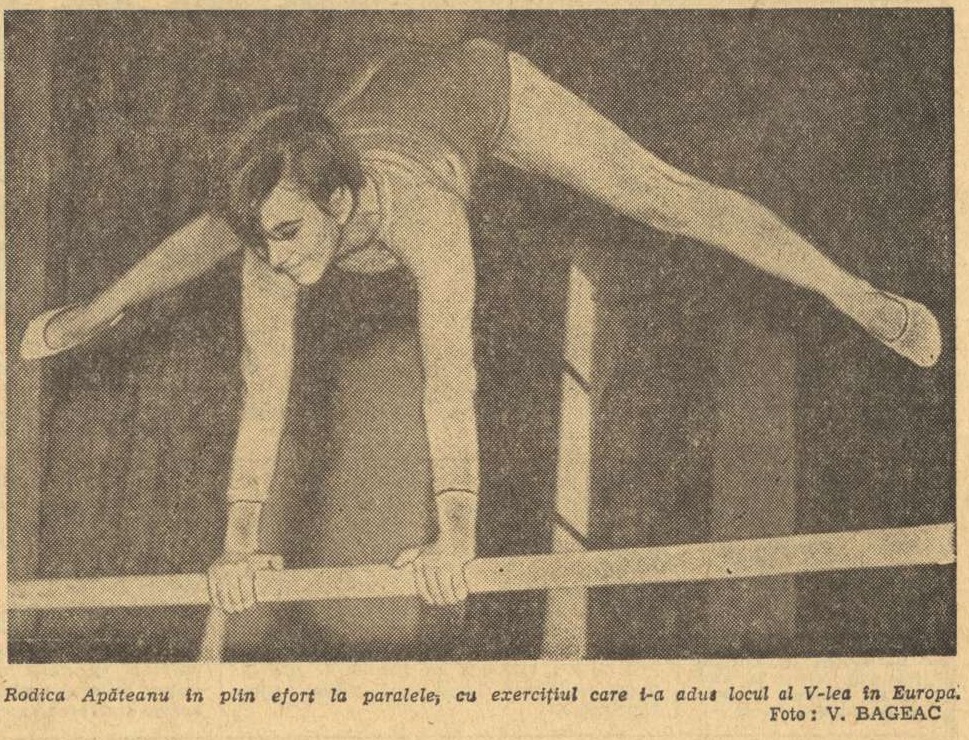

Rodica Apăteanu, 1969
Categories
1969 European Championships MAG

1969: Mikhail Voronin Retains His Title at the Men’s European Championships

On May 24 and 25, 1969, just months after the Olympic Games, the top male gymnasts in Europe gathered in Warsaw for the European Championships. As expected, the Soviet gymnasts dominated the meet.

In 1969, the rules for the European Championships changed. Each country could send three gymnasts instead of two. (Meanwhile, in women’s artistic gymnastics, countries continued to send only two gymnasts to the European Championships.) But the Soviet gymnasts were unable to sweep the all-around podium because Lisitsky had a major break on pommel horse.

Let’s take a look at what happened…

Viktor Klimenko, 1970
Categories
1969 European Championships WAG

1969: Karin Janz Dominates at the Women’s European Championships

Gymnasts from nineteen countries traveled to Landskrona, Sweden to participate in the European Championships on Saturday, May 16, 1969 and Sunday, May 17, 1969.

The stars of the 1968 Olympics — Čáslavská, Petrik, Voronina, Kuchinskaya — did not attend (or had retired), which gave 17-year-old Karin Janz a chance to shine and win four of the five gold medals. 

Datum: 23.05.1969 Copyright: imago/Werner Schulze Karin Janz (DDR) während des Trainings; Quadrat, Geräteturnen 1969, Kunstturnen
Categories
European Championships MAG Olympics Perfect 10 WAG World Championships

The Perfect Scores before Nadia Comăneci and Nellie Kim

Before Nadia Comăneci’s and Nellie Kim’s perfect 10s at the 1976 Olympic Games, there was a long line of gymnasts who obtained perfect scores at the Olympic Games, the World Championships, or the European Championships. (Originally, the World Championships were called the International Tournament.)

Some of them even managed perfect totals, meaning that they received the maximum score for their compulsory and optional routines combined.

So, here’s a chronological list of the gymnasts who were “perfect” before Comăneci and Kim.

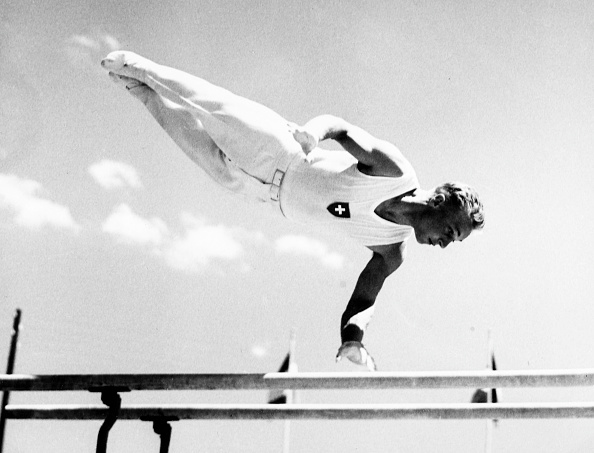
Kunstturn-WM in Basel 1950: Barren-Sieger Hans Eugster (Photo by RDB/ullstein bild via Getty Images)
Categories
1967 European Championships

1967: Karin Janz’s International Debut at the European Championships

Věra Čáslavská’s performance was the big news out of Amsterdam in 1967. But it wasn’t the only story. 

15-year-old Karin Janz had an incredible international debut. In fact, she was just hundredths away from stopping Čáslavská’s gold medal sweep at the 1967 European Championships.

Let’s take a quick look at her performance…

Karin Janz (East Germany), 1967 European Championships
Categories
1967 European Championships Perfect 10

1967: Čáslavská’s 10.0s at the Women’s European Championships

The 1967 WAG European Championships are a crucial moment in the history of artistic gymnastics. Let’s take a look at why this competition matters…

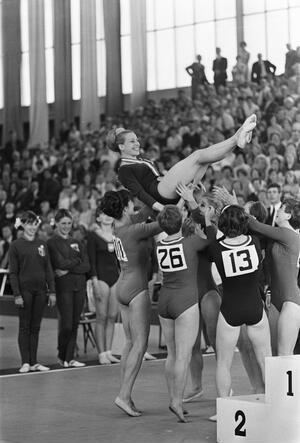
Věra Čáslavská being jockeyed, European Championships, 1967