Tsukahara Mitsuo opens his autobiography not with triumph but with catastrophe. Rather than beginning with his eponymous vault or the dismount that made him famous, or with any of his five Olympic gold medals, he begins in February 1980, when he sustained a cervical spine injury, which effectively ended his bid for a fourth consecutive Olympic Games.
The excerpt translated here follows him through the accident itself, the frustrating weeks of rehabilitation, his increasingly desperate attempt to recover in time for Japan’s Olympic trials, and the painful realization that his competitive career had come to an end. They also reveal a personality familiar from the earlier chapters of this autobiography: a gymnast whose greatest strength was often indistinguishable from his greatest weakness. Again and again, he acknowledges that his determination to finish routines no matter the circumstances and his willingness to accept risks others would avoid had become both the source of his success and the cause of his injuries.
One aspect of the accident is worth noting. The skill that caused Tsukahara’s injury was a roll-out skill: an Arabian 1¾. Only months later, Elena Mukhina would be paralyzed attempting a more difficult version of the skill. Roll-out skills have since been banned from FIG competition.
The excerpt below is Tsukahara’s account of how that ending unfolded.
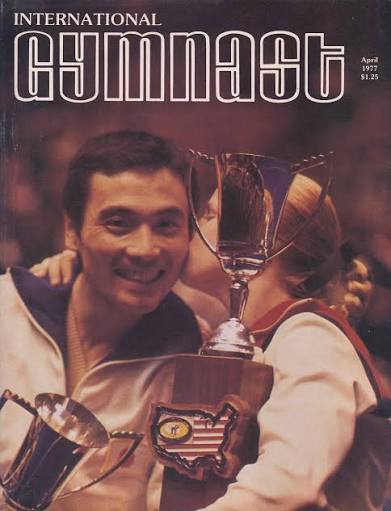
Tsukahara Mitsuo and Kathy Johnson, 1977 American Cup
Coaches and gymnasts rarely leave detailed accounts of the failed attempts, incremental breakthroughs, and training methods that transform an idea into an eponymous skill. As a result, the origins of even the sport’s most famous elements are often reduced to little more than a date and the name of a competition.
This excerpt from Tsukahara Mitsuo’s autobiography is a rare exception. He takes the reader through the entire process of learning the Moon Salto (i.e., a half-in, half-out): discovering an unfamiliar trampoline skill, adapting it for high bar, devising progressions, repeating elementary drills hundreds of times, confronting crippling fear, and gradually convincing himself that the impossible might actually be possible.
Along the way, Tsukahara shares memorable anecdotes that illuminate how gymnasts trained before modern training methods became commonplace. He explains, for example, that he first practiced a double back dismount from the horizontal bar not in a gymnasium, but by landing in an outdoor sandpit, which resulted in a gash on his face. Later, while working toward the Moon Salto, he waited until everyone else had left the gym before attempting it, preferring to work on the skill with complete focus.
More than half a century later, the Moon Salto is rarely performed in men’s gymnastics and now carries a modest C rating. Yet its significance extends far beyond its current difficulty value. It opened the door to an entirely new family of skills, and before long, gymnasts were taking full-twisting double back somersaults to events such as floor exercise and still rings. Gymnastics advances by building on the innovations of one’s predecessors. I hope you enjoy Tsukahara’s story.
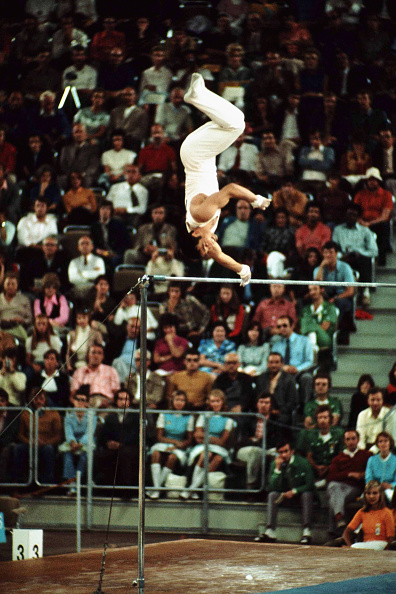
MUNICH, GERMANY – SEPTEMBER 01: Mitsuo Tsukahara of Japan competes in the Horizontal Bar apparatus final of the Artistic Gymnastics during the Munich Summer Olympic Games on September 1, 1972 in Munich, Germany. (Photo by The Asahi Shimbun via Getty Images)
Few skills in artistic gymnastics are as recognizable as the Tsukahara vault. More than fifty years after its debut, it remains a cornerstone of international gymnastics. Yet remarkably little is known about how it was created. (See Tsukahara’s skeletal Wikipedia page.)
Most histories reduce its origins to a single sentence: Tsukahara Mitsuo unveiled a new vault at the 1970 World Championships in Ljubljana, and it soon entered the Code of Points bearing his name. This excerpt from Tsukahara’s autobiography, Endless Challenge, offers the fullest account we have from the inventor himself. He describes an accidental beginning, experimenting with the vault after watching a university teammate perform it on the women’s side horse vault in training. At first, he regarded the skill as little more than a curiosity—awkward and lacking the “grandeur” expected of a competition vault. He then recounts months of persistence as nearly everyone around him dismissed the idea as impractical. Only after discovering that the skill worked better piked than tucked did he begin to believe it had competitive potential.
This account provides an invaluable window into how Tsukahara himself understood the creation of the vault that would bear his name. It does not, however, tell the whole story. American gymnast Hal Shaw performed the same vault at the 1968 NCAA Championships, where it was known in the United States as the “O-Shaw.” The two histories have rarely been considered together, and the relationship between Shaw’s vault and Tsukahara’s remains unclear. Whether the two men arrived at the idea independently, or whether knowledge of Shaw’s vault somehow reached Japan before Tsukahara began experimenting with it, remains impossible to determine.
For that reason, this chapter should be read not as the definitive history of the Tsukahara vault but as one essential piece of a larger puzzle. It is the closest thing we possess to an inventor’s notebook: a story of experimentation, stubbornness, failure, and gradual refinement, told by the gymnast whose name ultimately became attached to one of the sport’s most influential skills.
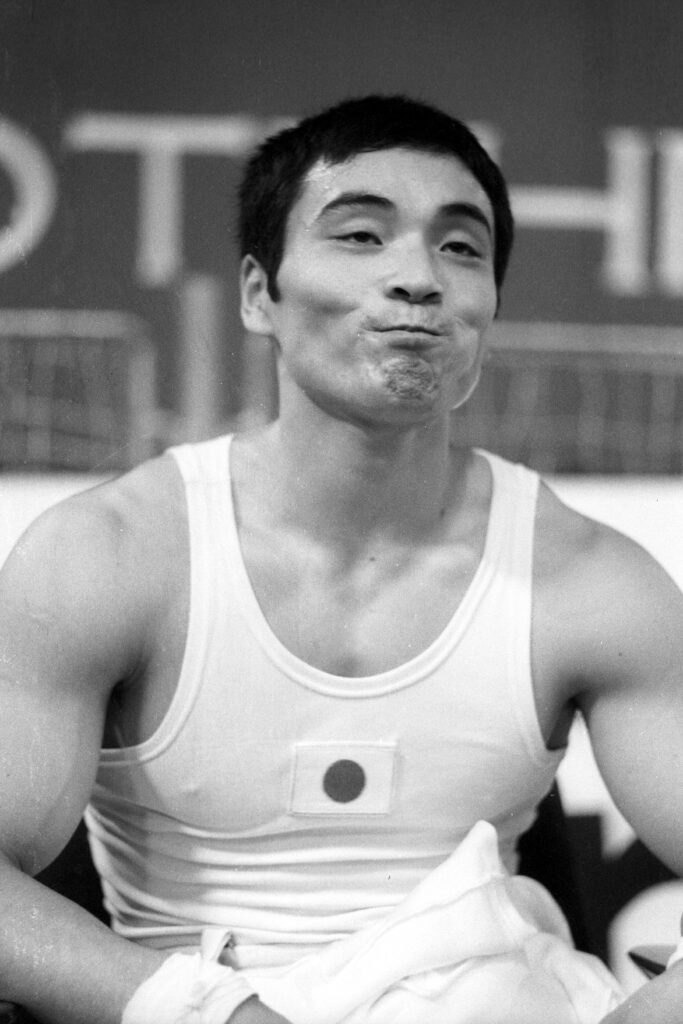
Tsukahara Mitsuo, 1970 World Championships, Ljubljana
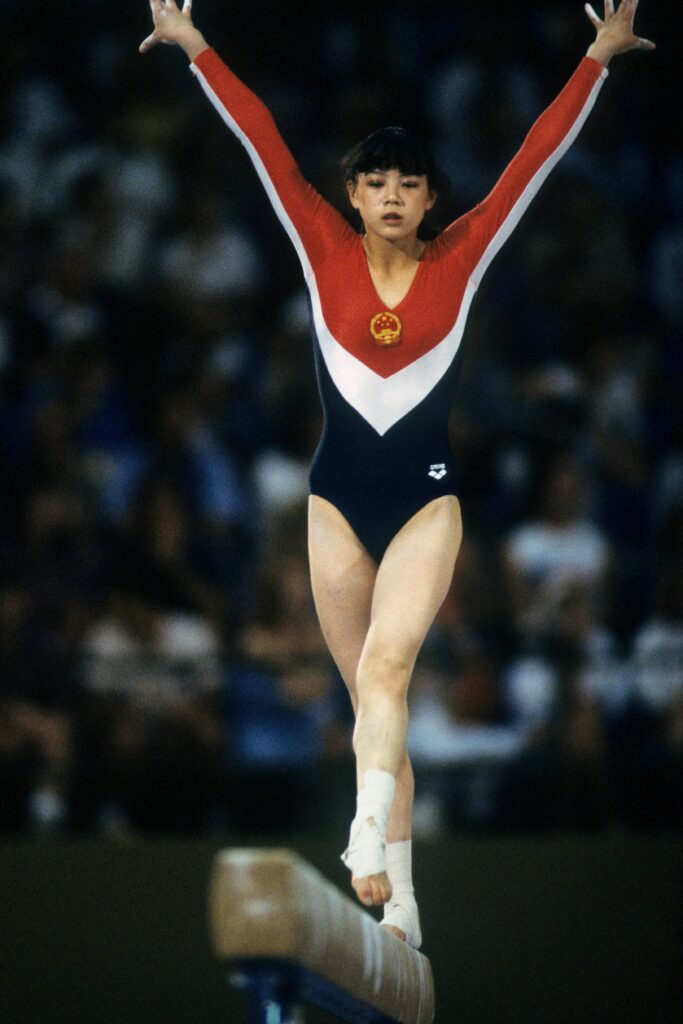
Wu Jiani was one of the most accomplished gymnasts of the early 1980s. At sixteen, she won three gold medals at the 1982 Asian Games and received the only perfect 10 awarded in the women’s competition. A year earlier, she had claimed a bronze medal on balance beam at the World Championships in Moscow, and her shoulder-destroying uneven bars release—commonly called the “Jiani Leap”— was recognized by the International Gymnastics Federation. She would later help China earn its first Olympic team medal in women’s artistic gymnastics, taking bronze at the 1984 Los Angeles Games.
The four profiles translated here, written between 1980 and 1983, are less interested in those achievements than in explaining how they became possible. Each returns to her unlikely beginning in the sport. Wu arrived at the national team with protruding knee joints, stiff ankles, and legs so weak that coaches compared them to those of a child recovering from polio. She failed to finish among the top thirty at her first national championships. Coaches reportedly decided three separate times to send her home, only to relent after watching her climb back onto the apparatus following yet another fall. Again and again, the articles attribute her transformation not to extraordinary talent but to extraordinary persistence: endless repetitions, late-night conditioning sessions, and an almost preternatural refusal to complain.
Read together, the profiles reveal something larger than the career of a single gymnast. They belong to a recognizable genre of Chinese sports writing in which athletic excellence serves as evidence of moral character. Wu’s story—frail child, repeated setbacks, silent perseverance, eventual triumph—was a narrative that readers would have recognized from countless profiles of elite athletes during the reform era. The details vary from article to article, but the structure remains remarkably consistent.
The differences are equally revealing. Three of the profiles were written for readers inside China and dwell on physical shortcomings, repeated failure, and the harsh demands of elite training. The fourth profile appeared in the English-language edition of China Pictorial, a Chinese state magazine published for overseas readers. Unlike the domestic profiles, it smooths away many of the rough edges. The malformed joints disappear, the coaches no longer contemplate sending her home, and the emphasis shifts to a determined girl practicing on a log in her bedroom before emerging as an international champion. Read side by side, the four articles offer not only a portrait of one of China’s pioneering gymnasts but also a glimpse of how the country chose to tell different versions of the same sporting success to domestic and international audiences.
In September 1994, the Romanian women’s gymnastics team did something almost unthinkable: they went on strike. Fresh off winning the European team title, the athletes training at the national center in Deva suspended gymnastics training and refused to return to the gym, limiting themselves to outdoor conditioning. The dispute centered on prize money promised for medals won at the European and World Championships that had still not been paid months later because of bureaucratic delays and a dispute over how new government regulations should be applied.
The protest placed coach Octavian Belu in an unusual position. Rather than opposing the athletes, he publicly defended them, arguing that the team had waited since the spring for money repeatedly promised by government officials. Belu described the strike as a last resort after months of assurances failed to produce results, stressing that the dispute was financial rather than political. The timing was particularly risky: Romania was preparing for a series of international competitions and the upcoming World Championships in Dortmund, raising fears that a prolonged interruption could affect the team’s competitive readiness.
The strike lasted only a few days. After the dispute drew widespread attention and the Romanian Gymnastics Federation publicly backed the athletes, the government agreed to begin releasing the overdue payments. Training resumed, the gymnasts returned to competition, and the immediate crisis passed. Yet the episode offered a rare glimpse behind the image of Romania’s celebrated gymnastics machine, revealing that even the country’s most successful athletes sometimes had to fight simply to receive the rewards they had already earned.
Below, you can find a collection of Romanian newspaper articles about the strike.
Trying to escape from one’s training environment is an almost universal experience in elite gymnastics. When Liu Xuan came down with mumps, her teammates envied her because the illness offered a rare break from training. In Romania, Rodica Dunca later described the Károlyi system as a “concentration camp” and recalled a failed escape attempt with Melitta Rühn and Teodora Ungureanu before the Securitate brought them back. Mihaela Stănuleț remembered a similar episode, claiming that she and Rühn tried to run away only for Béla Károlyi to send dogs after them.
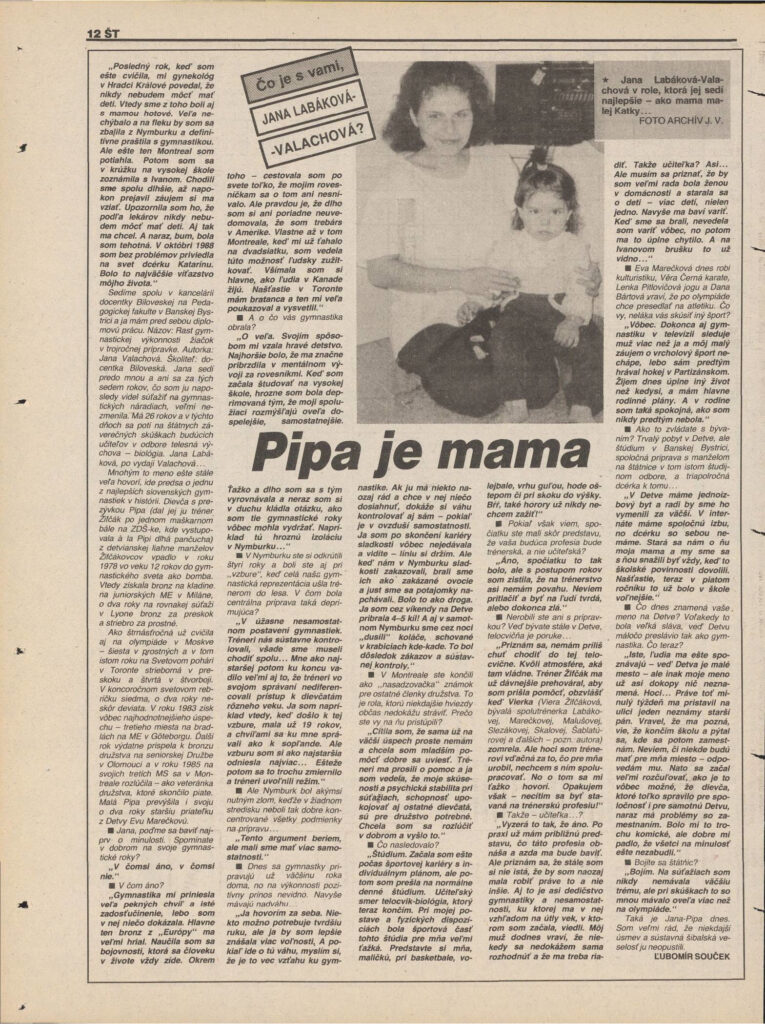
Czechoslovakia was no exception. During the summer of 1985, a group of national team gymnasts slipped away from the centralized training center in Nymburk and spent the night in the surrounding woods. Below are two accounts of the incident: Jana Lábaková’s recollection from 1992 and the contemporary version offered by the national team coach. Read side by side, the two narratives seem to describe the same event from different perspectives. Together, they leave the impression that the full story of what happened in Nymburk has never been completely told—that what survives on the page may be only the tip of the iceberg.
Published in 2012, Liu Xuan’s memoir Xuanmu offers a look back on the journey that shaped one of China’s most celebrated gymnasts. Written more than a decade after her retirement, it traces her path from a timid, sickly child in Changsha to Olympic champion, while also exploring the personal costs of that transformation.
The opening chapters focus on Liu’s childhood and introduction to gymnastics, providing a vivid portrait of the training culture that defined Chinese gymnastics in the 1980s and early 1990s. Alongside stories of relentless conditioning, competition, and athletic ambition, Liu recalls a childhood marked by contradictions. She disliked many aspects of training, envied classmates who spent their afternoons in school, celebrated bouts of illness because they offered a brief escape from the gym, and at times questioned whether gymnastics was worth the sacrifice at all. Yet she also remembers the coaches, teammates, and family members who sustained her along the way. The result is a rare first-person account of the grueling system that produced generations of elite Chinese gymnasts.
Enjoy!
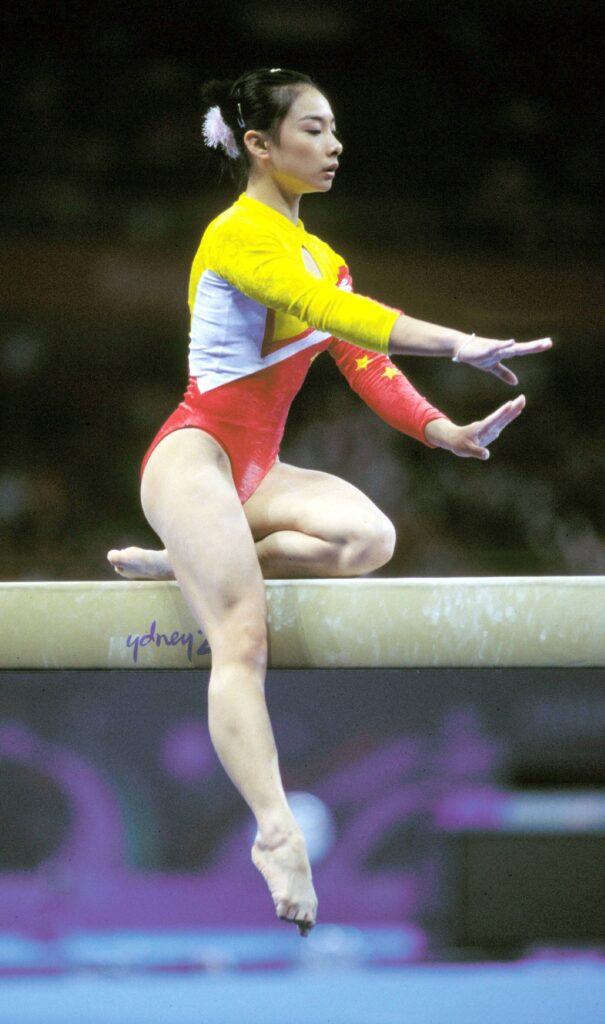
Liu Xuan, 2000 Olympics, Copyright: imago/Schreyer
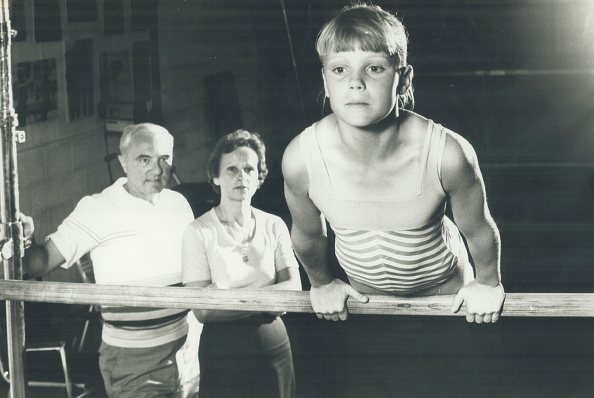
In the spring of 1980, Canada’s gymnasts were preparing for what many believed would be a breakthrough Olympic Games. The men’s and women’s teams had both qualified for Moscow, experienced veterans stood alongside rising young stars, and several athletes were realistic contenders for international success. Then Canada joined the American-led boycott of the Moscow Olympics. The decision emerged from a complex mixture of diplomacy, political pressure, and financial leverage, but its consequences were felt most directly by the athletes themselves. Some retired soon after the boycott was announced. Others spent four more years chasing an Olympic opportunity that never came. Below, you can find their stories.
Elfi Schlegel (Photo by Doug Griffin/Toronto Star)
When the Soviet Union invaded Afghanistan in December 1979, governments across the Western alliance were forced to decide whether to support the American-led boycott of the Moscow Olympics. Most Western European countries ultimately found ways to send their athletes to the Games, often under the Olympic flag rather than their national colors. West Germany was different. As one of the largest and most influential countries in Western Europe, it joined the boycott.
That decision has usually been told as a story of Cold War diplomacy: alliance politics, relations with Washington, and the struggle to balance political principles against Olympic ideals. But for the athletes whose careers had been built around Moscow, the boycott was something far more personal. Olympic opportunities vanished, training cycles lost their purpose, and years of preparation suddenly led nowhere.
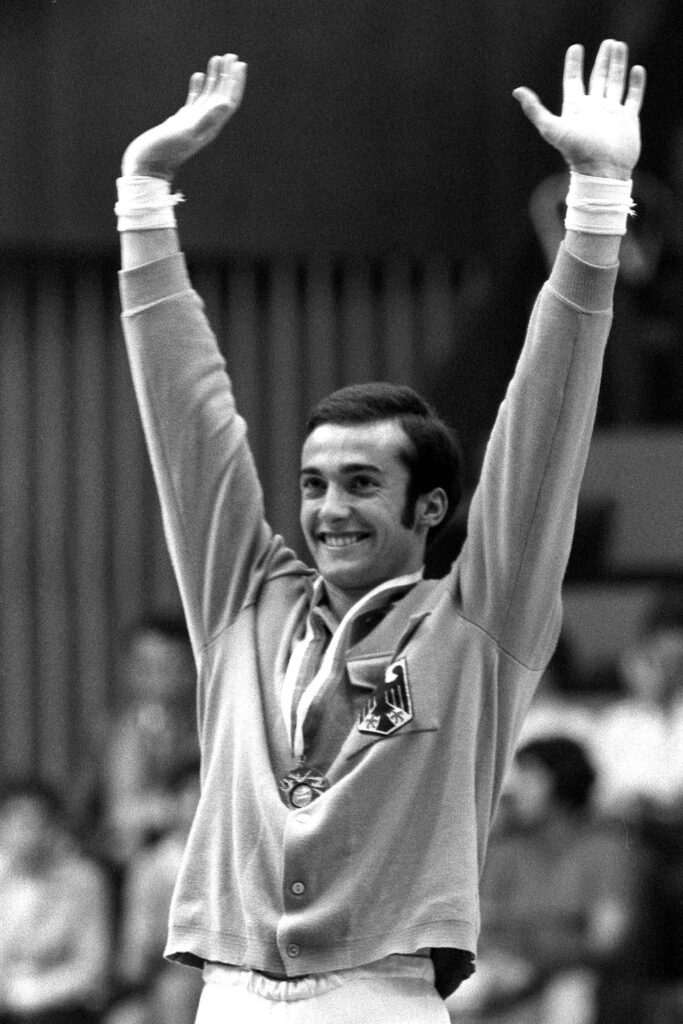
Among those affected were members of West Germany’s gymnastics team. Below, we’ll look at the reactions of Eberhard Gienger and Volker Rohrwick.
In Japan, athletes selected for the 1980 Moscow Olympics are sometimes described as maboroshi no orinpian—”phantom Olympians.” The phrase is remarkably apt. A phantom occupies a liminal space between presence and absence: real enough to leave traces, yet impossible to grasp; gone, yet somehow still there.
For years, thousands of people had organized their lives around a single, concrete destination. Athletes qualified. Teams were selected. Training camps began. Then, weeks before the opening ceremony, politics intervened. The Games went on without them, but the Olympic future they had spent years building toward vanished. What remained was an absence that would linger for decades.
Most histories of the 1980 boycott focus on diplomacy—the Soviet invasion of Afghanistan, the Carter administration’s campaign for international support, and the calculations of governments caught between alliance politics and Olympic ideals. Those stories matter. But they cannot fully explain the haunting. They cannot explain why Moscow continues to linger in the memories of so many who never competed there.
More than four decades later, many of those athletes still speak about Moscow in the language of loss, regret, and unfinished business. This is the story of what politics looks like to the people whose lives it has disrupted.
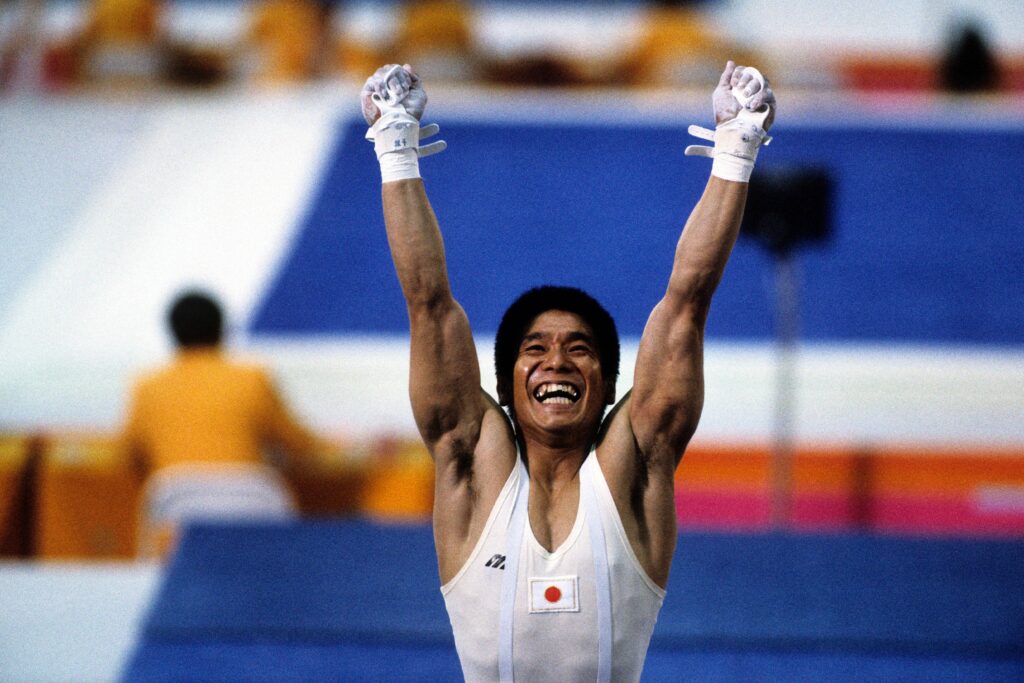
Gushiken Kōji, 1984 Olympics, Copyright: imago/Sven Simon