Even before Nadia Comăneci’s legendary performances at the 1976 Montreal Olympics, East German gymnastics officials had taken careful note of the Romanian teenager. Ellen Berger, the East German national team coach and a member of the FIG’s Women’s Technical Committee, was characteristically measured when asked whether Comăneci’s near sweep of the 1975 European Championships had surprised her. “No,” she said flatly. “We knew Nadia and were aware of her capabilities.” The sensation, Berger explained, was partly an artifact of the FIG’s age regulations, which had kept Comăneci off the international stage until the year she turned 14 — meaning the wider gymnastics world had simply not yet had the chance to see her.
What Berger did not withhold was her admiration for the quality of the performance itself. Comăneci ‘s routines, she observed, were extraordinarily difficult and executed with total confidence. More striking still was her psychological makeup: “She knows she is good, and nothing bothers her — not the audience, not her competitors, nothing at all.” Her one caveat was equally revealing: a single competition, she insisted, could not support sweeping conclusions. Ludmilla Tourischeva, she noted pointedly, remained one of the best gymnasts in the world. The subtext was clear — East Germany was not yet ready to concede the future to Romania.
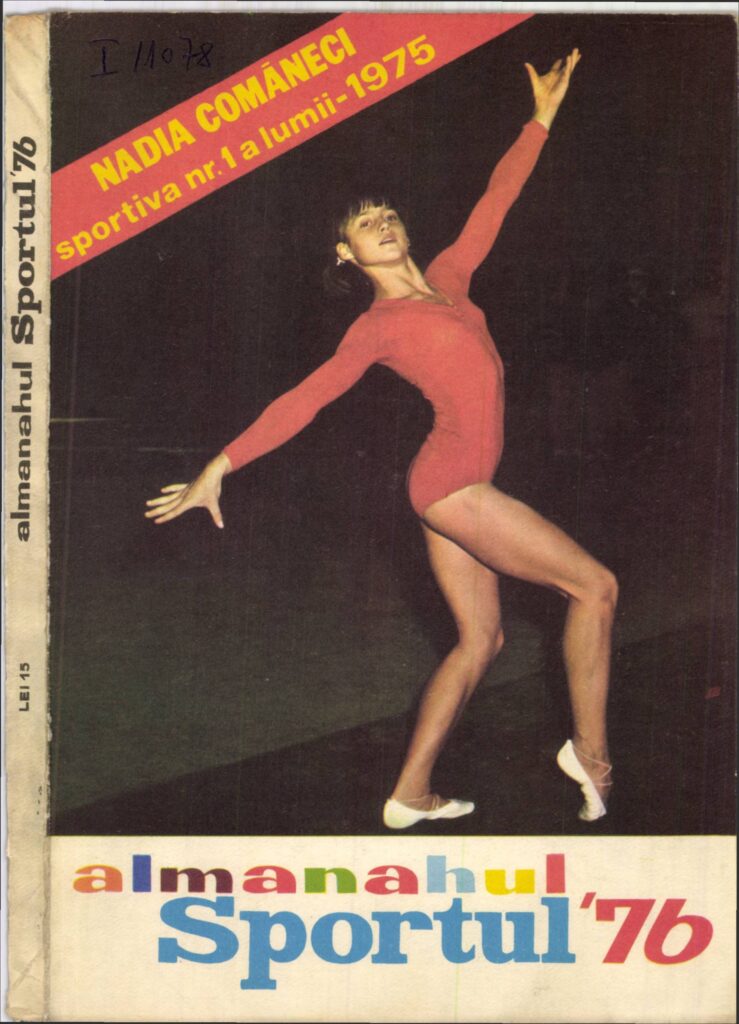
Verdict on a 13-Year-Old Champion: She Can Do Even More!
Nadia Comăneci, the Romanian gymnastics princess, is practicing new elements
By Wolfgang Richter, Neues Deutschland, May 15, 1975
Halfway between two European Gymnastics Championships. The women’s is barely two weeks in the past, the men’s is scheduled for just over two weeks from now. But the past feels more present than what is to come. People are still shaking their heads in astonishment at the sensational outcome of the 10th European Championships in the Norwegian city of Skien. The reason: the youngest participant, at 13 years old, won four of five titles and took one silver.
Everywhere the question is being asked: who is this Nadia Comăneci, and how can such a came-saw-conquered triumph be explained?
Our correspondent in Romania, Lutz Aulbach, reported on the enthusiastic reception given to Nadia Comăneci in her homeland. In recent days, she was awarded the title “Distinguished Pioneer” by the Romanian Pioneer Organization. But after a brief pause, she has resumed her normal life — going to school and training. She is, incidentally, among the best pupils in the 7th grade of the lyceum with an expanded gymnastics program in her hometown of Gheorghe Gheorghiu-Dej. Her favorite subjects are chemistry and English. And, as children her age still do, she collects dolls.
She began gymnastics at the age of five. The coaching couple, Marta and Béla Károlyi, had selected her, along with 24 other talented children, from several of the city’s kindergartens. After just one year, Nadia finished 10th in the children’s championships.
She celebrated her first international success at the age of ten at the Friendship Youth Games in Gera, where she immediately won the all-around title as well as gold on the uneven bars and vault, plus a bronze medal on floor. This was followed about five weeks ago by her victory at the London “Champions All” against strong international competition. That was where the fuse was lit for the rocket that would take off in Skien shortly thereafter.
Coach Béla Károlyi praises her diligence, endurance, and talent. “We are now working on training new elements — for example, two connected handsprings on beam and an improved Tsukahara on vault.” He also said: “Nadia is capable of still more.”
She did, at any rate, succeed in astonishing the expert world at the European Championships. We asked national team coach Ellen Berger whether the outcome had seemed equally sensational to her, and her answer was unequivocal: “No! We knew Nadia and were aware of her capabilities. The fact that she is now suddenly making such a sensation of herself, as it appears, is connected with the regulations. They state that a gymnast may only compete at international championships in the year in which she turns 14. Last year, at the World Championships, she was only 12.”
On November 12th, Nadia Comăneci will reach gymnastics majority — that is, 14. The girl who performs with such seriousness and restraint, and who shuns theatrical display, stands only 1.52 meters tall and weighs just 38 kilograms. Yet she moves over the apparatus with a perfection that immediately made her the star of the championships in Skien.
Where does Ellen Berger, who studied her closely, see the strengths of the new gymnastics princess? “All of her routines are extraordinarily difficult and are executed with total confidence. Nadia’s nerve is extraordinary. She knows she is good, and nothing bothers her: not the audience, not her competitors, nothing at all.”
Nevertheless, the national team coach is of the opinion that a single competition like the European Championships does not permit reliable conclusions about future outcomes. “Only that gymnastics is being performed with greater technical precision and brilliance, and that young gymnasts can perform very difficult elements while simultaneously being stable. But that too is not a finding unique to these championships.”
At the next competition, the result could look quite different, she believes, hinting at how: “For me, Ludmilla Tourischeva is still one of the best gymnasts in the world. Only she can perform with such elegance and charm. In Skien, after her two errors on bars and beam, her confidence had clearly been shaken. But that can happen to anyone.”
The highlight of the European Championships was probably the uneven bars final, which the young Romanian won ahead of world champion Annelore Zinke. Annelore herself says: “My world championship routine in Varna was perhaps a touch better.” That is her personal impression; the national team coach and other eyewitnesses to both routines attest that hers was a flawless bars performance. And yet “only” silver? “Nadia Comăneci had the more difficult, the more astonishing dismount,” according to Ellen Berger.
Proof of this: what was enough for the highest honors yesterday is no longer sufficient today…
Getting Younger for 10 Years
| Year | Place | Gymnast | Country | Age | Avg. Age |
| 1975 | 1st | Comăneci | (ROM) | 13 | |
| 2nd | Kim | (USSR) | 17 | = 15 | |
| 3rd | Zinke | (GDR) | 16 | ||
| 1973 | 1st | Tourischeva | (USSR) | 20 | |
| 2nd | Korbut | (USSR) | 18 | = 17 | |
| 3rd | Gerschau | (GDR) | 14 | ||
| 1971 | 1st | Tourischeva | (USSR) | 18 | |
| 2nd | Lazakovich | (USSR) | 17 | = 19 | |
| 3rd | Zuchold | (GDR) | 24 | ||
| 1969 | 1st | Janz | (GDR) | 17 | |
| 2nd | Karaseva | (USSR) | 20 | = 20 | |
| 3rd | Zuchold | (GDR) | 22 | ||
| 1967 | 1st | Čáslavská | (CSSR) | 25 | |
| 2nd | Druzhinina | (USSR) | 20 | = 21 | |
| 3rd | Krajčírová | (CSSR) | 19 | ||
| 1965 | 1st | Čáslavská | (CSSR) | 23 | |
| 2nd | Latynina | (USSR) | 31 | = 25 | |
| 3rd | Radochla | (GDR) | 20 |
Notes
1. You can read the Soviet response to the 1975 European Championships here.
2. A friendly reminder: The Károlyis were not Comăneci’s first coaches. Marcel Duncan was.
Urteil über eine 13jährige Meisterin: Kann noch mehr!
Nadia Comaneci, die rumänische Turnprinzessin, übt neue Elemente
Von Wolfgang Richter
Halbzeit zwischen zwei Turneuropameisterschaften. Die der Frauen liegen knapp zwei Wochen zurück, die der Männer stehen in reichlich zwei Wochen auf dem Programm. Aber das Vergangene ist gegenwärtiger als das Kommende. Denn noch immer begegnet man kopfschüttelndem Staunen ob des sensationellen Ausgangs der X. Europäischen Titelkämpfe im norwegischen Skien. Der Grund: Die mit 13 Jahren jüngste Teilnehmerin gewann vier von fünf Titeln und wurde einmal Zweite.
Überall wurde und wird gefragt: Wer ist diese Nadia Comaneci, wie ist solch Kam-sah-und-siegte-Triumph zu erklären?
Unser Korrespondent in Rumänien, Lutz Aulbach, berichtete vom begeisterten Empfang, der Nadia Comaneci in ihrem Heimatland bereitet wurde. Dieser Tage wurde sie vom rumänischen Pionierverband mit dem Titel „Verdienter Pionier” geehrt. Aber nach kurzer Pause hat sie wieder ihr normales Leben begonnen — geht zur Schule und trainiert. Übrigens zählt sie in der 7. Klasse des Lyzeums mit erweitertem Turnprogramm in ihrer Geburtsstadt Gheorghe Gheorghiu-Dej zu den Besten. Ihre Lieblingsfächer sind Chemie und Englisch. Und wie es Kinder in ihrem Alter noch tun, sammelt sie Puppen.
Schon mit fünf Jahren begann sie zu turnen. Das Trainerehepaar Marta und Bela Karoly hatte sie zusammen mit 24 weiteren Talenten aus mehreren Kindergärten der Stadt ausgesucht. Bereits nach einem Jahr wurde Nadia 10. bei den Kindermeisterschaften.
Ihren ersten internationalen Erfolg feierte sie mit zehn Jahren bei den Jugendwettkämpfen der Freundschaft in Gera, wo sie auf Anhieb den Mehrkampftitel sowie Gold am Stufenbarren und im Sprung und dazu eine Bronzemedaille (Boden) gewann. Dann folgte vor etwa fünf Wochen der Sieg beim Londoner „Champions All” gegen starke internationale Konkurrenz. Dort wurde die Rakete gezündet, die wenig später in Skien aufstieg.
Trainer Bela Karoly lobt an ihr den Fleiß, die Ausdauer, das Talent. „Nun gehen wir daran, neue Elemente zu trainieren — z. B. zwei miteinander verbundene Überschläge auf dem Balken und einen verbesserten Tsukahara im Sprung.” Er sagte auch: „Nadia ist noch zu mehr imstande.”
Immerhin vermochte sie bei der Europameisterschaft die Fachwelt zumindest zu verblüffen. Wir fragten Verbandstrainerin Ellen Berger, ob der Ausgang für sie gleichermaßen sensationelle Züge trug, und ihre Antwort war eindeutig: „Nein! Wir kannten die Nadia und wußten um ihre Leistungsstärke. Daß sie jetzt so plötzlich und dadurch sensationell, wie es scheint, von sich reden macht, hängt mit dem Reglement zusammen. Es besagt, daß eine Turnerin an internationalen Meisterschaften erst in dem Jahr teilnehmen darf, in dem sie das 14. Lebensjahr erreicht. Im vergangenen Jahr, zu den Weltmeisterschaften, war sie erst 12.”
Am 12. November wird Nadia Comaneci „turnvolljährig”, also 14. Das Mädchen, das so ernst und sachlich turnt und jeder Schau abhold ist, mißt nur 1,52 m und braucht lediglich 38 kg über die Geräte zu wirbeln. Aber das tut es mit einer Perfektion, die es auf Anhieb zum Primus der Turn-Sonderklasse in der Ibsenstadt Skien werden ließ.
Worin sieht Ellen Berger, die sie genau studierte, die Stärken der neuen Turnprinzessin? „Alle ihre Übungen sind außerordentlich schwierig und werden mit absoluter Sicherheit vorgetragen. Nadia ist unerhört nervenstark. Sie weiß, daß sie gut ist, und sie stört nichts: weder Zuschauer, noch ihre Konkurrentinnen, überhaupt nichts.”
Dennoch ist die Verbandstrainerin der Auffassung, daß ein einziger Wettkampf wie die Europameisterschaften keine gültigen Schlußfolgerungen für künftige Entscheidungen zulassen. „Einzig, daß technisch sauberer und brillanter geturnt wird und daß junge Turnerinnen sehr schwierig und gleichzeitig stabil turnen können. Aber auch das ist keine Erkenntnis nur dieser Titelkämpfe.”
Beim nächsten Wettkampf kann das Ergebnis ganz anders aussehen, meint sie und deutet auch an wie: „Für mich ist Ludmilla Turistschewa noch immer eine der besten Turnerinnen der Welt. So elegant, so charmant kann nur sie turnen. In Skien war sie nach den beiden Fehlern am Barren und Balken nervlich nicht mehr auf der Höhe. Aber das kann jedem passieren.”
Höhepunkt der EM war wohl das Finale am Stufenbarren, das die junge Rumänin vor Weltmeisterin Annelore Zinke gewann. Annelore selbst sagt: „Meine Weltmeisterschaftskür in Warna war vielleicht eine Idee besser.” Das ist ihr individueller Eindruck, die Verbandstrainerin und andere Augenzeugen beider Übungen bescheinigen ihr eine tadelsfreie Barrenkür. Dennoch „nur” Silber? Nadia Comaneci hatte den schwierigeren, den verblüffenderen Abgang”, so Ellen Berger.
Beweis dafür: Was gestern zu höchsten Ehren reichte, genügt heute schon nicht mehr …
Seit 10 Jahren immer jünger
| Jahr | Platz | Turnerin | Land | A. | D. |
| 1975 | 1. | Comaneci | (Rum) | 13 | |
| 2. | Kim | (UdSSR) | 17 | = 15 | |
| 3. | Zinke | (DDR) | 16 | ||
| 1973 | 1. | Turistschewa | (UdSSR) | 20 | |
| 2. | Korbut | (UdSSR) | 18 | = 17 | |
| 3. | Gerschau | (DDR) | 14 | ||
| 1971 | 1. | Turistschewa | (UdSSR) | 18 | |
| 2. | Lasakowitsch | (UdSSR) | 17 | = 19 | |
| 3. | Zuchold | (DDR) | 24 | ||
| 1969 | 1. | Janz | (DDR) | 17 | |
| 2. | Karassjowa | (UdSSR) | 20 | = 20 | |
| 3. | Zuchold | (DDR) | 22 | ||
| 1967 | 1. | Caslavska | (CSSR) | 25 | |
| 2. | Drushinina | (UdSSR) | 20 | = 21 | |
| 3. | Krajcirova | (CSSR) | 19 | ||
| 1965 | 1. | Caslavska | (CSSR) | 23 | |
| 2. | Latynina | (UdSSR) | 31 | = 25 | |
| 3. | Radochla | (DDR) | 20 |
A. = Alter, D. = Altersdurchschnitt