How did the Soviet Union explain Nadia Comăneci?
The fourteen-year-old Romanian gymnast had emerged from the Montréal Olympics as the sport’s ultimate luminary—the new all-around champion, the vanguard who made the perfect 10 famous, and the defining face of the Games.
Few sports occupied a more prominent place in Soviet sporting culture than women’s gymnastics. One might expect Moscow’s reaction to an outsider’s sudden dominance to be defensive, dismissive, or buried in administrative silence. Instead, the Soviet response split along a sharp fault line: Publicly, Comăneci was celebrated; privately, her performances ended careers and forced an institutional reckoning.
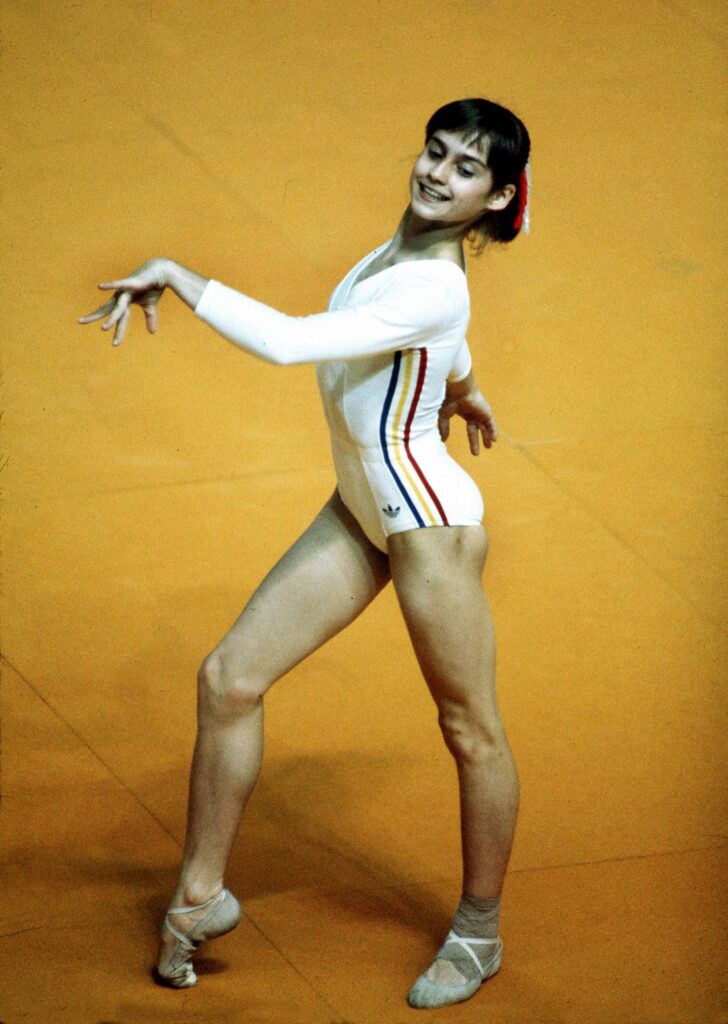
The Incomparable Comăneci
The Soviet gymnastics establishment had been aware of Comăneci long before Montréal.
At the 1973 Friendship Cup (Druzhba)—a testing ground among the socialist countries—Comăneci won the all-around title. Afterwards, Soviet officials tried to allay any concerns. Yuri Titov, Olympic champion and head of Soviet gymnastics, insisted that her emergence posed no existential threat. “The emergence of Comăneci causes no alarm,” he declared. “Yes, she is difficult to beat for now, but it is within our girls’ reach.”
Two years later, after Comăneci swept four gold medals at the 1975 European Championships in Skien, the tone had become more serious. Sovetsky Sport called her the “new undisputed leader” of women’s gymnastics and described the Soviet performance as a “relative disappointment.”
In Montréal, no one could deny her superiority.
The fascination crossed over from sports journals into mainstream daily life. Writing in Gudok, the newspaper of the Soviet railway workers, a correspondent watched the Romanian prodigy with awe:
Look at Nadia Comăneci—the European all-around champion. How effortlessly, as if anyone could do the same, she spins through her incredible saltos and flick-flacks. How freely, as if she were on the floor rather than a four-inch beam, she performs her super-difficult balance beam routine.
Gudok, July 23, 1976
The article contrasted Comăneci’s brilliance with the struggles of the Soviet veterans, especially Ludmilla Tourischeva. Tourischeva’s beam routine earned a disappointing 9.4. Comăneci received a 9.9.
“Five-tenths of a point—that is a gulf,” the writer observed.
Larisa Latynina offered an explanation.
“It’s nerves,” said Larisa Semyonovna Latynina. “The older you get, the more fragile your nerves become. You understand responsibility more deeply. But these girls? They win playfully and lose playfully.”
Gudok, July 23, 1976
The article ultimately celebrated the Soviet team victory. Tourischeva, Olga Korbut, Nelli Kim, Elvira Saadi, Svetlana Grozdova, and Maria Filatova successfully defended the Olympic team title. Yet even amid that triumph, the focus repeatedly returned to Comăneci.
The article concluded with an observation that had become impossible to dispute:
In the all-around, the incomparable Comăneci leads. It seems impossible now for anyone to catch her. A perfect 10 on the uneven bars on Sunday; perfect 10s on both beam and bars on Monday. Nothing like it had ever been seen at any Olympic Games.
Gudok, July 23, 1976
Understanding Montréal
While Gudok captured the emotional shockwave of the Games, Sovetsky Sport attempted a more clinical autopsy. In a definitive post-Olympic analysis, journalists Boris Bazunov and Mikhail Suponev sought to define exactly what Comăneci’s triumph meant for the evolution of the sport.
“The Olympic tournament in Montréal’s Forum brought us considerably closer to understanding the ideal. And for this, gymnastics owes thanks above all to Nadia Comăneci and Nelli Kim.
The all-around champion of the Montréal Olympics, Nadia Comăneci, now stands as something exceptional. Indeed, where else would you find a gymnast who in the optional program on bars and beam accepts no scores other than tens? And to speak honestly, those tens are fully earned.
[…]
Sovetsky Sport, July 23, 1976
Comăneci today is genuinely the world’s strongest gymnast, having embodied in her programs everything the times have demanded: complexity, risk, virtuosity of execution, emotional elevation.”
This was not reluctant, teeth-gritting praise; it was an explicit public declaration that a foreign athlete was sublime.
Yet, the ultimate purpose of the Sovetsky Sport piece was not merely to crown Comăneci. While Bazunov and Suponev were willing to recognize her supremacy in 1976, they protected the long-term supremacy of the Soviet system. Comăneci was the world’s strongest gymnast, yes, but she was not the final word. She was a tactical challenge to be solved by Moscow’s sports science bureaucracy:
“But we can say that in the creative laboratories of our leading coaches, intense intellectual work is underway—a bold search for the principles on which the gymnastics of the future will be built.
Let us note that Nadia’s achievements are not equal across all apparatus. She has not yet attained that exceptional combination of inspiration, artistry, and sporting virtuosity in floor exercise that distinguishes the Soviet gymnastics school. On vault, Kim’s flight — also awarded a ten — looks more oriented toward the future than Comăneci’s vault. And it is no accident that Nadia conceded ground to the Soviet gymnasts on these events.”
Sovetsky Sport, July 23, 1976
By reassuring readers that Comăneci lacked Soviet artistry on floor and that Nelli Kim’s vault was “more oriented toward the future,” the state press could offer glimmers of hope for the future. While Romania had won the day, the Soviet school could still own tomorrow.
Public Narrative, Private Consequences
None of this meant that Soviet officials greeted Montréal with indifference.
The public narrative and the institutional reality were not necessarily the same. Embedded within many discussions of Comăneci’s success was an uncomfortable question: how did this happen? Why had the Soviet gymnasts been unable to challenge her more convincingly?
One answer came from Olga Karaseva—Olympic champion, international judge, and a woman who had competed alongside Larisa Latynina on the Soviet national team. Writing in Sovetsky Sport in August 1976, she offered a lengthy retrospective titled “Along the Elegant Spiral of Difficulty.” Read between the lines, it was a careful indictment.
Karaseva first praised the Soviet women for securing their seventh consecutive Olympic team title and singled out Tourischeva, Kim, Korbut, and Saadi for recognition. But she also argued that the coaching staff had failed to formulate a coherent response to the Romanian prodigy. Although Comăneci’s rise had been visible for years, the Soviet coaches had never clearly identified who would serve as her principal challenger.
“We had our quartet of reliable fighters,” she wrote, “but who among them would emerge as the clear leader, who would take it upon herself to enter into battle with Comăneci at the decisive moments—that, I think, our coaches did not know.”
For Karaseva, the strongest candidate had been Nelli Kim. Since the 1974 World Championships, Kim had steadily modernized her routines and demonstrated exceptional psychological stability, while Korbut and Tourischeva continued to rely largely on established strengths. Karaseva was not claiming that Kim would necessarily have defeated Comăneci. Rather, she suggested that the Soviet team had entered Montréal without a clear strategic answer to the sport’s emerging star. Comăneci was extraordinary, but she was not unimaginable. As Karaseva noted, previous generations had also spoken of Larisa Latynina, Vera Čáslavská, and Ludmilla Tourischeva as gymnastics wonders.
Latynina ultimately paid the price. In early 1977, she announced that she was stepping down as head coach of the Soviet women’s team to take a position with the Moscow Olympic Organizing Committee. Publicly, the transition was presented as natural and voluntary.
“Of the team that shone on the international stage in recent years, only Nelli Kim remains today,” Latynina explained. “A new generation has arrived — evidently, we coaches must also make way for the young. And besides, I am convinced that a person should not stay too long in one place — new work generates new stimulations, new ideas.”
Years later, she offered a more honest account. Looking back in 1990, Latynina recalled the aftermath of Montréal with evident bitterness: “When Romania produced a gymnast like Nadia Comăneci, unique in her natural gifts, it was decided here that the head coach of the USSR was to blame.”
Foreign breakthroughs were not acts of God or generational accidents. They were considered institutional failures, and institutions required someone to answer for them.
The Spiral of Complexity
The task of reclaiming the lead fell to Latynina’s replacement, Aman Shaniyazov. In April 1977, less than a year after Montréal, Shaniyazov gave an interview to Sovetsky Sport commenting on the USSR Gymnastics Championship in Vilnius, Lithuanian Soviet Socialist Republic. Karaseva had titled her post-mortem “Along the Elegant Spiral of Difficulty.” Shaniyazov’s piece was simply called “The Spiral of Complexity,” dropping the adjective “elegant,” which may have been a subtle editorial choice to signal where this spiral was heading.
Shaniyazov’s central message was that Soviet gymnastics needed a deliberate push toward greater difficulty. He had implemented domestic scoring standards that went well beyond current international requirements, drawing open complaints from club coaches who could not understand why the All-Union championship was operating under different rules than the FIG. He was unapologetic:
“Our women’s gymnastics needs a leap, a surge toward greater complexity, so that from a qualitatively new platform we can storm the Olympic heights… Some coaches expressed bewilderment—why, they asked, introduce rules at the All-Union championship that differ significantly from international standards? And why these extraordinary special requirements for difficulty?… Having carefully thought through and discussed these innovations with the leading coaches, we were, above all, trying to look ahead to the future.”
Sovetsky Sport, April 27, 1977
Shaniyazov’s public metrics made his objectives clear. The Soviet system believed that the Romanians were currently the pacesetters in modern, high-risk routines, and Shaniyazov confidently assured readers that Soviet gymnasts were already closing the gap:
“In principle, our leaders today have routines on three events that are more complex and original than those of Olympic champion Nadia Comaneci and the Romanian team’s second gymnast, Teodora Ungureanu…”
All that remained were uneven bars, and even there, Maria Filatova was catching up to the Romanians:
“On bars, we need greater variety. Though it must be said, Filatova’s routine contains a full four saltos, and that looks highly impressive.”
The answer to Comăneci was not denial. It was adaptation. If Comăneci embodied the future of gymnastics, then the Soviet system would attempt to surpass her on her own terrain through greater difficulty, greater originality, and more intensive preparation.
This aggressive pivot marked a fundamental philosophical break for the Soviet program. Just three years earlier, in 1973, Larisa Latynina had laid out the traditional Soviet ethos, warning that “complexity for the sake of complexity, tricks for the sake of tricks, in my view, are absolutely contrary to gymnastics.” For Latynina, acrobatics were only valid if they served “feminine beauty” and “true artistry.”
By 1977, that philosophy was on shaky ground. Although the FIG would not formally reward greater risk, originality, and virtuosity until the 1979 Code of Points, Soviet officials were already moving in that direction. Determined to outpace the Romanians, they rewrote domestic judging standards, introducing bonus-driven scoring that allowed for scores like 10.80. The immediate results were often messy: there were “falls, errors, rough edges,” as Shaniyazov put it. But the institutional decision had been made. The future belonged to difficulty, and the woman most closely associated with the old philosophy was no longer the person chosen to lead it.
It would be reductive to credit Comăneci alone for these developments. But it would be equally naïve to believe her dominance in Montréal went unanswered. Latynina’s departure, Shaniyazov’s new scoring rubric, the gymnasts pushed toward unprecedented difficulty in Vilnius — these were not coincidences. They were the bureaucratic translation of what Sovetsky Sport‘s journalists had already put into words: that Comăneci embodied the direction in which women’s gymnastics was moving. The Soviet school’s answer was not to dispute that direction. It was to race down it faster.
Notes
1. In retrospect, Comăneci’s and Kim’s perfect 10s have come to define Montréal. Contemporary Soviet coverage placed far less emphasis on the scores themselves. In fact, Soviet writers did not claim that she had earned the first perfect 10 in gymnastics history. (Here is a partial list of perfect scores before 1976.)
2. I am not making a broader argument about difficulty at the Montréal Olympics. My concern here is how Soviet observers interpreted Comăneci’s success. A comprehensive analysis of difficulty in Montréal would necessarily have to consider skills such as the double back dismount off uneven bars.
3. It’s easy to read the Soviet commentary and forget that three gymnasts—Korbut, Filatova, and Kim—performed double tucks on floor in Montréal.
4. Aman Shaniyazov was in charge of Soviet women’s gymnastics when Mukhina was paralyzed. She discusses her opinon of him in her 1988 and 1989 interviews.
5. Creating a bonus system is one way to encourage risk-taking and originality in domestic competition. Over the years, federations have experimented with a variety of approaches. In Taiwan, gymnasts were even awarded cash payments for performing difficult skills.
Showdown on the Bars
Innovate a Move, Win a Cash Prize: Gymnastics Association Delivers on Rewards and Sees Immediate ResultsChinese Gymnastics Association Chairman, Zhuang Xiushi, has kept his word: any gymnast capable of performing a newly created skill can receive a scholarship award.
Zhuang established this incentive program to encourage athletes to learn new skills and coaches to develop them, believing that only in this way can the standard of gymnastics in Taiwan be raised. Over the past year, domestic gymnasts have pursued new skills with enthusiasm, and many advanced elements have appeared in competition. Those who performed them have received the promised rewards.
Take Taiwan’s sole gymnastics representative at the Seoul Olympics, Zhang Zhaoxun, for example. In floor exercise he performed a layout double back somersault as well as a side somersault with one-and-a-half rotations, an additional quarter twist, and a diving forward roll—a skill originally created by Chinese gymnast Li Yuejiu. On vault he performed a one-arm layout Tsukahara with a full twist, and on parallel bars a front-swing half-turn to Diamidov followed by a front-swing 450-degree turn to handstand. For introducing these new skills into domestic competition, Zhang received a total of NT$57,000 in prize money from the Association.
With the encouragement provided by this incentive program, new skills are expected to become increasingly common, inevitably raising the quality of gymnastics in Taiwan.
Staff Reporter: Yun Dazhi
槓上風雲 只要動作創新 就可拿到獎金 體操協會說賞就賞 馬上收到效果
中華體操協會理事長莊秀石「說話算話」,能夠做出新動作的選手,都可以獲得獎助學金。
莊秀石設置這新動作獎金制度,主要鼓勵選手去學習新動作,同時也希望教練去開拓新動作,唯有這樣才能提升國內體操水準。在這個制度的激勵下,在過去一年國內選手在追求新動作的目標下,有不少高級動作在國內選手身上展現,當然他們也獲得了應有的獎勵。
像我國參加漢城奧運的唯一體操選手張照圳,在奧運比賽中的地板運動作出「直體後空翻兩周」,以及「側空翻一周半加轉體四分之一接魚躍前滾翻」,這是大陸選手李月久首創的動作。張照圳在跳馬上也作出「單臂直體塚原騰越轉體三六○度」,以及雙槓上作出「支撐前擺轉二分之一接狄亞米德夫接前擺轉四五○度倒立」。以上張照圳所展示的國內新動作,共計獲得協會頒給五萬七千元獎金。
在這新動作給獎制度的激勵下,相信新動作會越來越多,勢必帶動國內體操品質的提高。
本報記者 雲大植
Min Sheng Bao Date: January 2, 1989
Appendix A: The All-Around Final
MASTERPIECES OF GYMNASTICS-76
What is gymnastics-76? Who is its most vivid embodiment? What qualities must the “stars” of the floor possess? All these far-from-rhetorical questions were posed not long ago by gymnastics fans and specialists alike. In the creative laboratories of the world’s leading coaches, throughout the entire four-year Olympic cycle, there was unceasing search for new methods of preparing elite athletes. Scientists tried to model the programs of champions. We rejoiced at the appearance of new talents on the gymnastics firmament. In short, many polemical lances were broken over the question of what gymnastics-76 actually is.
And now the Olympics has allowed us to see it. That very modern gymnastics, meeting all the demands of our age. One cannot but rejoice that one of the most vivid embodiments of this gymnastics turned out to be a Russian lad from the ancient city of Vladimir. In Montréal’s Forum, the Soviet national anthem rang out in his honor. And when Nikolai Andrianov stepped onto the victory podium, the gold medal for the all-around was presented to him by his namesake Konstantin Andrianov — one of the most senior figures of the Olympic movement in the Soviet Union.
…We have had Olympic champions before. It is impossible to forget them on this day — neither the wise and kind Viktor Ivanovich Chukarin, who endured so much, nor the unyielding, utterly devoted Boris Anfiyanovitch Shakhlin. Today’s all-around champion is different.
Six years ago, when he was first taken into the national team and brought to the European Championships in Madrid, no one called him anything but Kolka. He was tousle-haired, snub-nosed, mischievous — and, frankly, that rather impolite form of address suited him perfectly. Then he went to the Olympics in Munich. He was noticed by the connoisseurs. Though few of them knew his character: purposeful, stubborn, bold. There in Munich he came face to face for the first time with the famous Japanese aces. Now he — Nikolai Andrianov — is a family man, a great master, confident and knowing his own worth. Only when he smiles does the old mischievous boy peek through his new face — the boy who recognizes no authority except that of his coach, Nikolai Grigoryevich Tolkachev.
In Montréal he knew his task precisely: to defeat the Japanese rivals, to win the all-around. No more, no less. He knew how to achieve this goal: he had to be inspired and virtuosic in performing the most complex programs — programs assembled long ago, mastered and tested by the time of the Olympics. He could soar high above the horizontal bar and execute a triple salto that almost no one else even contemplated. He was prepared to show a vault of incredible difficulty.
The Olympics is not a fashion show where the novelties of the season are on display, novelties whose lifespan is perhaps a single year. The Olympics is above all an intense, multi-day competition in which only those who can demonstrate true gymnastics masterpieces to judges and spectators will emerge victorious. Such a competition has its own logic and tactics, and adhering to them is not simple. It is not simple, in moments of emotional surge, to keep a clear and calm head.
Andrianov gained an advantage in the compulsory program from the outset. This was very important, as it provided a known margin of safety. Moreover, such an advantage testified to the performer’s high class and spoke to his work ethic — bringing a compulsory program to crystalline purity of execution is possible only through the most stubborn labor. There is no other way.
Then came the optional program in the team competition. Andrianov was unable to extend his lead. He scored exactly as many points as the Olympic champion of Mexico and Munich, Sawao Kato.
Before the all-around final, specialists were unanimous: the Japanese veterans would not withstand the highest pitch of competition. Their age was against them. True, both Kato and Tsukahara produced flashes of brilliant mastery. They brought no shortage of innovations to the Olympic tournament. Yet maintaining freshness on every apparatus was beyond them. Kato and Tsukahara both delivered outstanding compositions — one on floor, the other on vault and horizontal bar. Even so, for the all-around this is not enough. All six apparatus must be performed with minimal errors. Kato and Tsukahara managed to keep their scores no lower than 9.4. Andrianov, however, had no score below 9.65.
Already after the third apparatus, Nikolai had built a substantial points advantage over Kato and Tsukahara, who alternated in the position immediately behind the leader. Andrianov reduced his risk to a minimum. Probably deep down he regretted having to simplify his program. But circumstances demanded it. He sacrificed the audience’s sympathy and their applause in order to increase his margin of safety. Practically every element Nikolai performed with high purity and precision. In those moments he recalled the iron-nerved man named Shakhlin. And the gap in the total kept growing.
Nikolai of course remembered Munich, where in a moment of impetuousness he had let slip the gold medal on vault. Now nothing of the sort could be permitted. Andrianov calmly brought his performance to a victorious conclusion. The closer the finish came, the more convincingly he stood out — not against his rivals so much as in his own right. It was not simply a matter of his youth and freshness. He proved stronger not only in muscles but in will.
The task was made harder for Andrianov by the fact that he was effectively alone. Vladimir Markelov, the teammate closest to him in caliber, sustained an injury and was in effect out of the fight. The other all-arounder, Alexander Dityatin, performed steadily but fell short of the Japanese. Nikolai did not lose his composure and continued fighting on his own.
And yet the Japanese lost to Andrianov not only because their critical age had arrived, and not only because their endurance was insufficient. Above all because the gymnastics that Andrianov professes and demonstrates is the gymnastics of today. It possesses complexity and virtuosity, inspiration and thought. In the routines of Kato, Tsukahara, and Kenmostu — who did not make the final — alongside fully contemporary, original combinations there coexisted others that were, if not mediocre, then at least ordinary. And even high technical mastery could not save them there. In terms of the developmental trend of program, it was not the celebrated masters of gymnastics who stood closest to Andrianov, but the young Kajiyama.
Still, on two apparatus the Japanese beat our leader — on parallel bars and horizontal bar. This should probably not cause alarm; rather, the situation must be assessed realistically. Japanese coaches and gymnasts have consistently been ahead of ours in building complexity and originality of combinations. This, therefore, is a reserve for our gymnasts and their leader. And the existence of reserves matters greatly — both for the young and for the Olympic champion — because Montréal is by no means the finish of Nikolai Andrianov’s sporting journey, but merely a milestone taken, with new ones to follow.
The search for the ideal, the modeling of the future champion, was taking place not only in men’s gymnastics but in women’s as well. Many lances were broken in debate, much lurching back and forth. The Olympic tournament in Montréal’s Forum brought us considerably closer to understanding the ideal. And for this, gymnastics owes thanks above all to Nadia Comăneci and Nelli Kim.
The all-around champion of the Montréal Olympics, Nadia Comăneci, now stands as something exceptional. Indeed, where else would you find a gymnast who in the optional program on bars and beam accepts no scores other than tens? And to speak honestly — those tens are fully earned.
It is clear that coach Béla Károlyi and Comăneci understand perfectly which road they must travel and what goals they must pursue. And it is misguided of some to try to present Comăneci’s achievement as a kind of ceiling, as the ideal in gymnastics. This cannot be — because progress cannot be stopped. Comăneci today is genuinely the world’s strongest gymnast, having embodied in her programs everything the times have demanded: complexity, risk, virtuosity of execution, emotional elevation.
But we can say that in the creative laboratories of our leading coaches, intense intellectual work is under way — a bold search for the principles on which the gymnastics of the future will be built.
Let us note that Nadia’s achievements are not equal across all apparatus. She has not yet attained that exceptional combination of inspiration, artistry, and sporting virtuosity in floor exercise that distinguishes the Soviet gymnastics school. On vault, Kim’s flight — also awarded a ten — looks more oriented toward the future than Comăneci’s vault. And it is no accident that Nadia conceded ground to the Soviet gymnasts in these events.
Behind Comăneci and Kim, third place in the all-around went to Ludmilla Tourischeva. She said she was proud of this achievement. And she was, as always, honest and sincere. Her combinations are more modern compared to Munich, yet apart from bars, the contemporary level has not been reached. This, however, is truly insignificant in comparison with the enormous contribution that Ludmilla, together with her coach Vladislav Rastrotsky, has made to the development of gymnastics. And though her floor exercise in the Montréal version has slightly less demanding acrobatics than some others, in organic wholeness and naturalness she has no equal here either — as the judges duly recorded.
The portrait of the Olympic champion of 1976 is not yet complete. During the apparatus finals it will be filled in with new vivid details and will become still more compelling and interesting. And then the time will come to write a new portrait. What it will look like — the future will show.
B. BAZUNOV, M. SUPONEV. (Our special correspondents) MONTREAL, July 22.
ШЕДЕВРЫ ГИМНАСТИКИ-76
Какова гимнастика-76? Кто её самый яркий выразитель? Какими качествами должны обладать «звёзды» помоста? Всеми этими далеко не риторическими вопросами совсем недавно задавались поклонники и специалисты гимнастики. В творческих лабораториях ведущих тренеров мира в течение всего олимпийского четырёхлетия шёл непрерывный поиск новых методов подготовки спортсменов экстра-класса. Учёные пытались смоделировать программы чемпионов. Мы же радовались появлению новых талантов на гимнастическом небосклоне. Словом, немало было сломлено полемических копий по поводу того, что такое гимнастика-76.
И вот Олимпиада позволила нам увидеть её. Ту самую современную гимнастику, отвечающую всем требованиям нашего века. Нельзя не порадоваться тому, что одним из ярчайших выразителей этой гимнастики стал русский парень из древнего города Владимира. В монреальском «Форуме» в честь его звучал Гимн Советского Союза. А когда Николай Андрианов поднялся на пьедестал почёта, золотую медаль за победу в многоборье ему вручил его однофамилец Константин Андрианов — один из старейших деятелей олимпийского движения в Советском Союзе.
…Были у нас и прежде олимпийские чемпионы. Забыть о них в этот день невозможно — ни о мудром и добром, много испытавшем Викторе Ивановиче Чукарине, ни о непреклонном, д noо предела преданном гимнастике Борисе Анфияновиче Шахлине. Сегодняшний абсолютный чемпион — иной.
Шесть лет назад, когда его только взяли в сборную страны и повезли на чемпионат Европы в Мадрид, кроме как Колькой, его никто не называл. Был он вихрастым, курносым, озорным. И, право же, это не совсем вежливое обращение подходило к нему в точности. Потом он побывал на Олимпиаде в Мюнхене. Был замечен знатоками. Впрочем, мало кто из них знал его характер — целеустремлённый, упрямый, дерзкий. Там, в Мюнхене, он впервые лицом к лицу столкнулся со знаменитыми японскими асами. Теперь он — Николай Андрианов — отец семейства, большой мастер, уверенный в себе и знающий себе цену. Только вот стоит ему улыбнуться, как в его новом облике проглянет прежний озорной парень, не признающий никаких авторитетов, кроме авторитета своего тренера Николая Григорьевича Толкачёва.
В Монреале он чётко знал свою задачу — победить японских соперников, выиграть в многоборье. Да, не больше, не меньше! Он знал, как достичь этой цели: ему надо было быть вдохновенным, виртуозным в исполнении сложнейших программ, составленных давно, к Олимпиаде освоенных и проверенных. Он мог высоко взлететь над перекладиной и прокрутить тройное сальто, о котором, кроме него, почти никто и не помышлял. Он был готов показать невероятный по сложности опорный прыжок.
Олимпиада — не выставка мод, где демонстрируются новинки сезона, век которых всего-то, быть может, год. Олимпиада — прежде всего напряжённейшая многодневная борьба, где лучшим становится только тот, кто способен продемонстрировать судьям и зрителям истинные гимнастические шедевры. В такой борьбе есть своя логика и тактика, придерживаться которых не просто. Как не просто в минуты эмоционального порыва сохранять ясную и светлую голову.
Андрианов сразу же добился преимущества в обязательной программе. Это было очень важно, так как давало известный запас прочности. Кроме того, такое преимущество убеждало в высоком классе исполнителя, говорило о его трудолюбии — довести обязательную программу до кристальной чистоты исполнения можно только упорнейшим трудом. Иначе не бывает.
Потом была произвольная в командном зачёте. Разрыв Андрианов увеличить не смог. Он набрал ровно столько же баллов, сколько и олимпийский чемпион Мехико и Мюнхена Савао Като.
Перед финалом многоборья специалисты сходились во мнении: не выдержат японские ветераны высочайшего накала борьбы. Возраст не тот. Правда, и у Като, и у Цукахары были всплески ярчайшего мастерства. Немало привлекли они новинок к олимпийскому турниру. Однако сохранить свежесть в каждом из подходов к снарядам было выше их сил. Те же Като и Цукахара показали превосходные композиции: один — в вольных, другой — в прыжке и на перекладине. Всё же для многоборья этого недостаточно. Надо все шесть снарядов проходить с минимальными ошибками. Като и Цукахара добились того, чтобы их оценки были не ниже 9,4. Андрианов же не имел оценки ниже 9,65.
Уже после третьего снаряда Николай достиг заметного преимущества в баллах над Като и Цукахарой, которые попеременно занимали ближайшее за лидером место. Андрианов свёл риск до минимума. Вероятно, в глубине души ему было жаль упрощать свои программы. Однако того требовала обстановка. Он жертвовал симпатиями зрителей и их аплодисментами, чтобы повысить запас прочности. Практически все элементы Николай выполнял с высокой чистотой и чёткостью. В те минуты он напоминал человека с железными нервами по фамилии Шахлин. И разрыв в сумме продолжал нарастать.
Николай, конечно, помнил Мюнхен, где по запальчивости упустил золотую медаль в опорном прыжке. Теперь же ничего подобного нельзя было допустить. Андрианов спокойно довёл выступление до победного конца. Чем ближе был финиш, тем убедительнее он выглядел на фоне не соперников. Дело тут не только в его молодости и свежести. Он оказался крепче не только мышцами, а и волей.
Андрианову было трудно ещё и потому, что он остался фактически один. Владимир Маркелов, ближайший из товарищей к лидеру, получил травму и, можно сказать, выбыл из борьбы. А другой многоборец — Александр Дитятин — хотя и выступал ровно, но уступал японцам. Николай не потерял присутствия духа и продолжал сражаться в одиночку.
И всё-таки японцы проиграли Андрианову не только потому, что у них настал критический возраст, и не потому, что им не хватило выносливости. А прежде всего потому, что та гимнастика, которую исповедует и демонстрирует Андрианов, — это гимнастика сегодняшнего дня. В ней и сложность, и виртуозность, и вдохновение, и мысль. У Като же, у Цукахары, у Кенмоцу, который не попал в финал, рядом с вполне современными, оригинальными комбинациями соседствовали если не сказать заурядные, то, во всяком случае, рядовые. И тут их не спасало даже высокое техническое мастерство. И если говорить о тенденции развития программ, то ближе к Андрианову стояли не прославленные мэтры гимнастики, а молодой Кадзияма.
Всё же на двух снарядах японцы выиграли у нашего лидера — на брусьях и на перекладине. Вероятно, следует бить тревогу по этому поводу, а надо оценить ситуацию реалистично. Японские тренеры и гимнасты постоянно опережали наших в наращивании сложности и оригинальности комбинаций. Следовательно, это резерв для наших гимнастов и их лидера. А наличие резервов очень важно и для молодых, и для олимпийского чемпиона, потому что Монреаль для Николая Андрианова вовсе не финиш его спортивного пути, а лишь взятый рубеж, за которым последуют новые.
Поиски эталона, моделирование чемпиона будущего происходили, конечно, не только в гимнастике мужской, а и в женской. Немало было сломано копий в дискуссиях, немало было шараханий из стороны в сторону. Олимпийский турнир в монреальском «Форуме» значительно приблизил нас к пониманию эталона. И этим гимнастика обязана прежде всего Наде Команечи и Нелли Ким.
Абсолютная чемпионка монреальской Олимпиады Надя Команечи сейчас выглядит как явление исключительное. В самом деле, ну где найдёшь гимнастку, которая в произвольной программе на брусьях и бревне не признаёт иных оценок, кроме «десяток»? И ведь сказать по совести — «десятки» эти вполне полновесные.
Ясно, что тренер Бела Кароли и Команечи отлично понимают, какой дорогой им идти, к каким целям стремиться. И напрасно кое-кто пытается представить достижение Команечи как некий предел, как идеал в гимнастике. Этого быть не может, потому что прогресс остановить невозможно. Команечи сегодня действительно сильнейшая гимнастка мира, воплотившая в своих программах всё, что потребовало время, — сложность, риск, виртуозность исполнения, эмоциональный подъём.
Но мы можем сказать, что в творческих лабораториях наших ведущих тренеров идёт напряжённая работа мысли, смелый поиск принципов, на которых будет основываться гимнастика будущего.
Заметим, что не на всех снарядах достижения Нади равноценны. Она ещё не достигла того исключительного сочетания вдохновения, артистизма, той спортивной виртуозности в вольных упражнениях, которые отличают советскую гимнастическую школу. В опорном прыжке полёт Ким, оценённый тоже в десять баллов, выглядит более устремлённым в будущее, нежели прыжок Команечи. И вовсе не случайно уступила Надя советским гимнасткам в этих видах многоборья.
Вслед за Команечи и Ким третье место в многоборье заняла Людмила Турищева. Она сказала, что гордится этим достижением. И была, как всегда, честна и искренна. Её комбинации по сравнению с Мюнхеном модернизированы, но всё же современного уровня, кроме брусьев, не достигнуто. Право же, это вовсе не существенно в сравнении с тем огромным вкладом, который внесла Людмила вместе со своим тренером Владиславом Растороцким в развитие гимнастики. И пусть в её вольных монреальского образца акробатика немного попроще, чем у других, зато в органичности, естественности ей не было и здесь равных. Что и зафиксировано судьями.
Портрет олимпийского чемпиона-76 ещё не дописан до конца. Во время финалов на отдельных снарядах он пополнится новыми яркими штрихами и сделается ещё более привлекательным и интересным. А потом придёт время писать новый портрет. Каким он будет — покажет будущее.
Б. БАЗУНОВ, М. СУПОНЕВ. (Наши спец. корр.) МОНРЕАЛЬ, 22 июля.
Appendix B: Event Final Coverage
QUEENS OF THE GRAND BALL
Farewells are never without sadness. Such was the farewell on that evening when the Olympics took its leave of women’s gymnastics. The people of Montréal had come to love Nadia Comăneci and Nelli Kim, and Ludmilla Tourischeva and Olga Korbut, familiar to them from earlier encounters. Every time they stepped onto the floor they were greeted with rapturous applause. Every success they achieved brought a storm of ovations.
The stars of world gymnastics gave Montréal a truly grand gymnastics ball as a parting gift. Its queens, without question, were Nelli Kim and Nadia Comăneci. The Munich situation repeated itself exactly: in the final, two athletes shared the gold medals equally between them. The gymnasts did their utmost to make this ball a splendid one.
Gymnastics is a beautiful world of movement. At the same time it is, naturally, sporting competition. In that sense, the women’s apparatus final proved exceptionally captivating and full of drama. We witnessed four small performances, each with its own dramatic arc, but each with the same number of players — six distinctive soloists.
Let us try to reconstruct in our minds everything that took place that day in the Forum.
Vault. Over twenty years of Olympic competition — from 1952 to 1972 — Soviet gymnasts won three gold, four silver, and four bronze medals on this apparatus. Olympic champions: Kalinchuk (1952), Latynina (1956), Nikolayeva (1960). The highest score over those years was 19.775 (Čáslavská). The winner at the previous Games: Janz (GDR).
The question of the vault champion was settled with surprising speed. Kim, competing third, brilliantly executed a unique vault — a Tsukahara with a full 360-degree twist — which she had learned with the help of candidate of pedagogical sciences L. Antonov. Never before had it been performed by anyone in major competition. Nelli executed the complex rotation with ease. The landing was flawless. Indeed, had the judges awarded her a ten, they would not have been wrong. But they nevertheless found some tiny flaw worth 0.05 of a point.
An excellent Tsukahara in the piked position was performed by GDR athlete Karola Dombeck. She worthily upheld the reputation of the vault school created by that country’s coaches some years ago. And her compatriot Gitta Escher also looked fully competitive in the final.
So right from the start our girls won two medals — gold and silver, the silver going to Ludmilla Tourischeva. And now the competitors in the uneven bars contest were invited to the floor. What would they have in store?
Uneven bars. Over twenty years of Olympic competition — from 1952 to 1972 — Soviet gymnasts won two gold, four silver, and four bronze medals on this apparatus. Olympic champion: Astakhova (1960 and 1964). Highest score over those years: 19.675 (Janz). She was also the winner at the previous Games.
Nadia Comăneci performed brilliantly on bars. In the preceding days she had received no score on this apparatus other than a ten. In the final she remained true to herself. Her combination, packed with difficult elements, contained nothing entirely new, but the elements were performed with distinctive, original connections, and above all with absolute cleanliness. However many times the judges might study the video recording of Comăneci’s performance, however scrupulously they might analyze it, they would still be unable to find the slightest basis even for minimal deductions.
Our girls made noticeable errors on bars. Korbut was not entirely well. Kim spoke of her own difficulty as follows: “I wanted to perform as well as possible — from the soul, as they say. At first everything was going well, and I relaxed slightly, losing control of myself for just a fraction of a moment. That was when I made the mistake. At least now I know: you should never try to perform an exercise better than you are capable of.”
Beam. Over twenty years of Olympic competition from 1952 to 1972, Soviet gymnasts won three gold, five silver, and three bronze medals on this apparatus. Olympic champions: Bocharova (1952), Kuchinskaya (1968), Korbut (1972). Highest score over those years: 19.65 (Kuchinskaya).
Nadia’s performance of the optional combination on beam was close to ideal. The difficulty in her program is, perhaps, slightly greater — at the very least, a double pirouette in the dismount from beam is a world-class achievement.
The most favorable impression on this apparatus was made, perhaps, by the other Romanian gymnast — Teodora Ungureanu. Her program is not particularly demanding, yet the cleanliness of execution is extraordinary. Ungureanu was a contender for the silver medal. But Olga Korbut did not let her chance slip. She removed the double salto from her program, but what remained of her combination was more than sufficient to claim the silver medal.
[Note: By double salto, the writers are referring to her standing back tuck to front tuck dismount.]
Floor exercise. Over twenty years of Olympic competition from 1952 to 1972, Soviet gymnasts won five gold, four silver, and three bronze medals on this apparatus. Olympic champions: Latynina (1956, 1960, 1964), Petrik (1968), Korbut (1972). Highest score over those years: 19.675 (Petrik).[Note: Čáslavská also had the same score as Petrik.]
We will reveal one secret: in our hearts, on floor exercise, we were desperately rooting for Tourischeva. Ludmilla had already announced the day before at a press conference that after the Olympics she would be leaving sport — or rather, active competition — and would be moving into coaching and preparing academic work. We very much wanted her to be awarded a gold medal as her farewell to major gymnastics at the Olympics. Ludmilla performed her combination with great lift and exceptional emotional intensity. She received 9.9. Only Nelli Kim could overtake Ludmilla — but only if she were awarded 10. Nelli had never before received a ten on floor exercise. But stepping onto the floor, Kim immediately on the first diagonal executed a double salto — high, swift, with a flawless landing. The rest was, as they say, a matter of technique. The judges almost unanimously and entirely justly awarded her 10. Though why be especially surprised? Nelli had become European champion on floor exercise a year ago, outscoring all her rivals there in the Norwegian city of Skien — including, incidentally, Nadia Comăneci. So everything was as it should be. Ludmilla took second place.
This means only one thing: in floor exercise, the Soviet gymnastics school retains its primacy.
When Nelli Kim stepped onto the victory podium, the motors of numerous film cameras began to whirr. The Olympic film was being shot. The scriptwriters of the official Olympic film from Canada’s national film company had decided to structure it as a story of six sporting heroes of the Games. They had been obliged to identify those heroes in advance, before the Olympics began. And to the credit of the scriptwriters, in choosing Nelli Kim as one of the heroines of the future film, they were not mistaken.
As we can see, the queens of the farewell gymnastics ball in Montréal were Nelli and Nadia, together with their teammates. It is worth noting that the final competition among the world’s top gymnasts was in essence a mini-match between the national teams of the Soviet Union and Romania. Athletes from the two socialist countries won practically all the Olympic medals.
Also noteworthy is this: every set of Olympic medals contested in the tournament of the graces went to representatives of socialist countries — as indeed at the two preceding Olympic Games. Is that not a remarkable fact?
Yes, the objective truth is that in modern gymnastics, athletes from socialist countries dominate absolutely. The authority and superiority of their gymnastics schools have been convincingly confirmed by the Olympics. One cannot fail to see in this a confirmation of the wisdom and foresight of those who are implementing the programme of socialist integration in the sphere of sport.
B. BAZUNOV, M. SUPONEV. (Our special correspondents) MONTREAL, July 23.
July 24, 1976
КОРОЛЕВЫ БОЛЬШОГО БАЛА
Расставания не бывают без грусти. Таким было расставание в тот вечер, когда Олимпиада прощалась с женской гимнастикой. Монреальцам полюбились и Надя Команечи, и Нелли Ким, и знакомые им по прежним встречам Людмила Турищева и Ольга Корбут. Каждый их выход на помост они встречали восторженными аплодисментами. Каждая их удача рождала бурю оваций.
Звёзды мировой гимнастики подарили Монреалю на прощание воистину большой гимнастический бал. Королевами его, безусловно, стали Нелли Ким и Надя Команечи. Полностью повторилась мюнхенская ситуация: в финале две спортсменки поровну поделили между собой золотые медали. Гимнастки постарались, чтобы бал этот выглядел красочным.
Гимнастика — прекрасный мир движений. В то же время это, естественно, спортивное соперничество. В этом смысле финал состязаний женщин выдался на редкость увлекательным, остросюжетным. Мы были свидетелями четырёх маленьких спектаклей. В каждом была своя драматургия. Но в каждом одинаковое количество действующих лиц — по шесть своеобразных солисток.
Попробуем же мысленно восстановить в памяти всё то, что происходило в тот день в «Форуме».
Опорный прыжок. За двадцать лет выступлений на Олимпиадах — с 1952 по 1972 год — советские гимнастки завоевали на этом снаряде три золотые, четыре серебряные и четыре бронзовые медали. Олимпийскими чемпионками становились: Калинчук (1952), Латынина (1956), Николаева (1960). Высшая оценка за эти годы — 19,775 балла (Чаславска). Победительница прошлых Игр — Янц (ГДР).
Вопрос о чемпионке в опорном прыжке решился на удивление быстро. Ким, выступавшая третьей, с блеском выполнила уникальный прыжок — «цукахара» с поворотом на 360 градусов, который ей помог разучить кандидат педагогических наук Л. Антонов. Никогда ещё в крупных турнирах он никем не исполнялся. Нелли легко исполнила сложное вращение. Приземление было безупречным. И право же, если бы судьи выставили ей «десятку», они бы не погрешили против истины. Но крохотную помарку в 0,05 балла они всё-таки где-то обнаружили.
Отлично выполнила «цукахару» согнувшись спортсменка из ГДР Карола Домбек. Она достойно поддержала авторитет школы опорного прыжка, созданной тренерами этой страны несколько лет назад. Да и её соотечественница Гитта Эшер выглядела в финале вполне достойно.
Вот так сразу же на старте наши девчата завоевали две медали — золотую и серебряную, которой удостоилась Людмила Турищева. И вот уже на помост приглашаются участницы состязаний на брусьях. Чем-то порадуют они?
Брусья. За двадцать лет выступлений на Олимпиадах — с 1952 по 1972 год — советские гимнастки завоевали на этом снаряде две золотые, четыре серебряные и четыре бронзовые медали. Олимпийской чемпионкой становилась Астахова (1960 и 1964). Высшая оценка за эти годы — 19,675 (Янц). Она же — победительница прошлых Игр.
На брусьях с блеском выступила Надя Команечи. В предыдущие дни она не получала на этом снаряде никаких других оценок, кроме «десятки». В финале она не изменила самой себе. В её комбинации, насыщенной сложными элементами, не было совершенно новых, зато исполнялись они с самобытными, оригинальными связками, а, главное, предельно чисто. Наверное, сколько бы ни изучали судьи видеозапись этого выступления Команечи, как бы скрупулёзно ни анализировали её, всё равно не сумели бы найти ни малейшего основания даже для минимальных сбавок.
На брусьях заметные ошибки допустили наши девушки. Корбут выступала не совсем здоровой. Ким о своей неудаче сказала так: «Мне хотелось выступить, как можно лучше, что называется от души. Поначалу всё получалось хорошо, и я немного расслабилась, на какую-то долю мгновения снизила контроль над собой. Тут-то и допустила ошибку. Теперь я по крайней мере знаю: никогда не надо пытаться выполнить упражнение лучше, чем умеешь».
Бревно. За двадцать лет выступлений на Олимпиадах с 1952 по 1972 год советские гимнастки завоевали на этом снаряде три золотые, пять серебряных и три бронзовые медали. Олимпийскими чемпионами становились: Бочарова (1952), Кучинская (1968), Корбут (1972). Высшая оценка за эти годы — 19,65 балла (Кучинская).
Почти идеальным было исполнение Надей произвольной комбинации на бревне. Только сложности в её программе, пожалуй, побольше. По крайней мере, двойной пируэт в соскоке с бревна — это достижение высшего класса.
Самое благоприятное впечатление произвела, пожалуй, на этом снаряде другая румынская гимнастка — Теодора Унгуряну. Не такая уж вроде бы у неё сложная программа, но чистота исполнения необыкновенная. Унгуряну претендовала на серебряную медаль. Но Ольга Корбут не упустила своего шанса. Она исключила из своей программы двойное сальто, но и оставшейся части её комбинации с лихвой хватило для того, чтобы завоевать серебряную медаль.
Вольные упражнения. За двадцать лет выступлений на Олимпиадах с 1952 по 1972 годы советские гимнастки завоевали на этом снаряде пять золотых, четыре серебряные и три бронзовые медали. Олимпийскими чемпионками становились: Латынина (1956, 1960, 1964), Петрик (1968), Корбут (1972). Высшая оценка за эти годы — 19,675 (Петрик).
Откроем один секрет: на вольных упражнениях в душе мы отчаянно болели за Турищеву. Людмила уже объявила накануне на пресс-конференции, что после Олимпиады покидает спорт — вернее активные выступления в спорте, будет заниматься тренерской деятельностью и готовить научную работу. И очень хотелось нам, чтобы при прощании с большой гимнастикой на Олимпиаде ей была вручена золотая медаль. Людмила с большим подъёмом, в высшей степени эмоционально выполнила свою комбинацию. Получила она 9,9 балла. Только Нелли Ким могла опередить Людмилу. Однако лишь в том случае, если ей выставят 10 баллов. Нелли за вольные упражнения никогда ещё «десяток» не получала. Но, выйдя на помост, Ким сразу же в первой диагонали сделала двойное сальто — высокое, стремительное, с безупречным приземлением. Остальное было, как говорится, делом техники. Судьи почти единогласно и совершенно справедливо выставили ей 10 баллов. Впрочем, чему тут особенно удивляться? Нелли стала чемпионкой Европы именно в вольных упражнениях год назад, опередив там, в норвежском городе Шиене, всех соперниц, среди которых, между прочим, была и Надя Команечи. Так что всё по справедливости. Людмила заняла второе место.
Это означает только одно: в вольных упражнениях советская школа гимнастики удерживает приоритет.
Когда Нелли Ким поднялась на пьедестал почёта, застрекотали моторы многочисленных кинокамер. То снималось олимпийское кино. Сценаристы олимпийского фильма из канадской национальной кинокомпании решили его построить как своеобразный рассказ о шести спортивных героях Игр. Этих героев им пришлось определять заранее, до начала Олимпиады. И, к чести сценаристов, избрав одной из героинь будущего фильма Нелли Ким, они не ошиблись.
Как видим, королевами прощального гимнастического бала в Монреале были Нелли и Надя, а также их подруги по команде. Кстати сказать, последние состязания сильнейших гимнасток мира превратились по существу в микроматч сборных Советского Союза и Румынии. Спортсменки двух социалистических стран завоевали практически все олимпийские награды.
Примечательно и другое — все комплекты олимпийских медалей, что разыгрывались на турнире граций, достались представительницам социалистических стран, как, впрочем, и на двух предыдущих Олимпийских играх. Не правда ли, знаменательный факт?
Да, объективная истина состоит в том, что в современной гимнастике безраздельно доминируют спортсменки социалистических стран. Авторитет и превосходство гимнастических школ подтверждены Олимпиадой убедительно. В этом нельзя не увидеть подтверждения благоразумности и дальновидности тех, кто реализует программу социалистической интеграции в области спорта.
Б. БАЗУНОВ, М. СУПОНЕВ. (Наши спец. корр.) МОНРЕАЛЬ, 23 июля.