Categories
Doping MAG West Germany

Beyond the East German Shadow: What Gienger’s Steroid Admission Reveals

Two stories dominate the history of doping in gymnastics. The first is a story of incompatibility: the widespread belief that performance-enhancing drugs simply don’t work in a sport built on precision, balance, and spatial awareness rather than brute strength. The second is a story of geography: the assumption that systematic doping was an Eastern Bloc problem, a product of Communist sports systems that treated athletes as instruments of national prestige. Both narratives contain elements of truth. But both also obscure a more complicated reality.

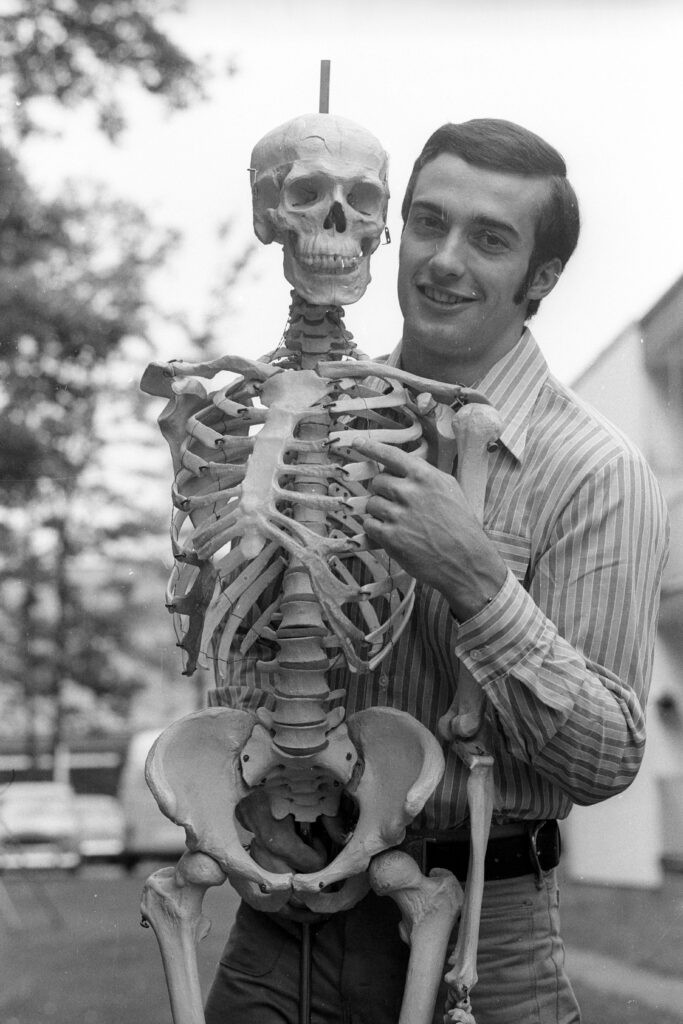
The case of Eberhard Gienger dismantles both myths at once. Gienger was not an East German athlete subjected to a centralized doping program. He was a West German star—1974 world champion on high bar, 1976 Olympic bronze medalist, inventor of the Gienger release, and later a member of the Bundestag (the lower house of the German federal parliament)—and decades after his competitive career ended, he acknowledged using anabolic steroids. His admission unsettles the comfortable boundaries of doping history. Doping in gymnastics was not impossible. And it was not uniquely Communist. It was, instead, embedded in a broader landscape of sports medicine, scientific authority, and permissive norms that transcended Cold War divides.

Eberhard Gienger
Categories
Doping East Germany FIG Leadership WAG

Clearing Their Names: Three GDR Gymnastics Figures in a New Germany

When the German Democratic Republic collapsed in 1990, thousands of coaches, doctors, trainers, and officials from its elite sports system entered a unified Germany that was still trying to understand what, exactly, the GDR had been. Their reputations now depended on how their pasts were interpreted—by newspapers, by athletic federations, by former teammates and rivals, and sometimes by courts. Some sought to defend themselves through interviews. Others tried to fight damaging statements in court. Still others discovered that defending themselves was complicated by missing documents, conflicting testimony, or shifting expectations in a country still learning to read its own history.

Three figures from GDR gymnastics—Ellen Berger, Klaus Köste, and Gudrun Fröhner—each confronted the same problem: how to assert their own account of the past in a new Germany where the rules, the evidence, and even the moral categories were changing under their feet. Their cases did not follow the same path, nor did they end in the same place. But all three illustrate how difficult—and sometimes impossible—it was to clear one’s name in the 1990s and beyond.

Ellen Berger, 1985
Categories
Doping East Germany MAG

Code Name “Rose”: The Double Life of East Germany’s Head Coach

In December 1991, a Swiss magazine profiled a new coach at a gleaming gymnastics center in Liestal. Dieter Hofmann, they wrote, was a “coaching legend”—his East German athletes had won 52 Olympic, World, and European Championship medals. Now he was in Switzerland, “baking smaller rolls,” teaching part-time at a vocational school. The profile mentioned, briefly, that some had blocked his appointment to lead unified Germany’s team because of his past. But it went no further.

Over the next decade, two sets of articles would tell a fuller story. The first, released in 1993, documented Hofmann’s work as Stasi informant “Rose”—reporting on colleagues, providing a safe house for covert operations, and derailing careers to demonstrate loyalty to the East German state. The second, revealed in 2003, showed his role overseeing athletes during secret experiments with psychotropic drugs, including an incident where a gymnast lost control and had to be carried from the hall. Together, they painted a portrait of a man embedded in two overlapping systems of control: one focused on surveillance and political compliance, the other on pharmaceutical performance enhancement. Both required absolute secrecy. Both treated athletes as instruments of state policy rather than individuals with rights of their own.

Trainer Dieter Hofmann Schweiz
Categories
Doping East Germany WAG

Blue Pills and Broken Spines: How East Germany Destroyed Its Young Gymnasts

Rotterdam, October 1987. Dörte Thümmler stood before the uneven bars in Amsterdam’s Ahoy Hall, knowing what she had to do. Her teammate Gabriele Fähnrich, the reigning world champion, had only just returned to competition after a long injury layoff and had fallen during compulsories. Now the fifteen-year-old Berliner—just 1.47 meters tall and 36 kilograms—was suddenly East Germany’s best hope for gold. She executed her routine flawlessly: the Tkatchev, the Deltchev, the toe-on front with a half turn, landed with just a small shuffle backward. When the score appeared—a perfect 10—she had won the world championship title on uneven bars, sharing the gold with Romania’s Daniela Silivaș. Dutch journalists were stunned. “Thümmler?” one said. “In a poll of favorites, her name would not have appeared on a single ballot.” In claiming this title, she continued a long tradition that included Maxi Gnauck and Fähnrich herself.

Thirty years later, Dörte Thümmler spoke publicly for the first time about what that victory had cost. At a press conference held by the Doping Victims Assistance Association in April of 2018, she stood alongside other former gymnasts, all of them bearing similar damage. For eight years by that point, she had been unable to work, living on a full disability pension. Medical specialists at Berlin’s Charité hospital had diagnosed her with Chronic Fatigue Syndrome. She had only thirty percent of the strength typical for people her age. She was forty-six years old.

What Thümmler and the others revealed that day was something far worse than simple overtraining. Across East Germany’s gymnastics program, young girls had been fed into a system that treated them as experimental subjects rather than children. They trained seven hours a day, six days a week. They lived in boarding schools separated from their families. They were told the pills were vitamins. And when their bodies inevitably broke down—often before they even reached adulthood—they were left to live with permanent disabilities.

Dörte Thümmler, 1988 Olympics
Categories
1981 Doping East Germany MAG World Championships

1981: The Vault Champion Who Vanished after a Positive Doping Test

In November 1981, Ralf-Peter Hemmann stood in a packed Moscow arena, preparing for his second vault in the apparatus finals of the World Championships. His first had been flawless—a handspring front with a half twist that stuck to the mat as if pulled by a magnet. The judges awarded him a perfect 10. Now came his Tsukahara. He landed it cleanly. Score: 9.95. The twenty-two-year-old auto mechanic from Leipzig was the world champion.

“After the 10, I still wasn’t sure,” he told reporters afterward, beaming. “But then when the second vault went so well…” He didn’t finish the sentence. He was being called to the podium, where thousands of East German tourists in the sold-out hall cheered for their new champion. It was the kind of victory that makes careers, the kind that gets remembered in record books. The days before had been the hardest, Hemmann said—sleepless with nerves. But in the competition itself, he’d been completely calm.

Then, without warning, he disappeared.

Not literally—Hemmann was still alive. But his gymnastics career ended abruptly in the spring of 1982, with no explanation, no farewell interview, no public acknowledgment of what had happened. One day, he was preparing for a competition in the Netherlands. The next, a club official told him his competitive career was over, effective immediately. The press never called again.

For years, people whispered theories while the official story was buried in Stasi files that wouldn’t surface until after reunification: Hemmann had tested positive for anabolic steroids at that same Moscow World Championship where he’d won gold. The Soviets had caught him, covered it up, and allegedly used the secret as leverage against East German sports officials. Rather than face an international scandal, those officials made Hemmann himself disappear—forced into retirement with his title mysteriously intact.

Thirty years later, Hemmann still didn’t have answers. His case raises troubling questions about how Cold War sports politics may have enabled cover-ups at the highest levels. Rumors of the positive test circulated among judges even during the competition itself. Yet the positive test result was never published, and the International Gymnastics Federation never stripped him of his medal. We may never know for certain why.

Here’s a translation of Sandra Schmidt’s article on Hemmann’s case.

Categories
Doping East Germany MAG WAG

“You Don’t Treat Children Like That”: The Pharmaceutical Manipulation of East German Gymnasts

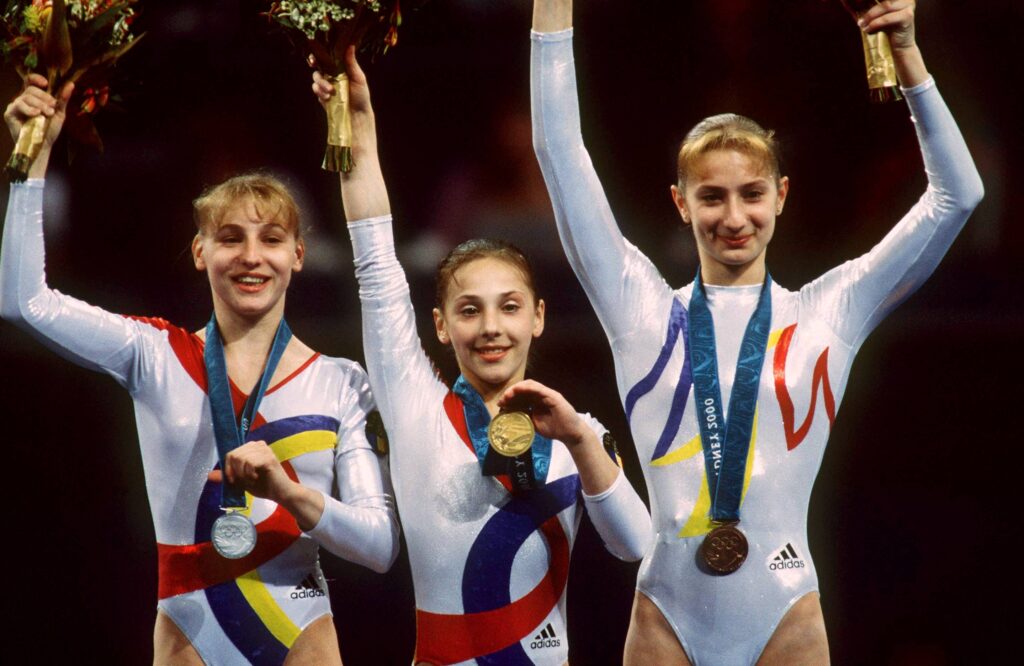
The roar in Seoul’s Olympic Gymnastics Hall is deafening as Dagmar Kersten dismounts from the uneven bars. It’s September 1988, and the seventeen-year-old has just executed an exquisite routine. Despite a small hop on the landing, a 10.0 flashes on the scoreboard. But perfection isn’t enough. Romanian Daniela Silivaș, who built an insurmountable lead after compulsories and optionals, takes gold with a perfect total of 20 points. Kersten’s silver is still East Germany’s highest finish in women’s gymnastics at these Games, confirming that the legacy of Karin Janz and Maxi Gnauck is still alive and well.

What Kersten doesn’t know—what she won’t discover until years later, after the Wall falls and the archives open—is that she’s been part of an experiment. The pills her coaches gave her weren’t just vitamins. She was a test subject in one of the most sophisticated pharmaceutical programs ever applied to athletes, a system that treated her body as a laboratory and her performance as scientific data.

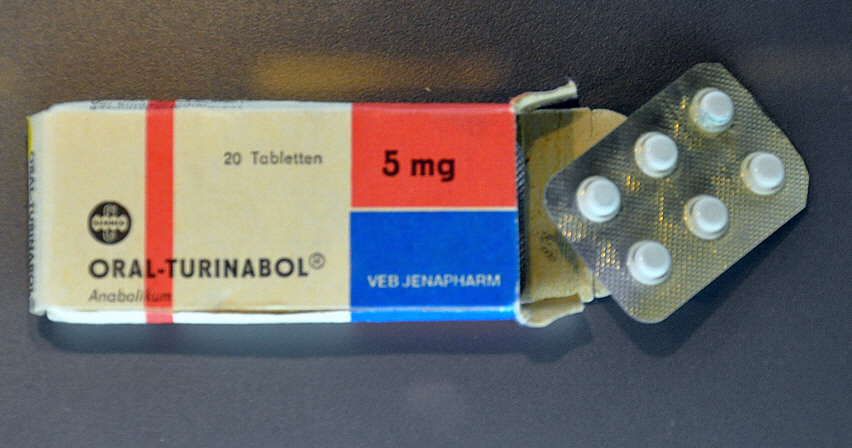
“I would never have thought that something like that existed among us—it was outrageous,” Kersten would later say. “That’s why the whole process of confronting it was so shocking, as well. That’s when you realized that you had been used for such things. I had always seen the people we trusted as people who saw us as human beings. You don’t treat children like that; it’s the very last thing anyone in a position of trust should exploit. It’s also outrageous that some of this is still being covered up today. It’s a slap in the face to those who are now reading their files from back then. To deny that such things were possible at the time is an insult. There’s more than enough evidence. People always say, ‘We’d rather not talk about that.’ It’s such a shame that this topic can’t simply be discussed openly. No one wants to face it. No one wants to engage with the gymnasts of that time. We were given psychotropic drugs and OT [Oral-Turinabol]. Some of these substances were even tested by the NVA [National People’s Army]. They were supposed to help gymnasts who fell react more quickly. Anabolic steroids weren’t the only things they could give.”[1]

For decades, the gymnastics world believed its sport stood apart from the chemical manipulations reshaping track and field, swimming, and weightlifting. Doping, the conventional wisdom went, was incompatible with a discipline requiring grace, balance, and split-second coordination. Steroids built bulk; gymnastics required mobility. The logic seemed airtight.

But the archives of the Ministry for State Security tell a different story.

Dagmar Kersten, 1988 Olympics. Kersten has been the most vocal East German gymnast on the subject of doping.

Note: This article is not intended as medical advice, nor does it endorse the use of steroids. It is a historical account based on a collection of Stasi files.
Categories
1990 Doping Interviews & Profiles USSR

1990: A Conversation with Olga Karaseva – “Imagine Yourself a Creator”

Olga Karaseva won Olympic gold in 1968, became world champion in 1970, and won medals on every event at the 1969 European Championships—taking silver in the all-around and gold on floor. Her career blazed briefly but brilliantly, embodying the elegance that made Soviet gymnastics compulsory viewing in those years. But by twenty-three, she was finished competing and felt, as she puts it, that “no one needed me anymore.”

In this 1990 conversation with sports writer Gennady Semar, Karaseva examines what the Soviet system did to athletes: how it created champions and then abandoned them, how it corroded the moral foundations that once made sport meaningful. She speaks with unusual candor about the collapse of purpose after competition ends, the loss of expertise as former athletes drift into bureaucratic roles, and the absence of any social safety net once the applause stops. Yet she’s not bitter. She counts herself fortunate—her coaches were “people of high human qualities,” and she escaped both the coercive “stick” of brutal training and what she calls the “chemicalization” of sport, a process she describes as “the destruction of the soul” that ruins both health and integrity.

For Karaseva, the crisis isn’t only institutional or pharmacological—it’s spiritual. Athletes, she insists, must be understood not as expendable performers but as whole people whose cultural development, imagination, and artistry are inseparable from their physical achievements. To save sport, she argues, means recognizing athletes as creators, not gladiators.

Note: Olga Karaseva passed away at the end of October at the age of 77.

Olga Karaseva, 1968