In 2008, Mike Walker, a cybersecurity specialist, uncovered cached spreadsheets from the Chinese government’s official sports website. At the time, attention centered on He Kexin and the birthdate listed in those documents: January 1, 1994. But she was not the only gymnast whose age shifted over time. Huang Qiushuang’s birthdate did as well. In fact, those same documents show her age changing.
But there is another wrinkle: Huang Qiushuang may have been even younger than the dates listed in those spreadsheets. At least, that was the view of some Chinese journalists.
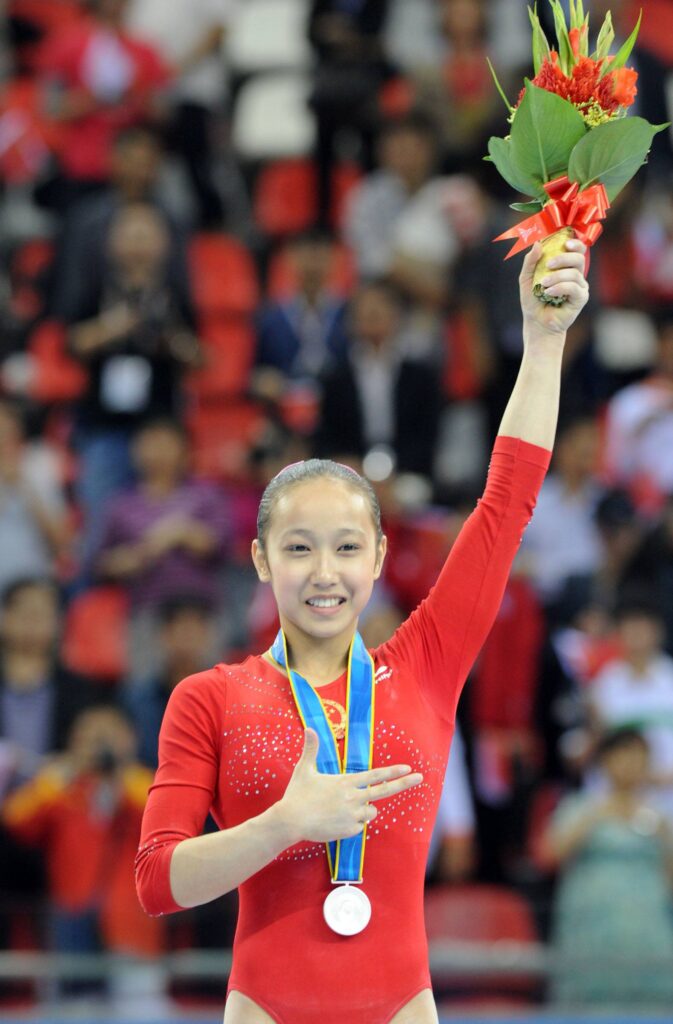
The Spreadsheets
In the cached 2005 registration spreadsheet found on the General Administration of Sport of China website, Huang Qiushuang’s birthday was listed as May 28, 1993.
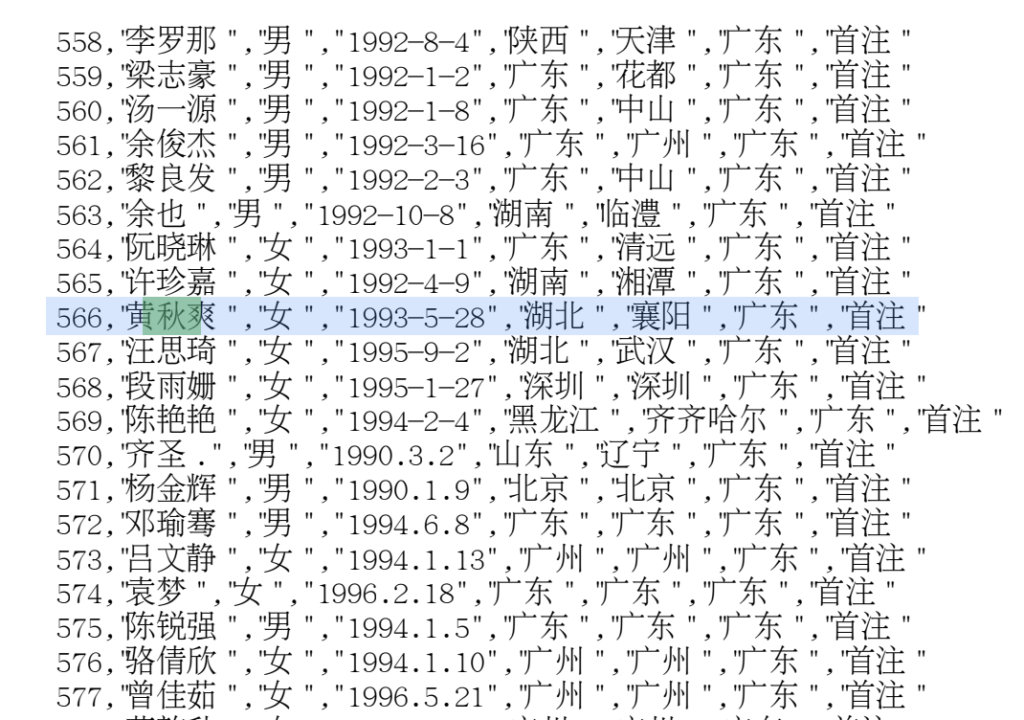
That would have made her ineligible for senior competition until 2009. Yet by 2007, her birth year had shifted back by one year: she was now listed as born on May 28, 1992, making her eligible for senior competition in 2008.
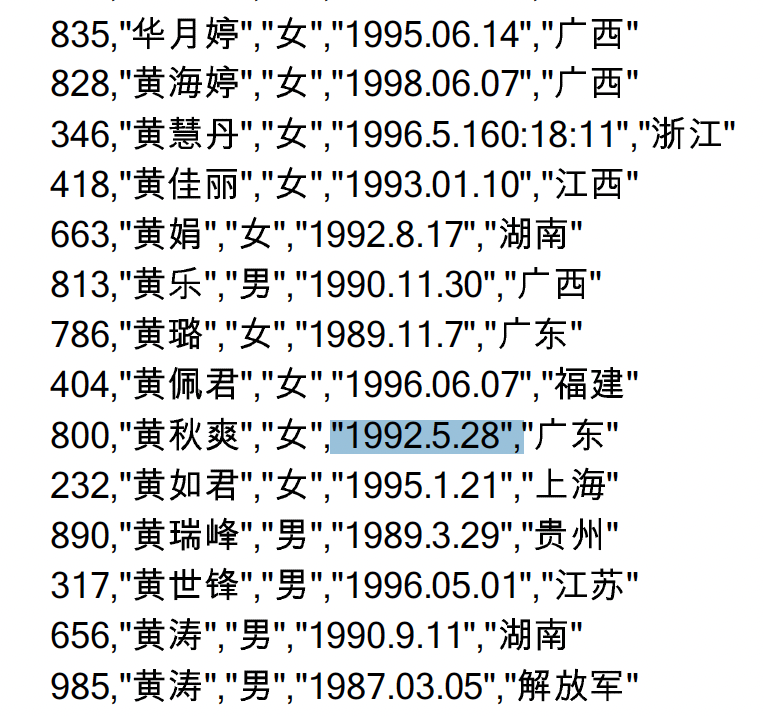
But there is reason to believe that neither date was correct. In 2009, some journalists appeared to be working from an entirely different birth year when describing her age and personal history.
15 in 2009
With a 1992 birth year, Huang Qiushuang would have been 17 in 2009. With a 1993 birth year, Huang Qiushuang would have been 16 in 2009. But that’s not the age that Chinese journalists used in 2009 during the National Games. Many reported that she was 15 in September 2009, which would imply a 1994 birth year.
From the Qianjiang Evening News:
Young Gymnasts Challenge the Queens in Women’s All-Around; Yang Yilin Faces Stiff Competition
September 19, 2009 | Source: Zhejiang Online – Qianjiang Evening News
Special correspondent report from Jinan — At the Beijing Olympics, the women’s all-around gold medal went to America’s Nastia Liukin. But who is China’s gymnastics queen? Tonight, that question will be answered.
The biggest draw of the National Games women’s all-around is naturally the showdown among Beijing Olympic gold medalists. Apart from Cheng Fei, who has withdrawn from the National Games due to injury, and Li Shanshan, who failed to advance to the all-around final, all four Beijing Olympic champions — Jiang Yuyuan, Yang Yilin, He Kexin, and Deng Linlin — will take the floor tonight.
Just who among these four is the strongest? Everyone wants to know.In the qualifying round, Yang Yilin placed third, while He Kexin and Deng Linlin finished sixth and seventh respectively; Jiang Yuyuan, who was not in good form, placed only fourteenth. As the bronze medalist in the women’s all-around at the Beijing Olympics, Yang Yilin is the most competitive of the group — although she fell from the balance beam in the team event, her overall form has been strong.
However, Yang Yilin will face a powerful challenge from her Guangdong teammate Huang Qiushuang. The fifteen-year-old Huang topped the qualifying round and turned in an outstanding performance in the team competition as well. When she is on, her ability may even surpass Yang Yilin’s — though her weakness is inconsistency. Also a genuine contender to take gold from the Olympic champions is Shanghai’s Sui Lu, who not only placed second in qualifying but helped Shanghai claim the team title in a remarkable upset. He Ning of Zhejiang, this year’s national championships all-around winner, is another strong medal contender, with consistency as her defining strength.
By this paper’s correspondent, Shi Yifang
体操女子全能小花挑战金花 杨伊琳遭遇强力挑战
本报济南专电 在北京奥运会上,体操女子全能冠军被美国队的柳金获得,那谁是中国的体操皇后呢?今晚,这一答案就将揭晓。
全运会女子全能的最大看点,当然是北京奥运会冠军得主之间的较量。除了因伤退出全运会比赛的程菲,以及没能进入全能决赛的李珊珊,江钰源、杨伊琳、何可欣、邓琳琳这4名北京奥运会冠军均将在今晚亮相。
这4人究竟谁更强?相信大家都想知道。
在资格赛中,杨伊琳排名第3,何可欣和邓琳琳分列第6和第7,江钰源则状态不佳,仅排名第14。作为北京奥运会女子全能铜牌得主,杨伊琳最具有竞争力,虽然在团体赛中,她从平衡木上掉了下来,但其状态很不错。
不过,杨伊琳将遇到其广东队队友黄秋爽强有力的挑战。年仅15岁的黄秋爽排在资格赛第一名,她在团体赛中也表现得极其出色。倘若她发挥稳定,其实力甚至在杨伊琳之上,尽管其软肋就是不够稳定。同样有希望从奥运冠军手中抢夺金牌的还有上海队的眭禄,她不但在资格赛中名列第二,还帮助上海队奇迹般地夺得了团体冠军。今年全国锦标赛全能冠军、浙江队的何宁也是金牌的有力争夺者,她的最大特点就是稳定。本报记者 史一方
Archived here
And from the Southern Metropolis Daily:
[…]
Too nervous — Young Qiushuang in tears at the sidelineThe intensity of the National Games is no less than any world-level competition, and for young Guangdong gymnast Huang Qiushuang — experiencing this kind of arena for the first time — the nerves proved too much. She had qualified first, but finished fifth. As the top three mounted the podium, Huang Qiushuang walked out of the mixed zone and burst into tears.
Huang Qiushuang is fifteen years old, born in Xiangfan, Hubei. She joined the Shenzhen sports brigade in 2003 and was selected for the national team in 2007. She won the women’s individual all-around at this year’s Japan Cup. In the current National Games qualifier, she had also advanced to the all-around final in first place. The sweet-faced Huang Qiushuang is currently one of the national gymnastics program’s priority development prospects. However, a left foot injury means she will miss October’s World Championships in London. At the current National Games venue, women’s head coach Lu Shanzhen had already taken the unusual step of explaining to the media why she would not be sent to Worlds; the care taken over her is plain to see.
In both the team qualifier and the team final at these National Games, Huang Qiushuang competed all four events and was the most consistently reliable performer, but in the all-around final she made a major error on floor exercise, her strongest event, with both feet going out of bounds on a tumbling pass, instantly dropping her out of the top three. “I was quite nervous mentally,” she said afterward, full of regret. “Everyone’s difficulty is about the same; the competition is just so fierce. I’ll have to see how the individual event finals go.”
When the conversation turned to the World Championships she would not be attending, Huang Qiushuang — already looking crestfallen — immediately began to cry. “After the National Games,” she said, “I’ll have to rest and let the injury heal.”
Southern Metropolis Daily, September 20, 2009. Special correspondent Xu Xianqiang, reporting from Jinan.
太紧张 小秋爽泪洒场边
全运会的激烈程度丝毫不亚于任何世界大赛,第一次置身于这种大场面下的广东小将黄秋爽也不免感到紧张。她以资格赛第1的身份晋级,最终仅排名第5。前三名在领奖时,走出混合区的黄秋爽不禁失声痛哭。
黄秋爽今年15岁,出生于湖北襄樊,2003年进入深圳体工队,2007年入选国家队,曾在今年的日本杯体操赛上获得女子个人全能冠军。在本次全运会资格赛上,她也以头名的身份晋级全能决赛。长相甜美的黄秋爽也是目前国家体操队重点培养的新人,不过由于左脚有伤,她将缺席10月份在伦敦举行的世锦赛。在本次全运会赛场,女队主教练陆善真还特意向媒体解释不派黄秋爽出征的原因,对她的保护与器重可见一斑。
本次全运会的团体资格赛和决赛中,黄秋爽都比满四项,整体发挥也最为稳定,但决赛中,她在自己的强项自由操上出现重大失误,跳跃时双脚出界,这让她一下子掉出了前3。“心理比较紧张,大家动作难度都差不多,竞争太激烈了。”赛后黄秋爽充满了遗憾,“接下来就看单项的了。”
说到无缘参加的世锦赛,本就一脸伤感的黄秋爽顿时哭了起来:“全运会之后,我就要养伤了。”
Archived here.
From Dazhong Wang (大众网), Shandong’s official provincial news portal:
[…]
Huang Qiushuang — Mastering the Beam Is the KeyIn the qualifying standings, 15-year-old Guangdong gymnast Huang Qiushuang put in a striking all-around performance. Her technical range is relatively well-rounded — vault, uneven bars, and floor are all strengths — and if she can deliver a stronger showing on balance beam, the pressure on both Yang Yilin and Sui Lu will intensify further.
In 2006, at the age of 12, she won the all-around title at the National Youth Championships, and at the 2009 National Gymnastics Championships she took the all-around silver. Huang Qiushuang is a forceful competitor; she has been in good form at these Games, and may well form a two-pronged Guangdong attack alongside Yang Yilin to lock up the gold medal.
黄秋爽 走好平衡木是关键
在资格赛排名里,来自广东队的15岁选手黄秋爽在全能项目上表现十分抢眼,她技术相对来说比较全面,跳马、高低杠和自由操都是她的强项,如果她能在平衡木上发挥更好一些的话,估计杨伊琳、眭禄的竞争压力会进一步增加。
2006年她12岁时,就获得过全国青年锦标赛全能冠军,2009年的全国体操锦标赛她获得了全能亚军。黄秋爽的冲击力十分强,这次全运会她状态不错,或许她将与杨伊琳形成双保险,锁定这枚金牌。
Archived here.
12 in 2006.
15 in 2009.
The article clearly points to a 1994 birth year.
If that was indeed her true birth year—and many publications thought it was—Huang Qiushuang’s first major senior accomplishments came in 2010, when she would have been 16. At the World Championships that year, she won team bronze, and at the Asian Games, she swept vault and team gold while adding silver in the all-around and on uneven bars. The following year, at 17, she returned to the World Championships to claim bronze in both the team and uneven bars events.
In 2008, some questioned the authenticity of those cached spreadsheets. Bruno Grandi, for instance, called them “forged” or “fake” online documents. Huang Qiushuang’s case, however, suggests another possibility: that some gymnasts may have been even younger than the dates listed there, and that certain birthdates may have been revised more than once. In her case, the apparent progression was from 1994 to 1993 in the 2005 registration, and then from 1993 to 1992 in the 2007 registration.
Huang Qiushuang’s case suggests that the cached spreadsheets may not have marked the outer limits of the problem so much as captured it midstream. The documents were widely treated as evidence of age falsification — proof that gymnasts had been made older on paper than they really were. That was true. But for some gymnasts, the falsification may have predated the spreadsheets themselves. By the time Huang Qiushuang appeared in the 2005 registration, her birth year appears to have been moved forward at least once. The 2007 registration moved it forward again. The spreadsheets did not preserve a clean starting point; they preserved a process already underway.
The number of other gymnasts who shared that history remains unknown.
Appendix: A 2011 Profile of Huang Qiushuang
Gymnastics Beauty Huang Qiushuang: A Carefree Soul Who Gets Nervous, Prefers Cross-Stitch to Shopping
2011-04-19 Source: NetEase Sports
During the Spring Festival, while people across the country were enjoying the long holiday, the gymnastics team had already resumed training from the second day of the New Year. As for the Lantern Festival, in the words of women’s team coach Xu Jinglei: “What kind of holiday is the Lantern Festival, anyway?”
And so, for gymnastics girl Huang Qiushuang, that day was no different from any other ordinary one — into the gym at 8 a.m., training until 12:30; back on the floor at 2 p.m., finishing close to 7; returning to the dormitory for treatment, occasionally watching a little television, then off to sleep.
What looked like a grueling day was merely a snapshot of her more than ten years of training.
“Don’t you ever find it tedious?”
The young girl smiled and answered earnestly: “It is tedious, but when you have a goal, the feeling changes. Because every session of training moves you one step closer to that goal.”
The Origins: Latin Dance and Gymnastics
Huang Qiushuang is beautiful, with delicate features. Everyone agrees on that. But her performances in competition are even more breathtaking, her expressiveness outstanding. This can be traced back to an experience from her childhood.
Huang Qiushuang was born in 1992 in Xiangfan, Hubei. Her father worked at a school; her mother ran a small shop. As an only child, she was doted on by her parents. From an early age, little Qiushuang showed a strong flair for performance. In her own self-deprecating words, she was a “show-off for company.” Whenever guests came to the house, she would spring to life, talking, singing, on and on without end.
Because of their daughter’s love of performing, her parents enrolled her in a Latin dance class. Huang Qiushuang took to it immediately and danced with tremendous enthusiasm. Perhaps that experience quietly shaped the expressiveness she would later show on the competition floor.
When she was six, a parent from her dance class mentioned gymnastics in passing, telling Huang Qiushuang, “You’re really suited for gymnastics. You should give it a try.” Huang Qiushuang went to take a look at a gymnastics gym, and at that time, the facility had no apparatus to speak of, just a trampoline net and a foam pit. The little girl found it tremendously fun and fell in love with it instantly.
And so Huang Qiushuang officially began her gymnastics career.
“I suppose I chose it myself. I thought it was fun,” she said with a laugh.
At seven and a half, Huang Qiushuang was selected by the Wuhan Sports Institute. It was then that she truly encountered the harshness of gymnastics training. The physical pain went without saying, but leaving her parents at such a young age and living independently was even harder to bear. During that period, she would often hide away and cry alone, missing her father, her mother, her home.
Gradually, Huang Qiushuang adapted to life on the sports team and to days without her parents beside her, though a sense of loneliness slowly closed in around her. The coaches were strict, and she grew quieter and quieter, becoming somewhat withdrawn.
Nevertheless, with exceptional physical gifts, Huang Qiushuang progressed steadily in gymnastics. In 2003, she was selected by the Shenzhen city team and joined the Guangdong provincial team a few months later. In 2007, she and teammate Yang Yilin were selected together for the national team, entering the roster in preparation for the Beijing Olympics.
Unfortunately, due to an elbow injury, she returned to the Guangdong provincial team at the end of 2007 and dropped out of contention.
During those months back with the provincial team, Huang Qiushuang barely trained at all. On one hand, she was hampered by the injury; on the other, she had suffered a deep psychological blow, missing out on the Beijing Olympics had left her despondent, and she simply could not summon the will to train. When the Chinese women’s team won their gold medal, she sat listlessly in front of the television and watched…
Capsizing in a Shallow Stream
After the Beijing Olympics concluded, Huang Qiushuang was recalled to the national team, training under coach Wang Liming. Having let things lapse for some time, she needed to rebuild from the ground up, which is the most agonizing phase for any gymnast. “The difficulty elements were one thing, but because my conditioning was poor, I was constantly gasping for breath while doing skills — really struggling for air.” The physical exhaustion, combined with the monotony of training, brought Huang Qiushuang to the point where she nearly gave up altogether.
Wang Liming did not give up on her. While arranging for her to learn difficult elements, he also intensified her physical conditioning and strength training.
At the 2009 National Games preliminaries, Huang Qiushuang shone brilliantly, competing 22 times with only two errors, and winning gold medals in the all-around and on uneven bars. In 2010, she represented China at the World Championships in the Netherlands, and in the team qualifying round on uneven bars, she successfully performed the “twisting one-armed 360-degree release” (the twisted Tkatchev), an E-level difficulty element. The skill was subsequently named the “Huang Qiushuang” by the International Gymnastics Federation, making it the 34th gymnastics element in history to bear a Chinese name. In the all-around competition, she finished fourth.
Still, Huang Qiushuang had her regrets. In the uneven bars final, even as her teammate He Kexin was falling, she herself made an unexpected error and could not seize the opportunity.
She then competed at the Guangzhou Asian Games, where in the all-around final she had a higher difficulty score than her teammate Sui Lu, yet again faltered on uneven bars, ultimately taking a silver medal.
“After the World Championships and the Asian Games, I feel I’ve matured a little. I have a better feel for the technical aspects of the skills, and I’m gradually getting a handle on the atmosphere of competition.
But compared to foreign athletes and some of the top competitors, I’ve still competed relatively little. There’s still something missing, I think.”
The string of errors at the World Championships and the Asian Games drew some criticism, but the young athlete did not lose confidence. Instead, she carefully analyzed the reasons behind her mistakes, particularly the perplexing phenomenon of “capsizing in shallow water”: the hard skills had gone through just fine, so why was she always stumbling on the simpler elements?
“When we got back from the World Championships, we did some reflection on it. The errors on the small elements probably come from not really thinking about them. Before competing, I’m focused on the big difficulty skills, and I just assume the smaller ones will take care of themselves,” she said.
Carefree, but Prone to Nerves
“Huang Qiushuang really isn’t the way people imagine. It’s not that she has some psychological problem. She’s not an especially sensitive child, not someone who overthinks things,” said coach Wang Liming. It turned out that the Huang Qiushuang we couldn’t see offstage was actually a girl with quite a carefree, easygoing streak.
“Maybe I just fall a little short on the details,” Huang Qiushuang said with a shy smile. In stark contrast to her commanding presence in competition, the Huang Qiushuang of everyday life is a polite, quiet child — not much of a talker. Yet put her among girls her own age, and she will laugh and giggle just like anyone else, getting wild and playing along with the crowd. She just prefers to follow rather than lead, not particularly forward about things. On the rare occasion she offers an idea, it is almost never taken up.
The reporter recalled the first interview with Huang Qiushuang after the Japan Cup in May 2010. She seemed very ill at ease then, answering questions almost one syllable at a time. A colleague nearby joked: “When the reporter asks you a question, you have to answer with at least twenty characters, you know.” A year on, Huang Qiushuang had improved considerably, smiling from time to time during conversation with reporters, speaking up a little more readily.
“I feel like I’ve improved, too. I’m not as nervous seeing you all anymore, heh,” she said with a smile.
On Sundays, the girls on the gymnastics team like to go shopping together. New World and Hongqiao Market are their usual haunts. But Huang Qiushuang says she rarely goes out: partly out of deference to the coach’s schedule, and partly because she has another hobby: cross-stitch embroidery. “I used to do a lot of small pieces and give them all away as gifts. Now I’m working on a very large one, and I can only get to it for a little while on Sundays,” she said.
“Cross-stitch is very demanding work, isn’t it — for someone like you?” the reporter teased. The girl laughed: “Actually, I’m quite good at it!”
Over more than a decade in gymnastics, she had accumulated countless fans, and whenever Huang Qiushuang competed, her fans would rush to cheer her on, following her closely. This made her feel deeply content and deeply moved.
In 2011, Huang Qiushuang and her teammates would set out on a new journey. She said that having missed out on Beijing, she would not keep missing out. “My goal is the London Olympics, and in the near term, this year’s World Championships. I haven’t been satisfied with any of my past competitions. I hope to have one that I am truly satisfied with,” she said.
“If you’re given another chance to compete, you’ll definitely seize it!”
“Yes!” Huang Qiushuang gave a firm, emphatic nod.
(Written by Wang Xiangna)
* * *
体操美女黄秋爽:大咧咧爱紧张 不爱逛街爱十字绣
2011-04-19 来源: 网易体育
春节,当全国人民都在享受长假的时候,体操队却从初二就恢复了训练。至于元宵节,用女队教练员徐惊雷的话说,”元宵节算什么节日啊”?
于是,这一天对体操女孩黄秋爽来说,和任何一个平凡的日子没有任何不同——早上8点进馆,练到12点半;下午2点到场,接近7点结束;回到宿舍,进行一下治疗,偶尔看一会儿电视,就必须休息了。
看似繁重的一天,只是她十几年训练生涯的一个缩影。
“不会觉得枯燥吗?”
小姑娘笑了,认认真真地答道:”会枯燥,但是有目标,感觉就会好!因为你的每一次训练,都会朝着你的目标前进。”
拉丁舞、体操之渊源
黄秋爽漂亮,五官清秀,这是大家公认的,但她在赛场上的表演更是令人惊艳,表现力极佳,这要追溯到她小时候的一段经历。
1992年,黄秋爽出生在湖北襄樊,爸爸在学校工作,妈妈开了个小商店。作为独生女的黄秋爽备受父母呵护。小秋爽从小就显示了较强的表现力,用她自嘲的话说就是”人来疯”,家里只要来了客人,她就来了劲,讲话啊唱歌啊,没完没了。
因为女儿的”爱表现”,父母为她报名参加了拉丁舞班,黄秋爽非常喜欢,跳得很起劲。或许就是那段经历,对她日后在赛场上的展现起到了潜移默化的作用。
6岁那年,黄秋爽所在舞蹈班的一个家长闲聊,说起了体操,她对黄秋爽说,你很适合练体操的,可以去试试看。黄秋爽就真的去体操馆看了一下,那时的馆里,还没有诸多器械,只有弹网和海绵坑,小姑娘觉得好玩极了,一下子就喜欢上了那里。
就此,黄秋爽正式开始了体操生涯。
“算是自己选的吧,觉得好玩。”她笑着说。
7岁半,黄秋爽就被武汉体院选中,此时的她,才真正见识了体操训练的残酷,身体的苦痛自不必说,小小年纪离开父母,独立生活,更是让她无法接受。那段时间,她总是一个人躲起来哭,想爸爸,想妈妈,想家。
渐渐地,黄秋爽适应了运动队的生活,也适应了没有父母陪伴的日子,然而孤独的感觉也渐渐将她围拢。加上教练比较严厉,她不太多说话,慢慢地变得有点闷。
不过,凭借优异的身体素质,黄秋爽在体操项目上走得比较顺利。2003年,她被深圳市队选中,几个月后就进入到广东队;2007年,她和队友杨伊琳一起入选国家队,进入备战北京奥运会的大名单。
遗憾地是,由于肘关节的伤势,她在2007年年底回到广东队,退出了竞争行列。
回到省队的那段日子,黄秋爽几乎没怎么训练,一方面是伤势的影响,另一方面是心理上的打击,落选北京奥运会让她心灰意冷,训练总是打不起精神。中国女团夺取金牌的那一刻,她蔫蔫地坐在电视机前观看……
小河沟里船翻了
北京奥运会结束后,黄秋爽再次被召回国家队,跟随教练王立明训练。由于此前荒废了一段时间,需要重新恢复,而这也是体操运动员最为痛苦的阶段。”难度是一方面,由于能力不足,做动作的时候总是喘气,喘得很厉害。”身体的疲惫加上训练的枯燥,黄秋爽一度几乎不想练下去了。
王立明并没有放弃,在安排她学习难度动作的同时,还加强了她的素质力量训练。
2009年全运会预赛,黄秋爽大放异彩,出场22次,仅失误两次,拿到全能和高低杠两枚金牌。2010年,黄秋爽代表中国队出征荷兰世锦赛,在团体预赛的高低杠比赛中成功完成”扭掏单臂转体360度(扭掏毕转)”这一E组难度动作,该动作也被国际体操联合会命名为”黄秋爽转体”,成为体操史上第34个以中国人名字命名的动作。全能比赛中,她拿到了第四名。
不过,黄秋爽也有遗憾,那就是高低杠的决赛,她在队友何可欣失误的情况下,竟然也出现了意外失误,没能抓住机会。
随后,她再度出征广州亚运会,这一次,在全能决赛中,难度分高出队友眭禄的她再度失误高低杠,最终拿到一枚银牌。
“世锦赛和亚运会比下来,感觉自己更成熟了一些,对于动作的技术感觉都有点把握,也能逐渐掌握一些场上的气氛。
但跟外国选手、还有一些优秀选手相比,我参加的比赛还少,还是欠了一点吧。”
世锦赛和亚运会的相继失误,让黄秋爽受到了一些质疑,不过小姑娘并未失去信心,而是认真地总结自己失误的原因,尤其是令人费解的”小河沟里翻船”,难度动作都过去了,怎么总在小动作上出现差池呢?
“世锦赛回来,我们也做了一些总结。小动作失误可能在于自己没怎么想,上场之前都想着大的难度动作,小动作就觉得顺下来就可以了。”她说。
大咧咧,爱紧张
“其实黄秋爽真的不像大家想的那样,是出现了什么心理问题。她不是特别细腻、会想很多的孩子。”教练王立明说。原来,我们所看不见的黄秋爽竟是一个有几分大大咧咧的姑娘。
“我可能就是细节上还差了一点点。”黄秋爽害羞地笑了笑。和场上极具气场的感觉不同,生活中的黄秋爽是个礼貌的孩子,不爱讲话,不过,要是遇上同龄的女孩儿,她也一样会嘻嘻哈哈,和大家一起疯一起玩,她只是喜欢跟在别人后面,不那么主动而已,偶尔出个主意,却几乎没有被采纳过。
还记得2010年5月日本杯比赛结束后,记者第一次采访黄秋爽,当时的她显得很局促,对于我的问题,几乎是一个字一个字地往外蹦。一旁的同行还开玩笑对她说:”姐姐问你问题,你至少要回答到20个字哦。”一年过去了,黄秋爽进步了许多,和记者聊起来会不时地笑一笑,说话也主动了些。
“我也觉得自己进步了,看见你们没那么紧张了,呵呵。”她笑笑说。
周日,体操队的小姑娘喜欢搭伴逛街,新世界和红桥市场是她们常去的地方,但黄秋爽说,她很少出门,一方面是听从教练的安排,另一方面,她还有一个爱好——绣十字绣。”以前绣过很多小的,都送人了。现在在绣一副很大的,就只能周日绣一会儿。”她说。
“绣十字绣要求很细致啊,你?”记者开着玩笑,小姑娘一笑,”其实,我还绣得挺好的!”
十几年的体操生涯,无数的粉丝,每到黄秋爽参赛,粉丝们总是会赶来加油助威,给她关注,这让她很知足,也很感动。
2011年,黄秋爽和队友们又将迎来新的征程,她说,错过了北京,她不会继续错下去。”我的目标,是伦敦奥运会,近期的就是今年的世锦赛。以前的那些比赛,我都不太满意,我希望能有一场满意的。”她说。
“如果再给你一次比赛的机会,你一定能抓住!”
“嗯!”黄秋爽重重地点了一下头。(文/王向娜)
Appendix B: The Cached Documents
More on Age