When Sui Lu finished second on balance beam at the 2012 Olympics, she was widely described as a 20-year-old. For example, Jiefang Daily, one of Shanghai’s leading newspapers, wrote:
At age 20, a female gymnast must overcome even more obstacles. Sui Lu’s performances at these Olympics had already proven her ability.
20岁,对一名女子体操运动员来说,需要克服更多的困难。眭禄在本届奥运会的表现,已经证明了自己的实力。
But was Sui Lu really 20 in 2012? There’s a significant paper trail that suggests she was only 19 in London.
In 2008, cybersecurity specialist Mike Walker found cached spreadsheets from China’s official sports administration website. The discovery drew immediate attention to He Kexin, whose listed birthdate — January 1, 1994 — placed her under the eligible age for the Beijing Games. But He Kexin was not the only gymnast whose documented age appears to have changed. Sui Lu’s had too.
In 2005, Sui Lu was registered with a birthdate of April 1, 1993.
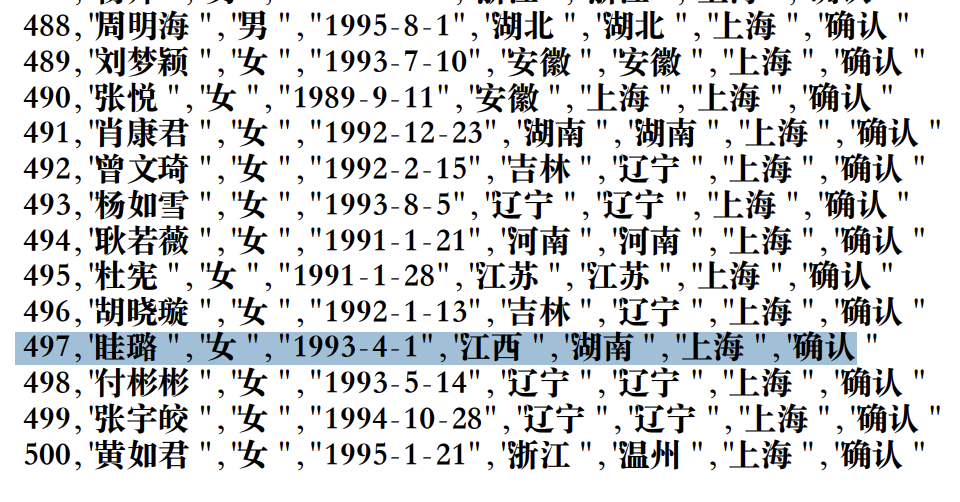
But she did not compete internationally using a 1993 birthdate. Instead, her registered birth year was moved back from 1993 to 1992 — enough to clear the age threshold for the 2008 Olympics. In the end, she was not selected for the Beijing team, but her FIG registration reflected the revised date, even as some Chinese journalists continued to use a 1993 birthdate to calculate her age.
Before the 11th National Games of China in 2009, Dazhong Wang (大众网), Shandong’s official provincial news portal, published a preview of the gymnastics competition, naming Sui Lu as one of the leading contenders:
Sui Lu — Will She Create Another Miracle?
Sixteen-year-old Sui Lu is the leading figure of the Shanghai women’s team and the core around whom Shanghai claimed the National Games women’s team title. Back in 2007, Sui Lu’s dazzling performances on floor and beam helped Shanghai’s women recapture the national women’s team championship — a title the city had been without for 27 years. This time, she again led Shanghai to an extraordinary result, with her outstanding performance in the final event, floor exercise, proving decisive.
In the National Games women’s all-around qualifying round, Sui Lu finished second. Her strengths are balance beam and floor, while vault and uneven bars are relatively weaker. In 2008, at an international gymnastics invitational in Houston, she claimed the women’s all-around gold medal.
Sui Lu is something of a late bloomer — her physical attributes are not especially outstanding, and her path to this point has been a good deal harder than most. Originally a girl from Hunan in every sense, she did not formally transfer to Shanghai until 2000, and only entered the national team in 2004. She ultimately did not make the cut for last year’s Beijing Olympics. The National Games represent an ideal stage for her to demonstrate her abilities more fully.
眭禄 或将再创奇迹
今年16岁的眭禄是上海女队的领军人物,也是这次上海女队夺取全运会女团冠军的核心。2007年眭禄就用自由操和平衡木的惊艳表现,帮助上海女队重夺阔别27年之久的全国体操女团冠军,而这次她再次率领上海女队创造奇迹,关键就是眭禄在最后一项自由体操项目上的出色发挥。
在全运会女子全能资格赛中,眭禄排名第二。她的强项是平衡木和自由操,在跳马和高低杠稍微逊色一些。2008年在美国休斯顿举行的国际体操邀请赛上,眭禄就曾斩获女子个人全能金牌。
眭禄属于大器晚成的选手,由于身体条件并不出众,她的成长经历相对坎坷许多。原本是标准的湘妹子的她,直到2000年才正式转会到上海。她2004年才进国家队,去年北京奥运会最终没能入围。这次全运会比赛,是她进一步展示自己才能的绝好舞台。
Archived here.
If her FIG-registered 1992 birth year were accurate, Sui Lu should have been 17 at those Games. Yet the article explicitly described her as 16.
This was not an isolated reference. After the National Games, iFeng ranked the top ten breakout stars of the competition and included 16-year-old Sui Lu:
3. Sui Lu (Shanghai), 16 years old, women’s gymnastics
With a women’s team gold medal, floor exercise gold, and two bronze medals on balance beam and in the individual all-around, Sui Lu shone brilliantly at the National Games and added considerable weight to Chinese women’s gymnastics. She has already earned the opportunity to compete at the World Championships, and although her results there were only average, the still-inexperienced Sui Lu is clearly an uncut jade worth careful polishing.
三、眭禄(上海),16岁,女子体操
女团冠军、自由操冠军、平衡木和个人全能两块铜牌,眭禄在全运会上光芒四射,也给中国女子体操“增重”不少。她已经获得在世锦赛上出战机会,尽管本届成绩一般,但欠缺经验的眭禄显然是块值得好好磨一磨的“璞玉”。
Archived here.
That “uncut jade” won floor bronze at the 2009 World Artistic Gymnastics Championships. If these documents are correct, she was 16—not 17—in London.
She would have been 17—not 18—when she won four gold medals at the 2010 Asian Games and another world bronze that same year.
She would have been 18—not 19—when she won beam gold, floor silver, and team bronze at the 2011 World Artistic Gymnastics Championships.
And she would have been 19—not 20—when she claimed Olympic silver in London.
By Chinese standards, she was labeled a “late bloomer.” That phrase merits a closer look. She entered the national team at eleven, which was considered relatively late. Her biggest international successes came after 16, an age when many Chinese women gymnasts of that era were thought to be nearing decline. A 2004 academic article even suggested Chinese gymnasts typically peaked at 15 and retired around 17.5. If the spreadsheet and newspaper dates are right, then Sui Lu did more than win medals; she challenged the assumptions about when Chinese gymnasts reach their peaks.
Notes:
1. Here is a quote from the academic article mentioned above:
In 1997, the International Gymnastics Federation established a minimum age of 16 for women competing at the Olympic Games. China’s female gymnasts begin training at around age 5, typically reach peak performance at around 15, quickly arrive at the apex of their results, and retire 2–3 years later. They peak early and retire early — cases have occurred in which an athlete returns from her first major world competition having just won gold, only to retire immediately upon arriving home, which is a genuine waste. According to a survey by Su Jianliang and colleagues, the average age at which China’s female gymnasts achieve their best results is 15.20, while the average retirement age is 17.57. In other words, the contribution period from peak result to retirement averages a mere 2.37 years — a flash in the pan. Coaches and athletes invest enormous effort over roughly ten years of training before finally forging a capable competitor, yet the contribution period after peak results amounts to only 2.37 years. The athletic lifespan is already very short; the contribution period is shorter still. It is only within this 2.37-year window that an athlete can participate in major world competitions, and her opportunity to compete at the Olympic Games amounts to one appearance at most.
Wang Kangle, Chen Ruiqin, Tai Chongxi (School of Physical Education, Suzhou University, Suzhou, Jiangsu, 215021), “Reflections on Extending the Athletic Longevity of China’s Female Gymnasts,” (对延长我国女子体操运动员运动寿命的思考), Journal of Beijing Sport University, 27.5, 2004
1997年国际体联规定参加奥运会女子参赛年龄最低为16岁。我国女子体操运动员从5岁左右开始训练往往在15岁左右就出成绩并很快就达到运动成绩的巅峰期2~3年后就退役了出成绩早退役也早出现了第一次参加世界大赛刚夺得金牌回国就退役的现象实为可惜。据苏俭亮等调查得出:我国女子体操运动员取得最好成绩的平均年龄为15.20岁退役平均年龄为17.57岁[2]。即从最好成绩到退役的贡献年限平均只有短短的2.37年可谓昙花一现。教练员与运动员辛辛苦苦投入训练经过10年左右终于磨练成才但出成绩后的贡献年只有2.37年运动寿命非常短其贡献年限更短。只有在其2.37年这一时间段内可以参加世界大赛而参加奥运会比赛的机会最多只有1次。由此可见我国进入专项训练的运动员人数本来就少尽管训练的科学性高、成才率高于其他体操强国但运动寿命短、贡献年限短、成本高造成了非常严重的体操人力资源的浪费制约着我国女子体操运动技术水平的迅速提高。假如我国也有几位同霍尔金娜那样运动寿命长的优秀运动员则我国女子体操近几年世界大赛团体成绩也不会老停留在第3~4名次上了。假如霍尔金娜也像我国运动员一样只有约3年的贡献年限寿命其最多只夺得7枚金牌也不会有今天的辉煌成就。我国只有极个别运动员运动寿命较长如刘旋5岁开始训练到了21岁还参加悉尼奥运会并夺得平衡木金牌后才退役参加了2届奥运会为国家做出了很大的贡献。因此我国不仅要训练运动员快出成绩而且更重要的是要延长运动员的运动寿命才能改变现状、迅速提高我国女子体操运动竞技水平才有可能战胜美国、罗马尼亚队而夺取桂冠也是为夺取各种世界大赛金牌为祖国赢得更大荣誉而具有十分重要的战略意义。
2. For comparison, Jiang Yuyuan entered the national team in 2003. If her official FIG registration (1991) is correct, she would have been 12 at the time, later even than “late bloomer” Sui Lu. If the birthdate embedded in her national ID registration (1993) is correct, Jiang Yuyuan would have turned 10 in 2003.
3. As cases like Sun Xiaojiao, Jiang Yuyuan, and Huang Qiushuang suggest, gymnasts’ birthdates could shift more than once. Whether 1993 represents Sui Lu’s true age or simply one point in a series of revisions is impossible to determine. What can be said, however, is that a substantial body of evidence calls her official 1992 birthdate into question.
Appendix A: Sui Lu’s Silver in London
Sui Lu Narrowly Misses Olympic Gold, But Has Already Defeated Herself and Has No Regrets
August 8, 2012
Source: Jiefang Daily
Author: Chen Hua
She still could not break the curse of the reigning world balance beam champion failing to claim Olympic gold. Shanghai native Sui Lu competed first that evening and, in the balance beam final, lost to teammate Deng Linlin, taking the silver medal.
Four years earlier, 16-year-old Sui Lu was at what many considered the golden age for a women’s gymnast, yet for various reasons she missed out on the 2008 Beijing Olympic Games. She cried over it then. Four years later, Sui Lu again narrowly missed gold, and after the competition, she kept wiping away tears.
Unwilling to Accept It
In apparatus finals, the first athlete to compete is often at a disadvantage. That night, Sui Lu happened to be first up. Although she performed very smoothly and scored 15.500, her difficulty value was 0.1 lower than Deng Linlin’s, so she ultimately had to settle for silver.
After missing gold, tears streamed from her eyes. She was upset with herself.
“We’re all Chinese—whoever wins the title, it’s the same. I just feel regret for myself,” she said. “I’m very satisfied with my score, but Deng Linlin truly performed better than I did.”
It Was Not Easy
In truth, few people understood Sui Lu’s grievance. Four years earlier, she had finished first in the internal Olympic selection trials, but for various reasons the national team ultimately chose not to take her. Deng Linlin went to Beijing instead. Watching the bus carrying other athletes drive into the Olympic Village broke her heart. She hid away and cried the entire afternoon, even considering retirement.
“I told her then: just because you didn’t make the Olympics, are you going to stop training? I know you’re holding this frustration inside. Then you should train even better and prove yourself with results…”
With encouragement from Shanghai gymnastics coaches, including Zhu Zheng, Sui Lu regained her determination and resolved to prove herself.
She trained harder than before. Though she had loved carbonated drinks, she forced herself to control her diet and manage her weight. Her four gold medals at the 2010 Asian Games showed the public a far more confident Sui Lu.
Defeating Herself
At age 20, a female gymnast must overcome even more obstacles. Sui Lu’s performances at these Olympics had already proven her ability.
She began gymnastics at age five and entered the national team at twelve, yet she had long been underestimated. Before the 2008 Beijing Olympics, she fell from the balance beam at a World Cup stop. She lost the trust of the coaches—what a heavy blow that was for a sixteen-year-old girl in the bloom of youth.
In 2010, Sui Lu won a string of domestic competitions and pushed toward new heights, becoming the first to perform a piked front somersault with a 180-degree twist. But at the 2010 World Artistic Gymnastics Championships, she again fell on beam while attempting a higher-difficulty routine. Some then labeled her as mentally weak.
In London, when Sui Lu landed steadily, she had already defeated herself, overcome the shadows, and driven away her inner demons. That, in itself, was victory.
Sui Lu, don’t cry.
奥运眭禄遗憾和金牌擦肩 已经战胜自己不会后悔
还是没能战胜世锦赛平衡木冠军无缘称霸奥运的魔咒——上海姑娘眭禄今晚第一个登场,在平衡木竞逐中不敌队友邓琳琳,摘得银牌。
4年前,16岁的眭禄正处于体操女将的黄金年龄,但因为诸多原因,她错过了北京奥运会,她为此哭过。4年后,眭禄遗憾和金牌擦肩,她在赛后不停抹泪。
心有不甘
体操单项比赛,第一个出场的选手,往往最吃亏。今晚,眭禄恰好是第一个出场。虽然她动作完成得非常流畅获得了15.500分,但终因难度系数低于队友邓琳琳0.1,最终屈居亚军。
无缘金牌,眭禄的眼泪夺眶而出,她在生自己的气。“都是中国人,谁拿冠军都一样,我是为自己感到遗憾。”她说,“我对自己的分数很满意,但邓琳琳确实比我完成得好。”
实属不易
其实,很少有人能理解眭禄的委屈。4年前,眭禄在队内选拔赛上拿了第一名,但种种原因国家队最终放弃了她,邓琳琳出征北京奥运会。看到载着其他运动员的大巴驶进奥运村,眭禄的心碎了。那天她躲起来哭了整个下午,甚至萌发了退役的想法。
“我当时跟她说,难道没去成奥运会,你就不继续练下去了?我知道你心里憋着一口气,就应该更好地练,练出成绩来给大家看……”在朱政等上海体操队教练的安抚下,眭禄重新铆足了劲,立志争回这口气。
眭禄比以前练得更刻苦。原本喜欢吃碳酸饮料的她,努力控制住自己的嘴巴,控制体重。2010年广州亚运会夺得4枚金牌,让人们看到了一个充满自信的眭禄。
战胜自己
20岁,对一名女子体操运动员来说,需要克服更多的困难。眭禄在本届奥运会的表现,已经证明了自己的实力。
5岁开始练习体操、12岁进入国家队的眭禄,一直被外界低估。2008年北京奥运会前的世界杯分站赛,眭禄出现了掉下平衡木的失误。她失去了教练的信任,这对一名16岁的花季女孩打击何其大?
2010年,眭禄赢得了一系列国内比赛,她开始冲击新高度,率先使用了 “屈体前空翻转体180度”。但在世锦赛上,她又因为挑战难度掉下平衡木。于是,有人为她扣上了心理素质不行的帽子。
在伦敦,眭禄稳稳落地时,她已经战胜了自己,击败了阴影,赶走了心魔。这,本身就是胜利。眭禄,不要哭。
Appendix B: A Profile of Sui Lu from 2021
Stepping Out of the Champion’s “Halo”: She Builds a New Sporting Life on a University Campus
Xinhua News Agency, Shanghai, November 25, 2021 (Reporters: Guo Jingdan, Wu Zhendong, Xu Dongyuan)
She won the world championship — on the balance beam at the 2011 World Artistic Gymnastics Championships in Tokyo, she was “so steady it was as if she were rooted to it.”
She did not win the title she wanted most. At the 2012 London Olympics on that same apparatus, she fell just short, taking silver.
Glory and disappointment, gain and loss — Sui Lu experienced all of it across seventeen years in gymnastics. After studying, then retiring, she turned a new page and became a physical education teacher at Shanghai Jiao Tong University.
“I had to refresh three semesters in a row before I could get a spot in her class.” “Just standing there, she radiates professional-level skill.” Students love Sui Lu’s classes. They love hearing her talk about the hardships and perseverance behind her climb to world champion — the setbacks she endured, the thinking and growth that came from working through them.
For Sui Lu, her competitive record is the past. Freed from the “halo,” she can still pour her love of sport into a university classroom. The sense of achievement on this new path in life comes from a student’s “Good morning, Teacher” — from their gaining something in her class — from the extra composure and persistence they carry with them when facing their own setbacks.
“I’m probably quite a strict teacher.”
In a spacious physical education room at Shanghai Jiao Tong University, the small-framed Sui Lu, dressed in black athletic wear, leads her students through their warm-up. Music flows through the room; Sui Lu steps into the middle of the group, counting out the beat loudly, her wrists rising and pressing, her eyes moving across each student.
The course is called “Body Sculpting and Shaping” — a general education course open to all undergraduates across the university. Sui Lu teaches eight sessions per week. “In my class, it’s da-da-da — warm-up block, new movement block, one block after another. I don’t really want students to have any downtime.” Sui Lu considers herself quite a strict teacher.
The strictness comes from a kind of conditioned reflex — an urgency she cannot suppress. She cannot stand students “killing time.” “It probably has to do with my athletic background. I feel that an hour and a half of class time is genuinely precious. You only come once a week, and you still need to achieve a certain effect — so I keep telling students: every time you come, you should get something out of it.”
In the classroom, her eyes are always on the students’ energy levels. If a student’s “spirit drops” or looks like they “just don’t want to train anymore,” Sui Lu takes it as her own problem. So she is always “thinking up ideas” — what could be improved in this class, what could be better. “Sometimes inspiration strikes at night and I can’t sleep, just hoping tomorrow’s class will come quickly so I can go test it out,” she says with a laugh.
Strict as she is, Sui Lu is not fierce. She helps students grasp the fundamentals and discover the joy of movement in her own way: when learning a new skill, she tells them to “connect it all together — don’t freeze up like you’re playing Red Light, Green Light” and “lift your head — why are you tucking a double chin?”; during stretches or holds, “hold it and count to six — one, two, three, four, five, five, five…” — the students groan collectively and catch on to her “cheating.”
“Teacher Sui’s class is absolutely not a blow-off,” said first-year student Li Yuting. “After her class, I walk home with my back completely straight.”
“I gave my best effort — everything else I can accept.”
The final class of every semester, Sui Lu uses for a conversation with her students. It is a lesson about sport and life — a political-thought class of a kind, with teacher and students sitting cross-legged on the floor together. Sui Lu opens up, talking about the path of a top-level athlete and the darkest moments beyond the podium.
She values this class highly, hoping students will understand how to bear setbacks and learn to cherish what they have.
“The students all sit there with their eyes wide open and their mouths agape, because it’s so different from anything in their own experience.” The “Hunan girl” Sui Lu first encountered gymnastics at four, transferred to the Shanghai team for development at seven, entered the national team at twelve, and won the world championship at nineteen. Like all athletes, those years when her peers were free to run around and cling to their parents, she spent in the training hall, day after day.
Sui Lu uses the word “torturous” to describe her athletic career. During the four years of preparation for the 2008 Beijing Olympics, she was in excellent competitive form — and still could not cross the threshold of the pre-Olympic selection trials. “That was the Olympics — the ‘ultimate goal’ for a professional athlete. I was right there on the edge of it, not some unreachable dream.”
Another four years, preparing for London. Her competitive form was again strong. Then, just three months before departure, a serious foot injury: the team doctor recommended she “not put weight on the foot,” and that was already a conservative opinion.
If the foot couldn’t bear weight, everything else would have to work twice as hard. “I was running like mad in the foam pit, training leg strength, training endurance, climbing ropes to build arm strength — basically everything except that one small part of my foot was getting double the training.” During that period, Sui Lu lived with anxiety as a constant companion, crying for no apparent reason, watching the other athletes in the gym make progress while she spiraled into negativity, occasionally getting into small conflicts with her coach.
She endured. Sui Lu finally “flew” onto the London Olympic balance beam. She completed her entire routine cleanly — and on the landing, one foot stepped forward a fraction. She waited anxiously for the score. By a margin of 0.1, she missed the Olympic gold.
The moment the score appeared, Sui Lu’s tears came. “The silver medal is genuinely wonderful, but who doesn’t want an Olympic gold? I had prepared for eight years, and I fell short by the smallest margin.”
Nine years on, Sui Lu speaks of that silver medal of her own accord, her face perfectly calm.
“These experiences taught me to keep my feet on the ground. I tell my students: don’t fixate on it. If you didn’t get this one, keep working for the next chance.” And underlying all of that, she says, is one’s own effort: “I gave my best effort — everything else, I can accept.”
“When you step into society, you have to set your ego aside.”
After completing her bachelor’s and master’s degrees at Shanghai Jiao Tong University, Sui Lu joined the physical education department as a teacher in 2020.
Becoming a PE teacher was Sui Lu’s own choice — it allowed her to explore, in a new environment, work connected to her own experience. But before arriving there, she had passed through real uncertainty about the transition.
Sui Lu acknowledges that retiring athletes face many options, and temptations surround them on all sides. “There are plenty of voices saying, while you still have your ‘heat,’ you should go do this and that. But after a few years of reflection, when you really think about it, could you actually handle those things?” Sui Lu believes the ideal path is steady forward progress, not burning through what you have.
“When you step into society, you have to set your ego aside — you can’t be floating.” Sui Lu keeps this reminder for herself. “Including whether your classes are genuinely valuable, whether you’re a teacher in name only, students can see clearly. I want to be the kind of teacher they truly appreciate.”
After several semesters of general education courses, the number of class groups on Sui Lu’s phone keeps growing. She loves the classroom and loves meeting more students. “The more students I reach, the more young people can be touched by an athlete’s experience and by the value of sport. I think that’s meaningful.”
If time could be reversed and Sui Lu had won that heavy Olympic gold, would her life have taken a different course? Might she have lost herself among the temptations?
“Sometimes, through missing out on something, you encounter your true self.” That is how Sui Lu thinks about it.
The halo gradually fades; the inner life grows ever richer. A Sui Lu who faces life with enduring positivity lets others see what sport truly illuminates — and through her efforts, more people have come to live richer lives in sport.
Contributing reporter: Ding Ting Editors: Zhang Yueshan, Huang Xuguo, Ji Jiadong
走出冠军“光环” 她在大学校园舒展体育人生
2021-11-25 新华网
新华社上海11月25日电(记者郭敬丹、吴振东、许东远)她拿到了世界冠军,在2011年东京世界体操锦标赛平衡木上“稳得就像扎在上面”。
她没拿到自己最看重的那个冠军,2012年伦敦奥运会同样项目上,她失之毫厘,摘得银牌。
辉煌与黯然,收获和不得,眭禄在17年体操生涯里长久地体会。读书,退役,她转身成为上海交通大学体育系教师。
“我连刷三个学期才抢到”“她光是站在那都显现出专业水准”……学生们喜欢眭禄的课,喜欢听她讲问鼎世界冠军背后的坎坷与坚持,那些承受挫折、走出挫折的思考和成长。
对眭禄来说,成绩已是过去,脱离了“光环”依然可以在大学课堂上投入对体育的热爱。人生新路上的成就感,是学生们一句“老师好”,是他们在自己的课上有所收获,是他们面对挫折时多了一份从容和坚持。
“我大概是个挺严格的老师”
上海交通大学一间宽敞的体育教室,身形小巧的眭禄一身黑色运动衣,带着学生做热身。音乐流淌,眭禄走到学生队形中间,大声数着拍子,手腕一抬一扣,眼睛观察每个学生。
这门课叫“形体修塑”,是面向全校本科生的通识课,眭禄每周要上8节。“我上课的时候,‘哒哒哒’,热身一块,学新动作一块,一块接一块,不太希望学生有松下来的时候。”眭禄认为,自己是个挺严格的老师。
严格的理由在于一种条件反射式的紧迫感,眭禄受不了“混时间”。“大概跟我的运动经历有关,我觉得上课一个半小时真的蛮宝贵的,一个星期就上一次,还要达到一定的效果,所以我一直跟学生讲,来一次就要有一次的效果。”
课堂上,她眼里都是学生的状态,学生“那股气掉下去了”“看上去就是不想练了的样子”,眭禄会觉得是自己的问题。于是,她一直在“想点子”,这堂课有什么地方可以改进、可以更好。“有时候晚上突然灵感来了,都有点睡不着觉,就希望明天的课赶紧到来,到课堂上去试验一下。”眭禄笑着说。
严格的眭禄并不“凶”,她用自己的方式让学生习得要领,体会运动乐趣:学新动作,她要求学生“连贯起来,不要搞得像‘一二三木头人’一样突然停下”“头抬起来,窝‘双下巴’干吗”;拉伸或保持动作,“坚持数到六哦,一、二、三、四、五、五、五……”学生在一片“哀嚎”里会意眭禄的“耍赖”。
“眭老师的课一点也不‘水’,我上完回去背都是挺直的。”大一学生李雨婷说。
“我努力了,其他东西我都能接受”
每学期最后一课,眭禄用来和学生交流。那是一堂关于体育和人生的思政课,师生盘腿坐在教室里,眭禄敞开自己,讲顶尖运动员的成长经历,还有登顶之外的至暗时刻。
眭禄看重这一课,希望学生领悟如何承受挫折,学会珍惜。
“学生们个个眼睛瞪得很大,嘴巴张得很大,因为跟他们的成长轨迹太不一样了。”“湘妹子”眭禄4岁接触体操,7岁转到上海队培养,12岁进入国家队,19岁拿到世界冠军。和所有运动员一样,那些同龄人能够自由奔跑、跟父母撒娇的时光,她在训练馆日复一日地训练。
眭禄用“坎坷”形容自己的运动生涯。备战2008年北京奥运会4年,她竞技状态上佳,但还是没踏过奥运赛前选拔的门槛——“那是奥运会啊,专业运动员的‘终极目标’,我就在那个边边上,并不是够不着的梦想”。
又是4年光阴,备战伦敦奥运会,她的竞技状态依旧良好,就在临出发前三个月,脚出现严重伤病,队医建议“脚不要落地”,这还是“有所保留的意见”。
脚不能落地,身体其他地方就更不能闲下来。“我要在海绵坑里疯狂地跑,练腿上力量,练耐力,爬绳子练手臂力量,反正除了脚上那一小块之外,其他地方都翻倍练。”那段时间里,眭禄与焦虑相伴,莫名其妙会哭,看到体操房里其他运动员都在进步,自己负面情绪上来,也会跟教练闹点别扭。
挺过艰难的日子,眭禄终于“飞”上了伦敦奥运会的平衡木。流畅地完成整套动作,落地时腿向前迈了一小步;焦急地等待分数,0.1分之差,她与奥运冠军失之交臂。
分数出来的刹那,眭禄落泪了。“银牌确实也很好,但谁不想拿奥运冠军呢?我准备了8年,就差那么一点点。”
9年过去,眭禄主动谈起这个亚军,脸上云淡风轻。
“这些经历教会我脚踏实地。我告诉学生,不要钻牛角尖,这个东西你没得到,下次再继续争取。”而这一切的前提,是自身的努力,“我努力了,其他东西我都接受。”眭禄说。
“踏入社会,要把自己放下来”
在完成上海交大本科和硕士学业后,眭禄于2020年留校担任体育系老师。
做体育老师,是眭禄的主动选择,这让她得以在新环境尝试与自己的经历相关的东西。但在此之前,她也有对于转型的迷茫。
眭禄坦言,运动员退役时面临的选择很多,四周都是诱惑,“会有不少声音说,借着你身上还有‘热度’,要去如何如何。其实经过几年沉淀,再去想这个问题,自己真的能够驾驭那些事吗?”眭禄觉得,理想的状态是稳步向前,而不是消耗自己。
“踏入社会,要把自己放下来,不能飘着。”眭禄一直这样提醒自己,“包括你的课是不是有价值,你这个老师是不是徒有其名,学生都看得清楚,我希望做那种真正受学生欢迎的老师。”
几个学期的通识课教下来,眭禄手机里的班级群越来越多。她喜欢课堂,喜欢接触更多学生。“我接触得越多,运动员的经历、体育的价值,就可以影响更多的青年人,我觉得这是有意义的。”
如果时光倒流,眭禄拿到了那枚沉甸甸的奥运金牌,她的人生轨迹会不会因此改变,会不会在诱惑中迷失自己?
“有时候,因为错过,却邂逅了真实的自己。”眭禄这样想。
光环逐渐褪去,内心愈加丰盈。一个永远积极面对人生的眭禄,让人看到真正的体育之光,通过她的努力,更多人拥有了更精彩的运动人生。
More on Age