After the Chinese women’s team finished sixth at the 2022 World Championships, the Chinese press searched for explanations. One recurring theme was a perceived lack of talent. In 2018, Chinese officials had lamented the absence of gymnasts born in 2001 and 2002. By 2022, the concern had shifted forward: now there was said to be a shortage of athletes born around 2005 and 2006.
China’s team final lineup consisted of Tang Qianjing, Zhang Jin, Ou Yushan, Luo Rui, and Wei Xiaoyuan. Three of them — Tang Qianjing, Zhang Jin, and Ou Yushan — were members of the Chinese women’s team at the Tokyo Olympics. Because women’s gymnastics turns over quickly, most gymnasts have a competitive window of only one or two Olympic cycles. As the Paris cycle began, most of the leading nations used this World Championships to carry out a major generational overhaul. China’s women’s team, however, found itself somewhat stretched for options: the squad is in the midst of a transition, its core preparation group still consists largely of athletes from the previous cycle, and gymnasts born in 2005 and 2006 have yet to emerge in sufficient numbers, leaving an apparent gap that has affected the team’s overall strength.
Archived here.
女团决赛中国队派出的队员为唐茜靖、章瑾、欧钰珊、罗蕊、韦筱圆,其中唐茜靖、章瑾、欧钰珊三人都是东京奥运会中国女团成员。由于女子体操更新换代较快,大部分小花只有一至两个奥运周期的“花期”,进入巴黎奥运周期,大部分强队都在本次世锦赛实现了“大换血”,但中国女团在人员调配上有些“捉襟见肘”,队伍正处在新老交替的过程中,重点备战队员还是上个周期的选手,2005至2006年出生的选手出现一定断档,整体实力受到影响。
Note: Similar langauge about an age gap was used in 2018.
In a country of more than a billion people, it is difficult to believe that China simply produced very few talented gymnasts born in 2005 and 2006. But there is another possibility: China did produce a substantial group of elite gymnasts born in 2005, yet many of them later appeared in official records with 2004 birth years instead.
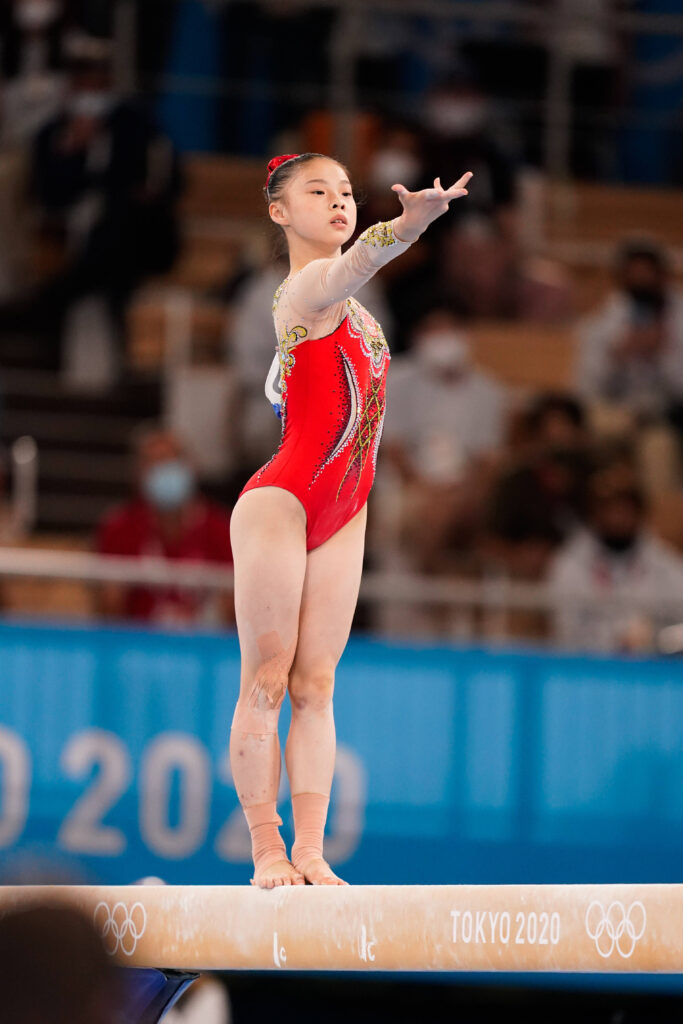
At the 2019 National Gymnastics Championships, China explicitly allowed teams to enter up to two female athletes born in 2005. Among the gymnasts identified as 2005-born athletes were Wei Xiaoyuan, Guan Chenchen, Ou Yushan, and He Licheng.
Veterans Return, Beauty in Full Bloom — National Gymnastics Championships Packed with Storylines
The 2019 National Gymnastics Championships and World Championships Selection Meet opened on May 8 in Zhaoqing. With returning veterans Shang Chunsong and Wang Yan, plus recovered athletes Fan Yilin and Mao Yi, four of the five members of China’s women’s team from the 2016 Summer Olympics reunited, giving gymnastics fans a welcome dose of nostalgia.
According to this year’s competition format, the team and all-around finals would be combined, with qualification scores carrying over into the all-around standings. Qualification took place May 8–9. The women’s age limit was birth year 2004, though teams could bring two athletes born in 2005. The top eight teams and top 24 all-around athletes advanced to the finals on May 10–11, while the top eight qualifiers on each apparatus advanced to event finals on May 12–13.
On the men’s side, with the core lineup for the 2020 Summer Olympics relatively stable, the all-around battle centered on Xiao Ruoteng, Sun Wei, and Lin Chaopan. Specialists such as Zou Jingyuan, Liu Yang, and Weng Hao remained dominant on parallel bars, rings, and pommel horse.
The women’s competition, however, promised the greatest intrigue: returning veterans, steady mid-generation athletes, and exciting newcomers all competing fiercely.
The return of older athletes was especially moving, as overcoming injuries and regaining top form is an enormous challenge. In fact, the recent international trend in gymnastics has been longevity, with Oksana Chusovitina competing at age 44 and Vanessa Ferrari at 28, reshaping perceptions of retirement age in women’s gymnastics. With scientific training, physical preparation, and injury prevention, Chinese women could achieve similar longevity.
Shang Chunsong and Wang Yan had both announced retirement in 2017, but chose to return, setting a strong example for younger athletes. Fan Yilin and Mao Yi both suffered serious injuries the previous year and endured long recoveries. Fan gradually rebuilt her form starting at the Cottbus World Cup and later won gold in Melbourne, with both difficulty and consistency nearing peak level again. Mao showed promising form at the East China meet, not yet at full difficulty but with strong execution and steadiness.
Mid-generation athletes such as Liu Tingting, Chen Yile, and Zhang Jin had already gained major-event experience at the 2018 Asian Games and 2018 World Artistic Gymnastics Championships. Liu’s world title on balance beam greatly boosted her confidence. Her mixed connections, leap quality, rhythm, and precision on beam matched the scoring priorities of the current Code of Points. She had also begun returning to the all-around. Chen Yile won three golds at the Asian Games in her first senior season. Though she faced setbacks at Worlds, the experience would aid her maturity. Li Qi, who missed the previous year’s major meets through injury, regained form by winning at the Doha World Cup.
The biggest surprises, however, were expected from the rising generation. Based on previous Olympic cycles, athletes born in 2003–2004 were considered ideal age candidates for Tokyo. Qi Qi, Tang Xijing, Yin Sisi, Li Shijia, and Zhao Shiting were all rising quickly, and this meet could be their breakout stage.
Since the women’s minimum age was set at 2005, even younger athletes such as Wei Xiaoyuan, Guan Chenchen, Ou Yushan, and He Licheng were also eligible to compete. Fans eagerly awaited these young blossoms making their senior debut.
老将复出 群芳争艳 体操全锦赛看点十足
“Reprinted from page 1 of the May 8 edition of China Sports Daily.”
2019年全国体操锦标赛暨世锦赛选拔赛,于5月8日在广东肇庆拉开帷幕。复出的商春松、王妍,伤愈归来的范忆琳、毛艺,里约奥运会中国女团五美中的四人再聚首,将让体操迷们好好怀旧一番。
根据今年体操全锦赛赛制,团体和全能决赛将合并,资格赛得分带入全能排名。其中5月8至9日将进行资格赛,团体采用6-5-4赛制,年龄限制为男子02年/女子04年,参加女团的队伍可带两名05年的选手;资格赛排名前8的队伍、全能排名前24的选手获得进入10日至11日团体和全能决赛的资格,团体采用6-4-4赛制,全能将按照资格赛和决赛的分数累加进行排名;资格赛各单项排名前8的选手,获得进入12日至13日单项决赛的资格。
男子方面,由于备战东京奥运会主力阵容相对稳定,全能的争夺主要集中在肖若腾、孙炜、林超攀等几位选手身上,各单项的明星选手如邹敬园、刘洋、翁浩等在双杠、吊环、鞍马等项目上的统治力也较难撼动,全锦赛主要将检验他们冬训的成果和稳定性。今年全锦赛更具看点的无疑是女子选手的发挥,老将回归、中生代稳定、新生代冲击力十足,争夺势必非常激烈。
老将的回归令人感动,毕竟克服伤病重新恢复,提升和保持能力对她们来说都是莫大的考验和艰巨的挑战。事实上体操项目近年来的“国际潮流”就是老将当道,44岁的丘索维金娜、28岁的意大利名将法拉利等早已颠覆了人们印象中女子体操运动员的退役年龄。科学训练、强化体能、防伤防病,中国女子体操选手同样能创造年龄奇迹。商春松、王妍都曾在2017年宣布退役,如今她们都选择复出,将是年轻选手的好榜样。范忆琳和毛艺在去年遭遇了重大伤病,两人都经历了漫长的恢复,范忆琳从去年科特布斯站开始一步步找回状态,墨尔本站成功夺金,成套难度和稳定性都逐步恢复到巅峰水平;毛艺今年华东赛状态不错,虽然还没恢复全部难度,但是质量和稳定性都属上乘。
刘婷婷、陈一乐、章瑾等中生代选手,在去年已经经历了亚运会、世锦赛等大赛考验,能力和经验上都稳步提升。去年世锦赛平衡木夺冠,帮助刘婷婷极大提升了自信,混合连接和跳步质量都是她的强项,木上动作规格韵律极佳,这些正是本周期平衡木规则鼓励的评分标准。今年刘婷婷也逐步恢复了全能,在意大利邀请赛小试牛刀。陈一乐去年在进入成年组第一年就在亚运会收获三金,世锦赛遭遇了一些挫折,但对她的成长和成熟未尝不是好事。黎琪去年因伤错过了亚运会和世锦赛,今年世界杯多哈站夺冠找回了状态,她的平衡木、自由操等都非常值得期待。
今年全锦赛能带给体操迷更多惊喜的将是新生代选手的崛起,按照往届奥运周期女子选手的成才规律,03至04年龄组将是东京奥运会适龄甚至可以说黄金年龄选手的首选。祁琦、唐茜靖、殷思思、李诗佳、赵诗婷等选手的上升势头很快,也许本次全锦赛就是她们惊艳亮相的舞台了。今年全锦赛女子最低年龄线划到了2005年,因此韦筱圆、管晨辰、欧钰珊、何骊澄等年龄更小一些的选手也将登场亮相,期待小小花们也能在初登成年大赛时美丽绽放。(转自5月8日《中国体育报》01版)
Archived here.
Yet all four gymnasts—Wei Xiaoyuan, Guan Chenchen, Ou Yushan, and He Licheng—were later registered with FIG birth years of 2004.
The significance of the article lies not only in its content but in its provenance, as well. It first appeared in China Sports Daily, the primary newspaper of China’s state-run sports system. Published under the authority of the General Administration of Sport of China, the paper serves as both a news outlet and an institutional mouthpiece for Chinese elite sport. In other words, the official voice of Chinese athletics itself presented these gymnasts as born in 2005.
Assuming these gymnasts were indeed born in 2005—rather than, say, 2006 or 2007—the adjustment involved only a single year: enough, on paper, to clear the age threshold for Tokyo as originally scheduled in 2020. But the pandemic intervened. The Games were postponed to 2021, and with that postponement, the adjustment became superfluous. A 2005 birth year would have cleared the threshold regardless.
Many believed that Chinese gymnasts no longer had their ages adjusted after the 2008 Summer Olympics, but the evidence suggests otherwise. The practice appears to have persisted into recent years, in some cases affecting entire cohorts whose recorded birth years were shifted.
To appreciate Chinese women’s artistic gymnastics is to hold two things in mind at once. For over four decades—from Ma Yanhong to Guan Chenchen—Chinese gymnasts have produced some of the most extraordinary routines in the history of women’s gymnastics. But the age discrepancies have never been far behind. The newspapers and magazines say one thing; the passports say another.
And the International Gymnastics Federation (now World Gymnastics) has yet to find a meaningful way to reconcile the two.
Notes
1. As for the gymnasts officially registered with 2005 birth years (and beyond), I will not publish any findings regarding their ages. This project is about documenting and archiving age discrepancies, not attempting to redistribute medals. In their cases, the FIG’s five-year disciplinary window still remains open.
2. Even as late as 2021, some smaller Chinese sports blogs continued to describe Wei Xiaoyuan as born in 2005, suggesting that at least some people in China still believed her true birth year differed from her official FIG registration.
Another gymnastics prodigy bursts onto the scene! Outstanding ability, striking looks, and a sweet smile dazzle at the World Championships
Oct 24, 2021 – Lingchen SportsNot long ago, the 2021 World Artistic Gymnastics Championships concluded, and the Chinese team delivered a solid overall performance. For the women’s team, however, the showing was not perfect—several events in which they had aimed for gold fell short. Still, there were new positives. Young gymnast Luo Rui stood out most with an impressive performance, winning one silver and one bronze medal. Another young athlete, Wei Xiaoyuan, also drew significant attention. This rising “prodigy” not only showed strong ability but also caught the eye with her looks and her sweet smile, which left a striking impression at the World Championships.
Wei Xiaoyuan is only 16 this year. She was first selected for the national gymnastics team four years ago. Having trained in gymnastics from a young age, she possesses excellent physical qualities and has trained diligently, allowing her to progress rapidly. After entering the national team, she gained the attention of coaches and was treated as a key athlete for development. This World Championships provided her with an opportunity to gain experience on the global stage.
Wei did not achieve the results she had hoped for in this competition, which was unfortunate. In the individual all-around, she had been maintaining a leading position, but a major mistake on the uneven bars ultimately cost her a medal. Wei is relatively well-balanced across all events and is a strong all-around gymnast. Although she fell short of the podium this time, audiences were still able to see her potential. In addition, her appearance also contributed to the attention she received.
Wei Xiaoyuan has delicate features and a sweet smile, making her quite eye-catching in competition. In recent years, it has become clear that many outstanding young stars are emerging across various events. To some extent, this reflects the vigorous development of China’s competitive sports system, as well as the early results of policies integrating sports and education. At this pace, China is likely to become a major sporting power in the near future.
Archived here.
又一体操天才少女横空出世!实力出众高颜值,笑容甜美惊艳世锦赛
2021-10-24 14:45:36 来源: 凌晨体坛
不久前,2021年体操世锦赛的比赛落下帷幕,中国体操队取得了不错的成绩。对于女队而言,这一次的发挥并不完美,有几项志在夺冠的项目都没能达成目标。不过却也有新的收获,其中小将罗蕊的出色表现最为抢眼,拿下了一银一铜。同为年轻运动员的韦筱圆也在这次比赛中受到观众们的关注,这位天才吐槽少女横空出世,不仅实力强,颜值也很高,笑容甜美惊艳世锦赛。
韦筱圆今年只有16岁,4年前她第一次入选体操国家队。从小练习体操的韦筱圆身体素质极佳,训练也比较刻苦,因此在体操方面进步神速。在进入国家队之后,韦筱圆受到教练们的重视,将其作为重点培养对象。这一次体操世锦赛,也是给了韦筱圆机会,让她在世界大赛上锻炼自己。
韦筱圆在这次比赛中并没有取得好成绩,非常遗憾。在个人全能的比赛中,韦筱圆本来一直保持着领先优势,但是在高低杠项目上出现了严重失误,最终导致无缘奖牌。韦筱圆各个项目都比较均衡,是一位全能高手,这一次虽然遗憾没能拿到奖牌,但观众们还是看到了她的潜力。除此之外,她的高颜值也是引起关注的原因之一。
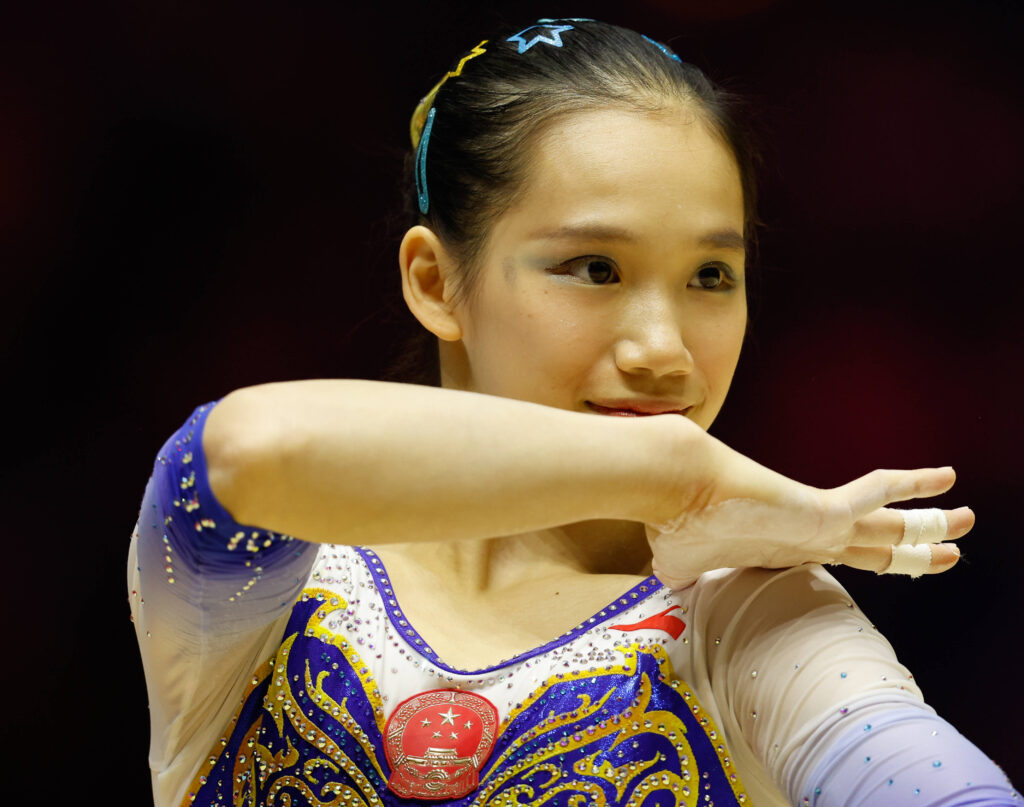
With her FIG birthdate, Wei Xiaoyuan should have turned 17 in 2021.
More on Age