Categories
2000 Doping Olympics Romania WAG

Andreea Răducan: The Only One Who Tested Positive

The women’s all-around final at the Sydney Olympics began at 7:00 p.m. on Thursday, September 21, 2000. Maria Olaru, competing for Romania alongside Simona Amânar and Andreea Răducan, had made a prediction before the competition started. She told her coaches that all three Romanians would make the podium. When Octavian Belu, Romania’s head coach, relayed this to reporters afterward, he added with affectionate exasperation: “She has the instincts of a witch. She scares me. From now on, anyone who wants to win the lottery should ask her what numbers will come up.”

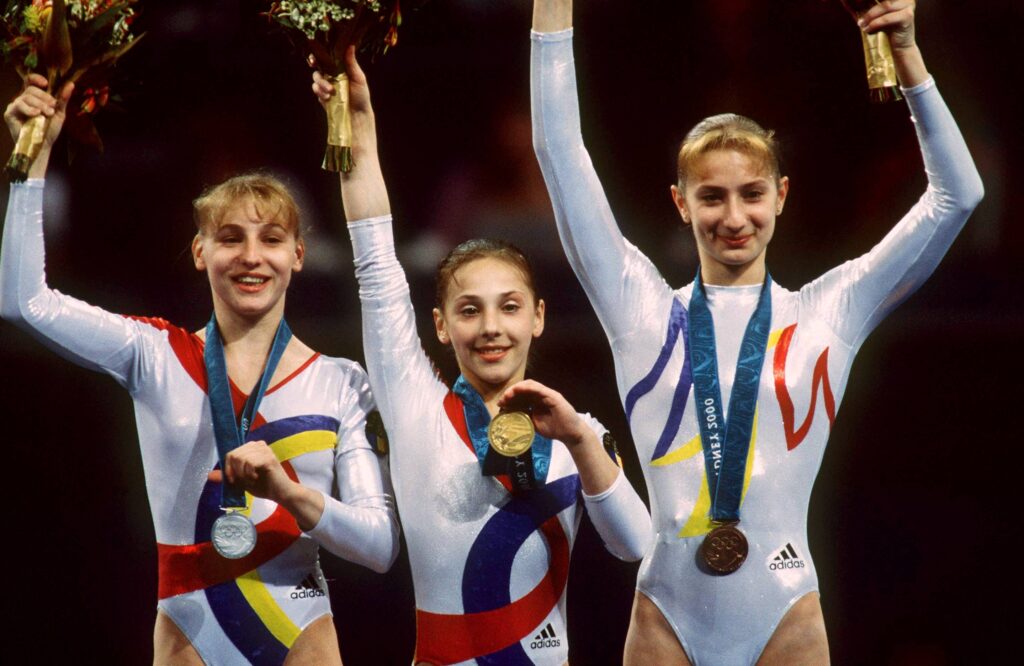
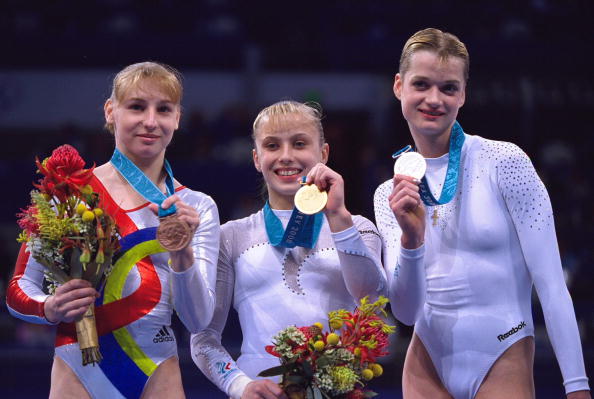
By the end of the night, the witch had been proven right. Răducan stood atop the podium with a score of 38.893, flanked by Amânar (38.642) and Olaru (38.581). It was the first time since the 1960 Rome Olympics that a single nation had swept all three medals in the women’s all-around at the Games.

What Olaru could not predict—what no one in the SuperDome that night could have imagined—was what followed.

Simona Amânar, Andreea Răducan, and Maria Olaru, 2000 Olympics
Categories
2000 Age China WAG

How China Explained the Dong Fangxiao Case

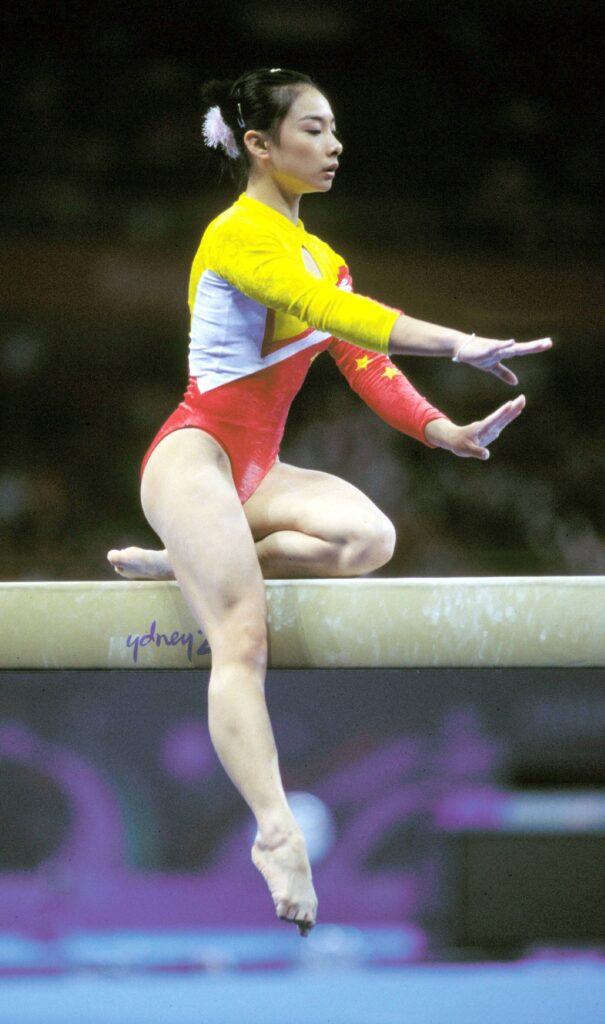
In April 2010, the International Olympic Committee stripped China’s women’s gymnastics team of its bronze medal from the 2000 Sydney Olympics. The decision followed an eight-month investigation by the International Gymnastics Federation (FIG), which concluded that team member Dong Fangxiao had been 14 years old at the Games—two years below the minimum age of 16.

The English-language coverage of the scandal—the discovery of conflicting documents, the investigation, the ruling, and the redistribution of medals—has been extensively documented. Less familiar to English-speaking audiences is how the case unfolded inside China: how state media framed the ruling, how sports officials explained it to the public, and how Chinese journalists and commentators responded.

What emerged was not a single narrative, but a fractured one. Alongside brief, formulaic official statements ran a parallel discussion in China’s press that questioned responsibility, credibility, and the structure of a state-run sports system that governed athletes’ lives long before—and long after—the medal was won.

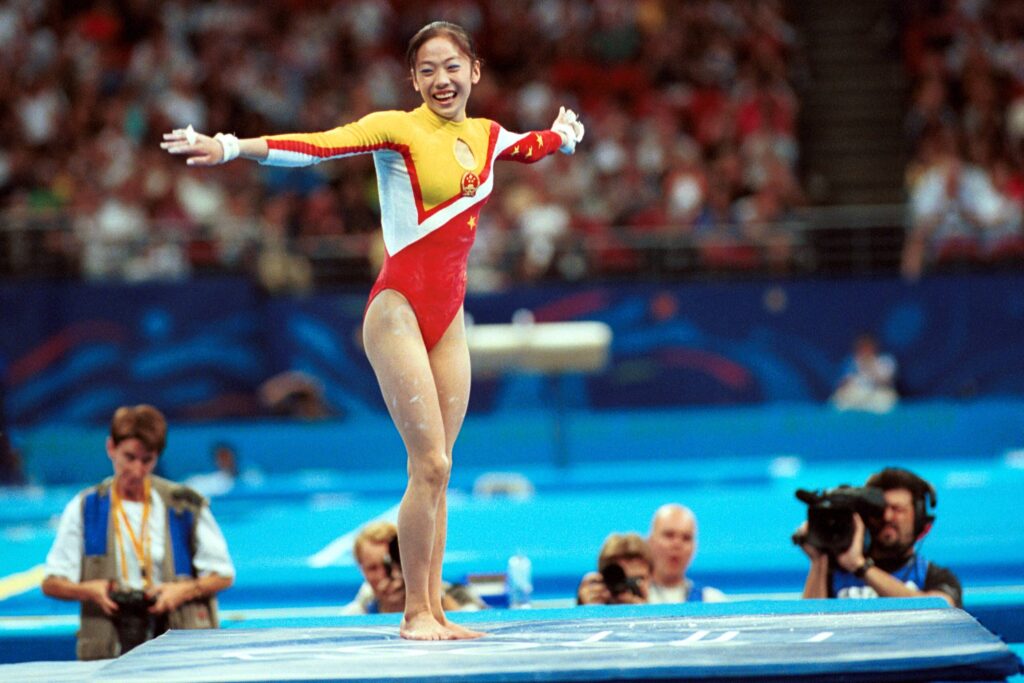
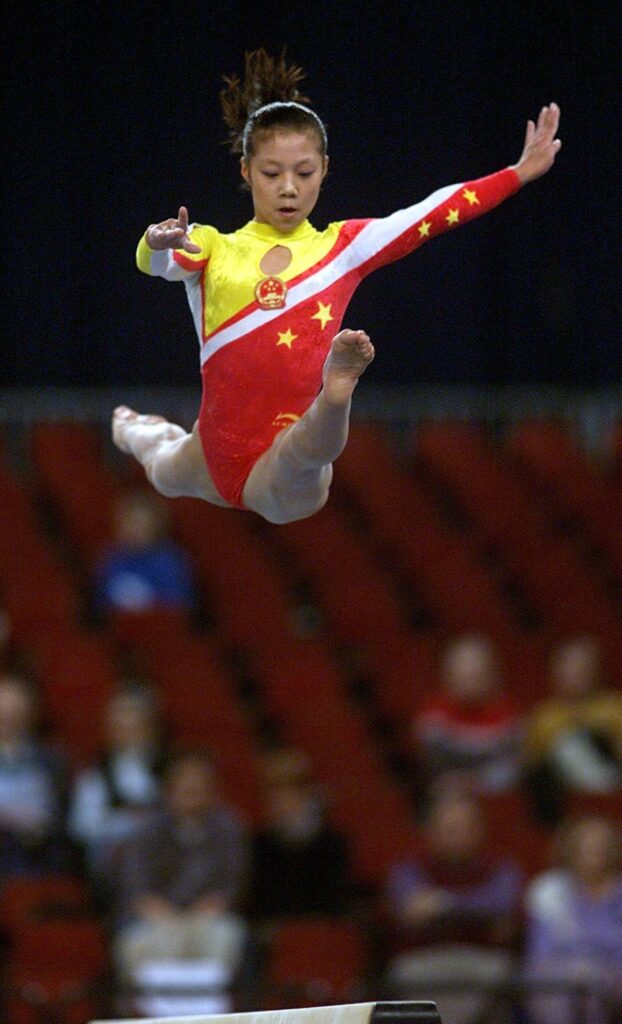
Dong Fangxiao, DTB Pokal, 2000
Categories
2000 Floor Music Olympics WAG

2000: The Floor Music of the Sydney Olympics

A big trend in 2000: Movie soundtracks. 

In Sydney, the floor music included songs from The Rock, Addams Family Values, The Mummy, and The Truman Show, among others.

A small surprise: In 1984, 1992, and 1996, several floor routines featured music associated with the host country. In 2000, that trend was not as pervasive. Of course, there were exceptions — like McIntosh’s use of “Waltzing Matilda” or Slater’s use of “I Still Call Australia Home,” which was contentious, by the way. (More on that below.)

25 Sep 2000: Elena Zamolodtchikova of Russia (centre) wins Gold, Svetlana Khorkina of Russia (right) wins Silver and Simona Amanar of Romania (left) wins Bronze in the Womens Floor Exercise Final at the Sydney Superdome on Day Ten of the Sydney 2000 Olympic Games in Sydney, Australia. Mandatory Credit: Shaun Botterill /Allsport
Categories
2000 Apparatus Norms Olympics

2000: The Sydney Vault Debacle and the Apparatus Norms Hypothesis

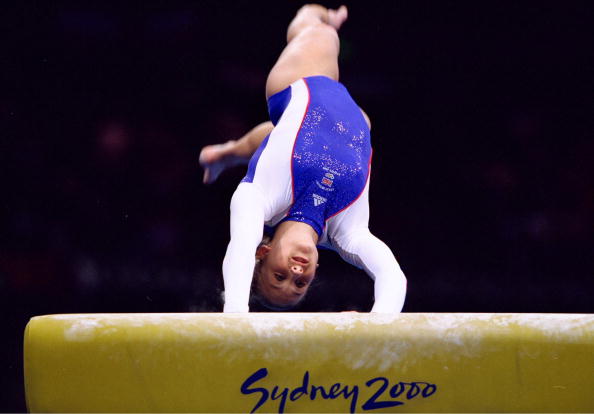
During the women’s all-around at the Sydney Olympics, the vault was set 5 cm too low. Multiple gymnasts vaulted on a horse set at 120 cm when it should have been set at 125 cm. As a result, several gymnasts fell, including the favorite for the all-around title, Svetlana Khorkina.

During the third rotation’s warmup, Allana Slater insisted that something was wrong, and eventually, the vault was raised to the correct height (125 cm). After the competition, Kym Dowdell, the competition manager, issued a statement:

“Unfortunately, equipment personnel failed to set the vault at the appropriate height.”

Qtd in. International Gymnast, November 2000

But how? How do equipment personnel fail to set the vault correctly?

That’s the question that the gymnastics community has been asking for over two decades.

Well, I have a hypothesis. It has to do with the apparatus norms that were printed in 2000. 

17 Sep 2000: Annika Reeder of Great Britain in action on the vault during the Women’s Gymnastics Qualification at the Sydney Superdome on Day Two of the Sydney 2000 Olympic Games in Sydney, Australia. \ Mandatory Credit: Billy Stickland /Allsport

Note: Reeder was injured on her vault landing during the all-around final.