Categories
1993 Age Netherlands

1993: The Dutch Federation’s Bungled Attempt at Age Falsification

In the summer of 1993, a minor act of deception briefly exposed a much larger truth about international gymnastics. At the European Championships in rhythmic gymnastics, a thirteen-year-old Dutch athlete was entered into competition using a teammate’s passport—an expedient decision made to avoid a poor result, and one that unraveled almost immediately. What followed was not a dramatic scandal, but something quieter and more revealing: admissions of responsibility, careful hedging of language, and a collective effort to keep consequences manageable.

The Dutch press covered the episode in a restrained, procedural tone. Reports in De Telegraaf and NRC Handelsblad detail how officials within the Dutch Gymnastics Federation (KNGB) knowingly circumvented age-eligibility rules, how the European Gymnastics Federation (UEG) investigated the breach, and how blame was diffused among coaches, administrators, and judges. The prose is sober; the facts are clear. Yet beneath this matter-of-fact surface lies a familiar pattern—one that challenges easy assumptions about where and how age manipulation occurs in the sport.

Age falsification in gymnastics is often narrated as an Eastern Bloc pathology: the product of centralized authority, pliable civil registries, and authoritarian sports systems willing to rewrite identity in service of medals. The Dutch case unsettles that narrative. Here was a Western European federation operating within a democratic state, an independent press, and formal oversight mechanisms—yet subject to the same pressures and incentives. Fear of finishing low in the rankings, institutional expectations of success, and the belief that everyone else was bending the rules proved sufficient to justify deliberate deception.

The mechanics of the fraud are themselves instructive. Lacking the ability—or political cover—to alter official documents, Dutch officials resorted to substitution rather than fabrication: entering an underage gymnast under another athlete’s passport and trusting that inspections would be cursory. This was not naïveté but pragmatism shaped by structural constraint. It reveals how rule-bending adapts to local conditions, even as its underlying logic remains constant.

Equally telling is the response from governing bodies. Despite explicit admissions that fraud had occurred, there was little appetite within the European Union of Gymnastics (UEG) for severe punishment. Officials emphasized their own inspection failures, spoke of shared responsibility, and repeatedly downplayed the likelihood of a suspension. The prevailing tone was conciliatory rather than corrective—a preference for containment over confrontation. Read together, these articles illuminate a sport in which age manipulation was widely understood, unevenly enforced, and, so long as it avoided public embarrassment, often met with indulgence rather than meaningful consequence.

Categories
Age China Interviews & Profiles WAG

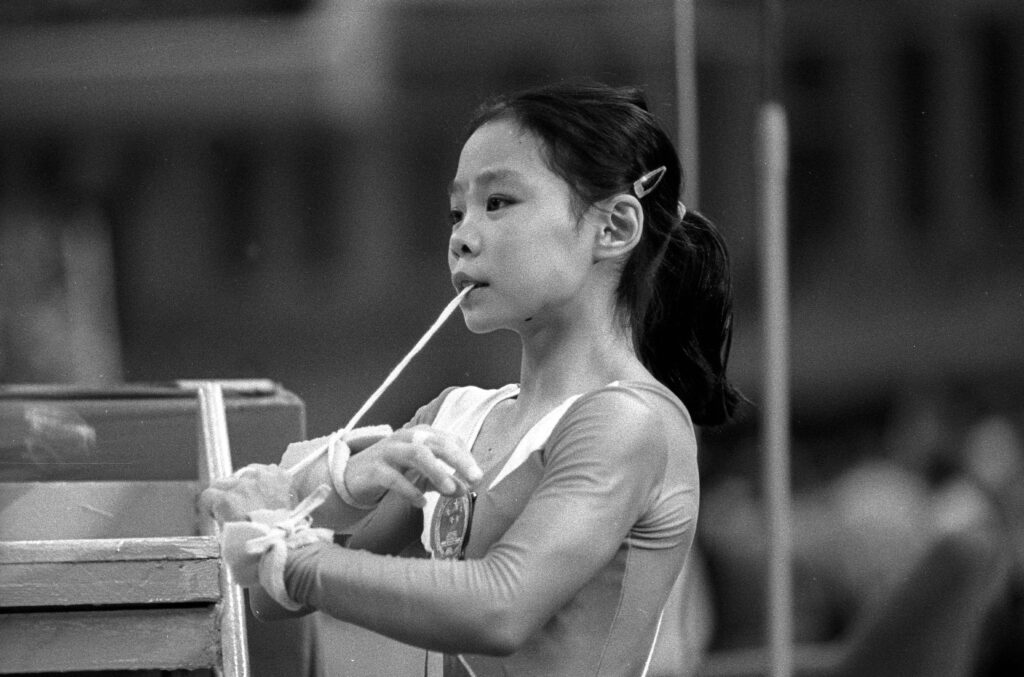
1986: A Profile of Chen Cuiting – “Like a Spring Swallow Arriving Gracefully”

In 1986 and 1987, Chinese media presented Chen Cuiting as a gymnast perfectly timed for inheritance: the nation’s elegant answer to Romania’s Daniela Silivaș. Reporting from the Seoul Asian Games, a People’s Daily correspondent lingered on her “spring swallow” lightness, praising the ease with which she carried herself to the all-around title. Both that article and a subsequent China Pictorial profile placed her age at fifteen—young, but properly arrived.

The China Pictorial piece, published in February 1987, filled in the arc behind the moment. Born on July 15, 1971, in Changsha, Hunan, Chen had risen from a raw “tumblebug”—a nickname earned for her explosive tumbling—into a national champion who, as the magazine put it, had learned to “smile spontaneously to the music.” It was a familiar story of discipline refined into artistry, told at precisely the point when promise seemed to be turning into permanence.

From today’s vantage point, however, that narrative no longer sits so easily. Across both Chinese- and English-language websites, Chen’s birthdate now appears as November 15, 1972. If accurate, she would have been only thirteen, turning fourteen, during the 1986 season—below the minimum age of fifteen required for senior international competition. The confident certainties of the mid-1980s press thus coexist uneasily with a digital record that rewrites the calendar.

Whatever the truth of her age, Chen Cuiting’s competitive record is unmistakable. She dominated Chinese women’s gymnastics through the late 1980s, breaking out internationally at the 1986 Asian Games with team gold, all-around gold, floor gold, and vault silver. She remained the country’s leading all-arounder at home, winning the title at the 1987 National Games and the 1988 National Championships. Though her Seoul Olympics yielded no individual medals—fourteenth in the all-around, sixth with the team—she rebounded at the 1989 World Championships with team bronze and top-six finishes in the all-around, beam, and floor. Her career closed where it had begun to crest: at the 1990 Asian Games in Beijing, she again swept gold in the team, all-around, and floor, adding another vault silver before retiring. In just five years, she anchored the national team through a transitional era, her dominance unquestioned even as the story told about her grew more complicated.

Chen Cuiting, 1986, Goodwill Games
Categories
1981 Age China Interviews & Profiles WAG

1981: A Profile Ma Yanhong – “She Trains Diligently as Always”

When Ma Yanhong scored 19.825 on uneven bars at the 1979 World Championships in Fort Worth, Texas, she became the first Chinese gymnast to win a world title. The moment carried weight beyond sport. It was December 1979, just months after the United States and the People’s Republic of China had established full diplomatic relations, and American spectators watched the five-star red flag rise in a Texas arena. A fifteen-year-old from the Bayi military sports team had arrived on the world stage at a pivotal moment in both gymnastics history and geopolitical realignment.

The two articles translated here—one an immediate dispatch from Xinhua News Agency filed from Fort Worth, the other a 1981 profile from the People’s Daily—show how Chinese state media framed this breakthrough. They follow familiar patterns of socialist sports journalism: diligence and endurance, sacrifice of personal comfort for collective glory, the coach’s discernment, and the athlete’s humility in victory.

At the same time, these reports preserve a vivid record of elite athletic life in late-1970s China. They describe a life of extreme (and unhealthy) discipline: cracked lips from dehydration, severely restricted food intake, and hands hardened by hundreds of repetitions of release moves. This is sports journalism in the service of a state narrative, but it is also lived reality. These accounts capture details that help us understand China’s re-emergence as a world power in women’s gymnastics.

Read closely, the articles also hint at unresolved questions. The ages they cite—fourteen at the 1978 Asian Games and fifteen in December 1979—imply a 1964 birth year. When International Gymnast interviewed her in 1999, the magazine reported her birthdate as March 21, 1964. However, at the 1984 Olympics, Ma’s official competitive date of birth was July 5, 1963. Under either birth year, Ma was age-eligible to compete at the 1979 World Championships. The puzzle, then, is not eligibility but motive: why alter her date of birth at all?

Unfortunately, the articles do not answer that question. Nonetheless, I hope that you can enjoy these articles about Ma, whose bar work, according to International Gymnast, possessed “a quality that has never been surpassed.”

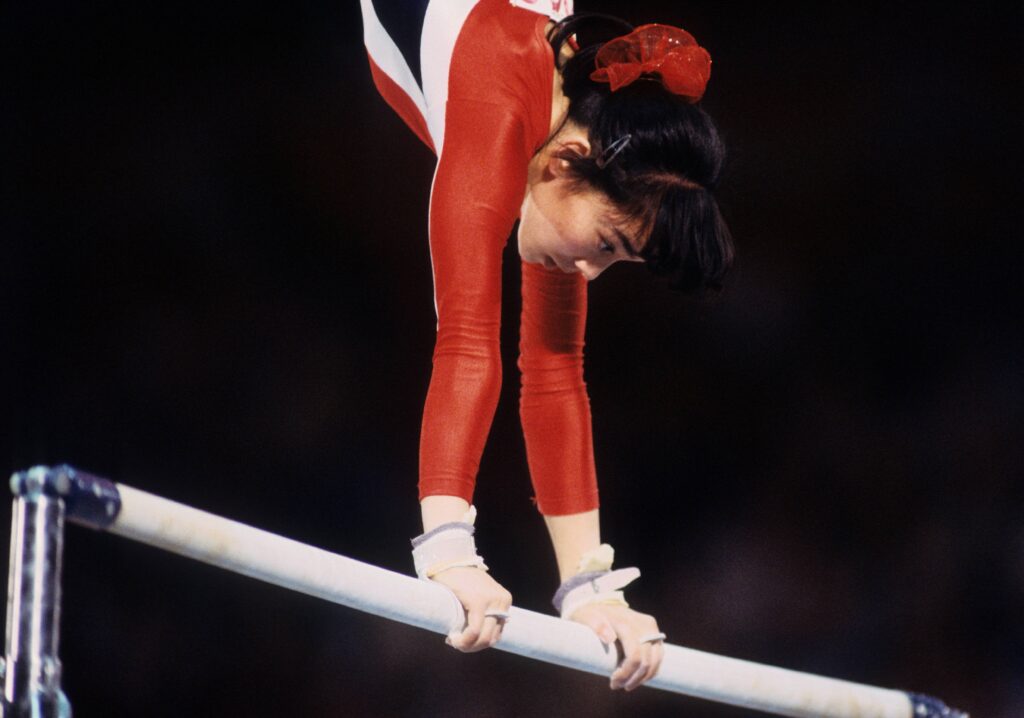
Ma Yanhong, 1984 Olympics

For more historical context, see:

Categories
Age FIG Leadership WAG

1994: “I Don’t Care at All Whether Documents Are Falsified”

In 1994, the International Gymnastics Federation passed what some critics had demanded for years: a minimum age of sixteen for international competition, set to take effect in 1997. The rule promised to protect children from the extreme physical demands of elite gymnastics. But when French journalist Richard Montaignac sat down with Michel Léglise, chairman of FIG’s Medical Commission, he discovered something unsettling. The official charged with safeguarding athletes’ health admitted he didn’t actually care whether national federations falsified their gymnasts’ ages. “I don’t care at all,” Léglise declared. “It makes absolutely no difference to me.”

Léglise’s views didn’t necessarily reflect every FIG official’s position. Surely, some genuinely supported meaningful enforcement. That said, the organization often responded with institutional shrugs when confronted with evidence of age falsification.

Here’s a translation of Léglise’s remarks as they appeared in Sovetsky Sport.

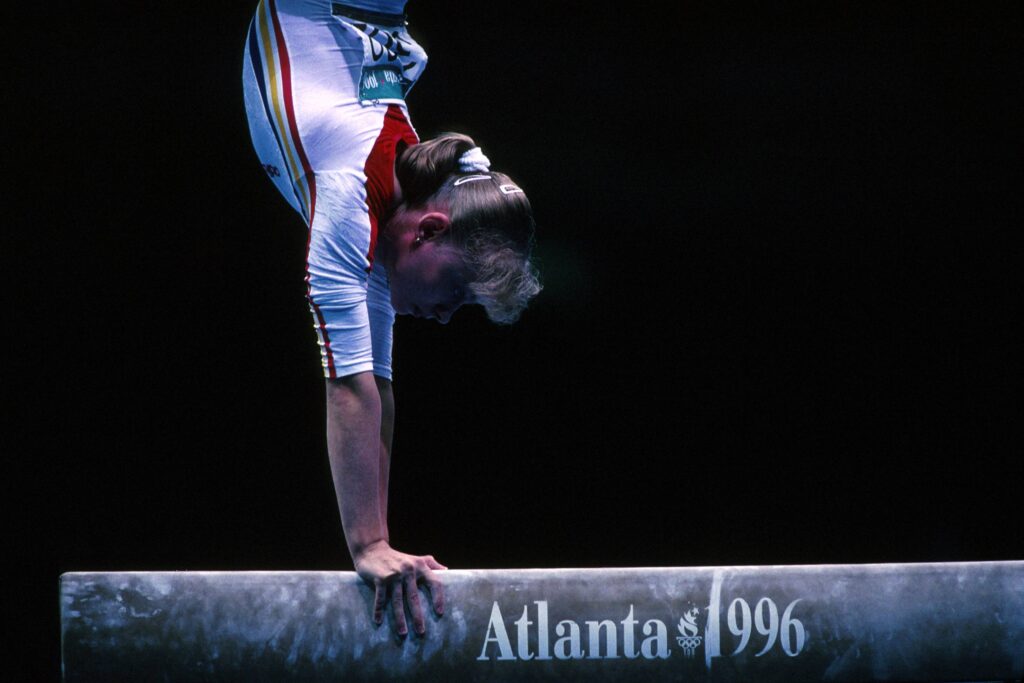
Alexandra Marinescu, 1996
Categories
1981 Age

1981: The IOC’s Medical Commission Addresses Questions of Age in Gymnastics

After the 1981 World Championships, the IOC was forced to confront an uncomfortable reality in women’s gymnastics: many elite competitors looked far younger than their official ages suggested. Olga Bicherova, who looked particularly young, had won the all-around, provoking widespread alarm across the sporting world and pushing concerns about women’s gymnastics all the way to the IOC’s highest levels.

To much of the Western gymnastics community, the explanation was straightforward. Birthdates were being falsified to satisfy age-eligibility rules. The International Olympic Committee (IOC), however, did not initially see the matter as an administrative deception. Its medical commission framed the issue as a health concern, questioning whether “dieting control” or pharmaceutical manipulation were being used to delay puberty and keep gymnasts artificially small. They wanted the FIG to establish a medical commission to conduct further investigation.

In this sense, the IOC was operating in the same conceptual space Western officials had occupied just a few years earlier. In 1978, accusations of doping in Eastern Bloc women’s gymnastics were widespread. By 1981, that narrative had begun to shift. Although state-run doping programs did exist in parts of the Eastern Bloc (and the gymnastics community still suspected it), many Western observers focused their efforts on underscoring the manipulation of birth records, not biology. It was a more provable allegation; they could point to paper records and show that the dates did not match.

The documents that follow illustrate this moment of interpretive overlap. The first is a brief report on an IOC Executive Committee meeting held in late 1981; the second is a lengthy interview with Prince Alexander de Mérode, then head of the IOC Medical Commission. Together, they show how age, doping, and women’s health were discussed not as separate issues, but as facets of the same unresolved problem.

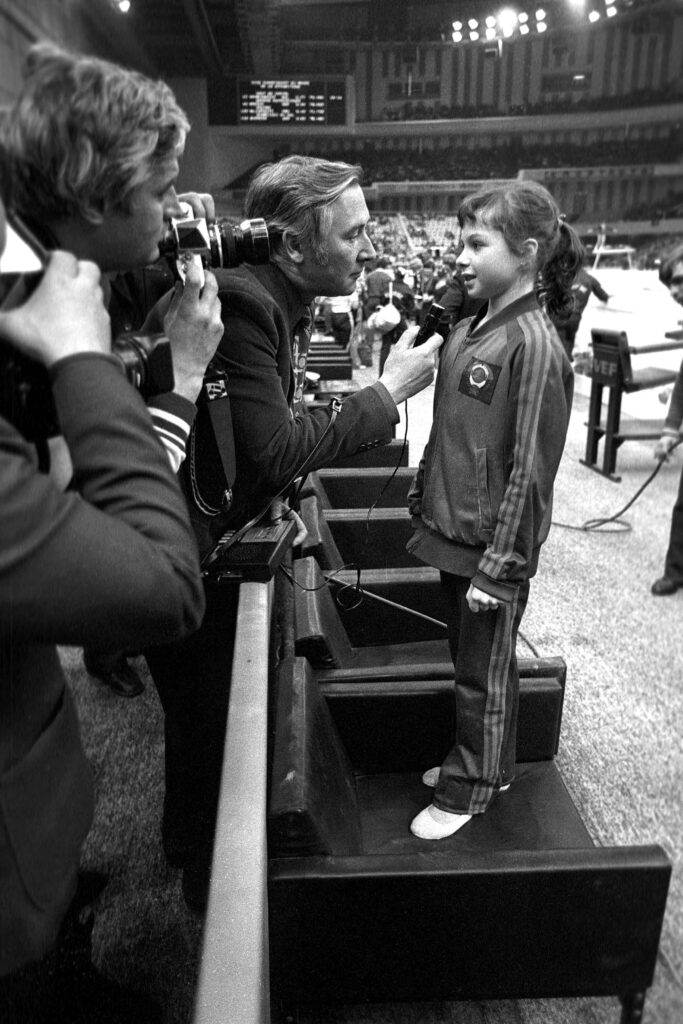
Olga Bicherova at the 1981 World Championships

To be clear, Bicherova did not do anything wrong; she did not ask for her passport to be altered. This photo simply illustrates what everyone was seeing and questioning in 1981.
Categories
1978 Age Doping WAG

1978: Doping Allegations at the World Championships

In November 1978, Western gymnastics officials charged that Eastern Bloc programs were using drugs to delay puberty in young female gymnasts, deliberately keeping athletes small to secure a competitive advantage.

The accusations emerged during the World Championships in Strasbourg, France, where officials remarked on the striking physical disparities between Eastern and Western competitors. Dr. Robert Klein, the meet’s chief medical examiner, reported having seen photographs of a Soviet gymnast showing what he described as a “steady regression of breast development” over a four-year period. Danish federation president Niels Peter Nielsen voiced broader suspicions, warning, “We see small girls, who I suspect are being controlled by drugs… they are being stopped from becoming women.” Even Nadia Comăneci, the sport’s reigning star, expressed astonishment at the child-like proportions of some competitors, remarking that she could not believe the 17-year-old Maria Filatova was actually older than herself.

There were many explanations for what Westerners were seeing. The onset of puberty varies from individual to individual. The sport itself favored smaller bodies, particularly in an era when the uneven bars were set closer together. Chronic overtraining and disordered eating almost certainly affected physical maturation, as well. More consequentially, age falsification distorted Western observers’ assumptions about normal pubertal timelines: gymnasts listed as fourteen or fifteen were sometimes several years younger in reality, and their bodies appeared pre-pubescent because they were, in fact, still pre-pubescent.

The historical irony of this moment is especially sharp. We now know that East Germany did, in fact, operate a systematic doping program for young athletes, and that one explicit aim of that program was premature growth-plate fusion—precisely the outcome Western officials feared in 1978, though they lacked proof at the time. The accusations were therefore simultaneously unsubstantiated, given the evidence available to the accusers, and eerily prescient, given what was occurring behind closed doors in at least one Eastern Bloc sports system.

The two articles that follow capture this moment of accusation and denial. The first, an Associated Press report, presents the Western claims with striking specificity, detailing suspected mechanisms and targets. The second, drawn from the FIG’s official bulletin, is a categorical rejection that combines legitimate scientific argumentation with institutional defensiveness and, in hindsight, a troubling underestimation of what state-run sports programs were capable of concealing.

Oral-Turinabol, the steroid that formed the basis of the East German doping program.
Categories
Age Romania WAG

Vaulting Ahead of Time: Eugenia Golea and the Years Romania Erased

For gymnasts whose ages have been falsified, a single birthdate is never enough. Their careers must be read against two calendars: the date on which they were actually born, and the date under which they were permitted to compete. Only by holding those two timelines together can we understand not just that an age was altered, but why.

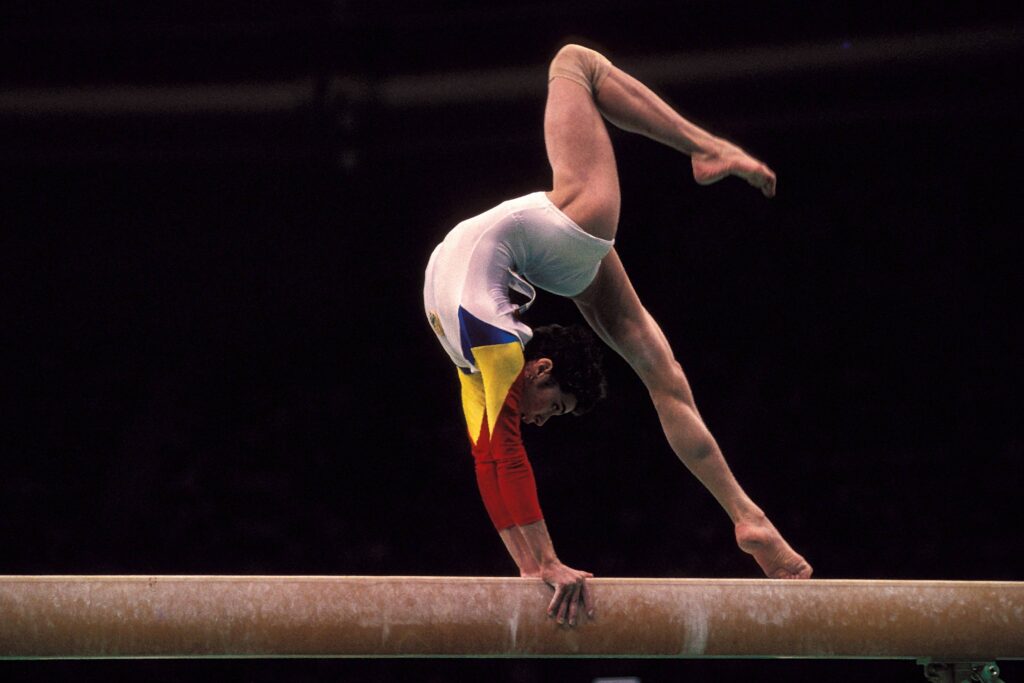
Take Eugenia Golea. She was born in 1971, yet her first senior World Championship medals came in 1985. To be fifteen at those championships, she would have needed a 1970 birth year. But that was not the date under which she competed. Instead, Golea was officially registered as having been born in 1969, making her eligible for the Los Angeles Games. However, for Golea, things never quite came together in 1984.

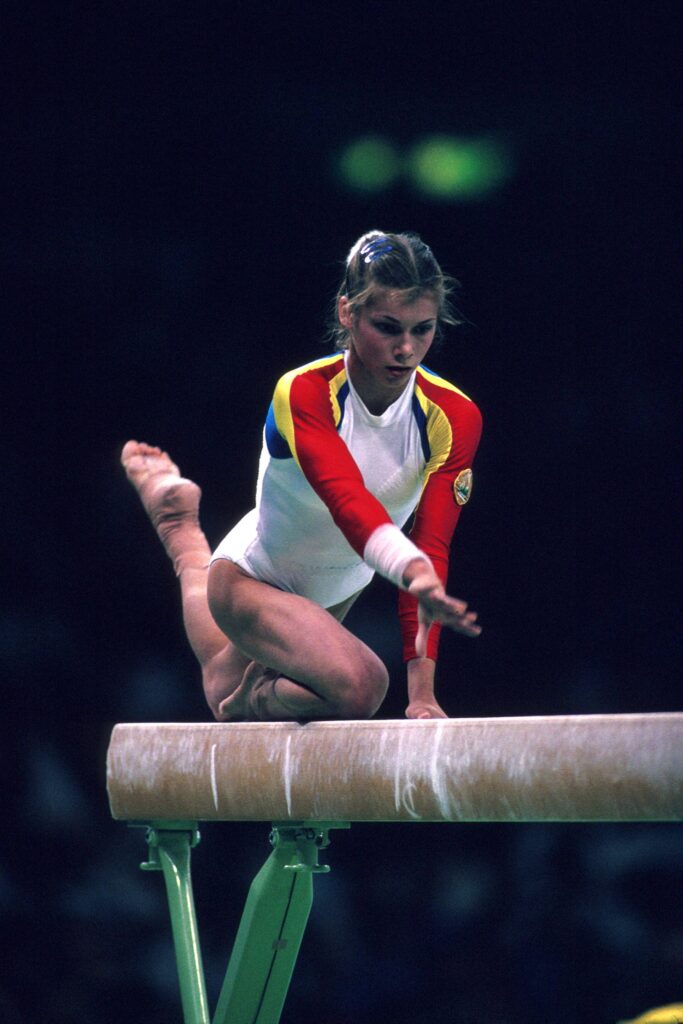
Eugenia Golea, 1988 Olympics

Photo credit: Norbert Schmidt
Categories
Age Bulgaria WAG

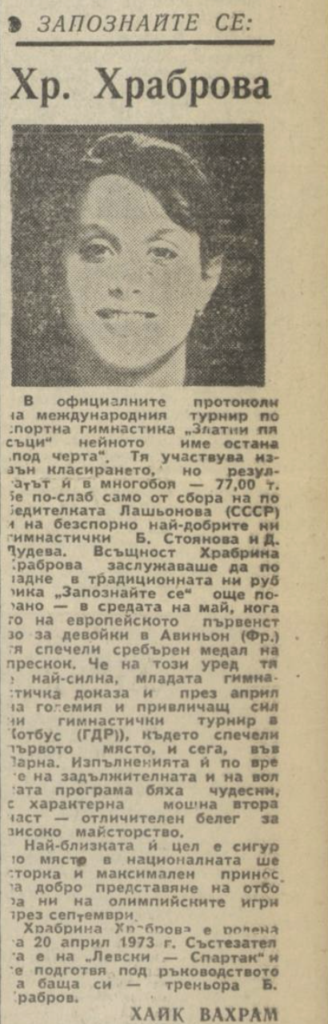
Hrabrina Hrabrova: The Gymnast Who Was Made Younger on Paper

Most age-falsification cases involve making gymnasts older so they can enter senior competition earlier. But what if the goal were the opposite—to make a gymnast younger, allowing her to compete in both junior and senior events?

That appears to be what happened with Bulgarian gymnast Hrabrina Hrabrova, who competed at both the 1988 Olympic Games and the 1988 Junior European Championships under a falsified age.

Categories
Age Romania WAG

The Forgotten Confession of Celestina Popa

In December 1990, as Romania struggled to redefine itself after the fall of communism, Celestina Popa said something that should have forced a reckoning in international gymnastics. Speaking to Dutch journalist Hans van Wissen for De Volkskrant, she acknowledged openly that the Romanian federation had falsified her age.

“Sometimes people on the street asked me how old I was,” Popa said. “I didn’t know what to tell them: my real age or the age the federation gave me. Officially, I was one year too young to compete at the 1985 World Championships.”

It was not a vague admission or a rumor repeated secondhand. Popa, herself, was correcting the historical record. Her confession came on the heels of Ecaterina Szabó’s own admission and Aurelia Dobre’s divulgence of Daniela Silivaș’s age falsification, as well.

Together, their statements represented a breach in the Eastern Bloc’s code of silence: athletes speaking openly, shortly after their careers were over, about a system built on falsification and obedience.

Yet nothing changed.

Celestina Popa, 1988
Categories
Age Romania WAG

Cristina Elena Grigoraș: The 12-Year-Old Olympic Silver Medalist

When Béla Károlyi defected to the United States in 1981, he carried with him not only his reputation as Nadia Comăneci’s coach but also Romania’s secrets. Speaking to the New York Times in December 1981, after an age scandal erupted at the World Championships in Moscow, Károlyi made a stunning allegation: three members of the Romanian women’s team competed in Moscow despite failing to meet the 15-and-over age requirement. They were Lavinia Agache, who he said was 13 years old; Christina Elena Grigoraș, also 13; and Mihaela Stănuleț, 14.

It would have been easy to dismiss these claims as the bitter accusations of a defector. But Károlyi was telling the truth. Subsequent research has confirmed that Mihaela Stănuleț was born in 1967, making her 14 at the 1981 World Championships. Lavinia Agache was born in 1968 and was indeed 13 years old. And, as we’ll see in the archival record below, Cristina Elena Grigoraș, the young star who had dazzled audiences with her European Championship performance earlier that year, was also born in 1968—not 1966, as her official documents claimed.

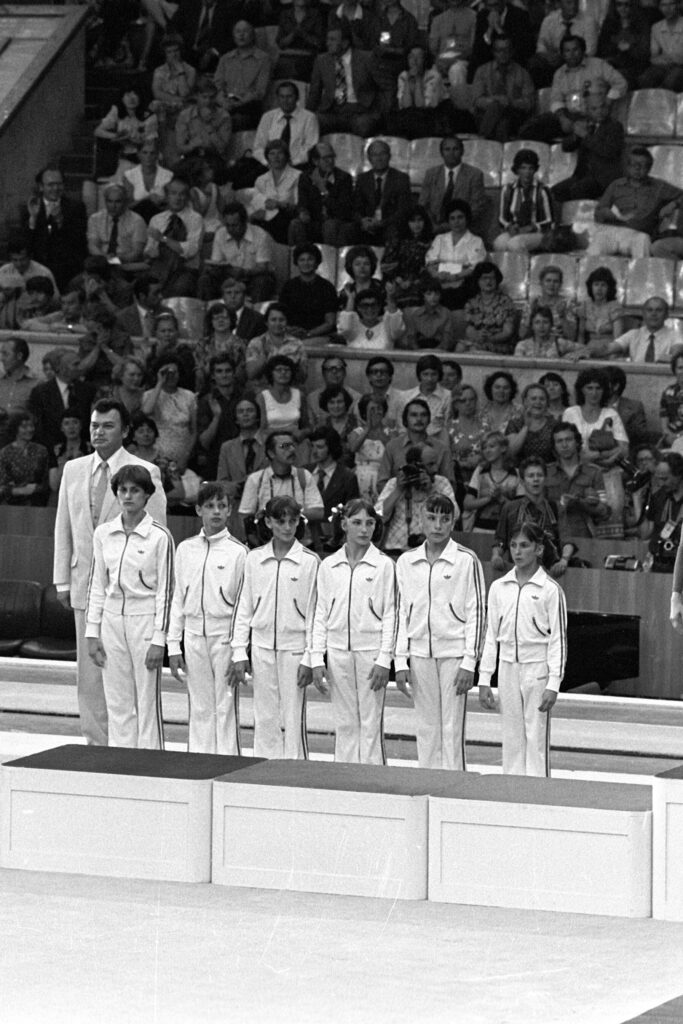
That means she was only twelve years old when she competed at the 1980 Moscow Olympics, well below the minimum age requirement of fourteen. Romania’s silver-medal team performance thus relied, in part, on the participation of an underage athlete competing under an incorrect birthdate.

The Romanian team at the 1980 Olympics, Moscow