Compulsories: The bane of some gymnasts’ existence, and the bane of some judges’ existence, as well.
Let’s take a look at the 1968 men’s compulsories and how they were judged…
Compulsories: The bane of some gymnasts’ existence, and the bane of some judges’ existence, as well.
Let’s take a look at the 1968 men’s compulsories and how they were judged…
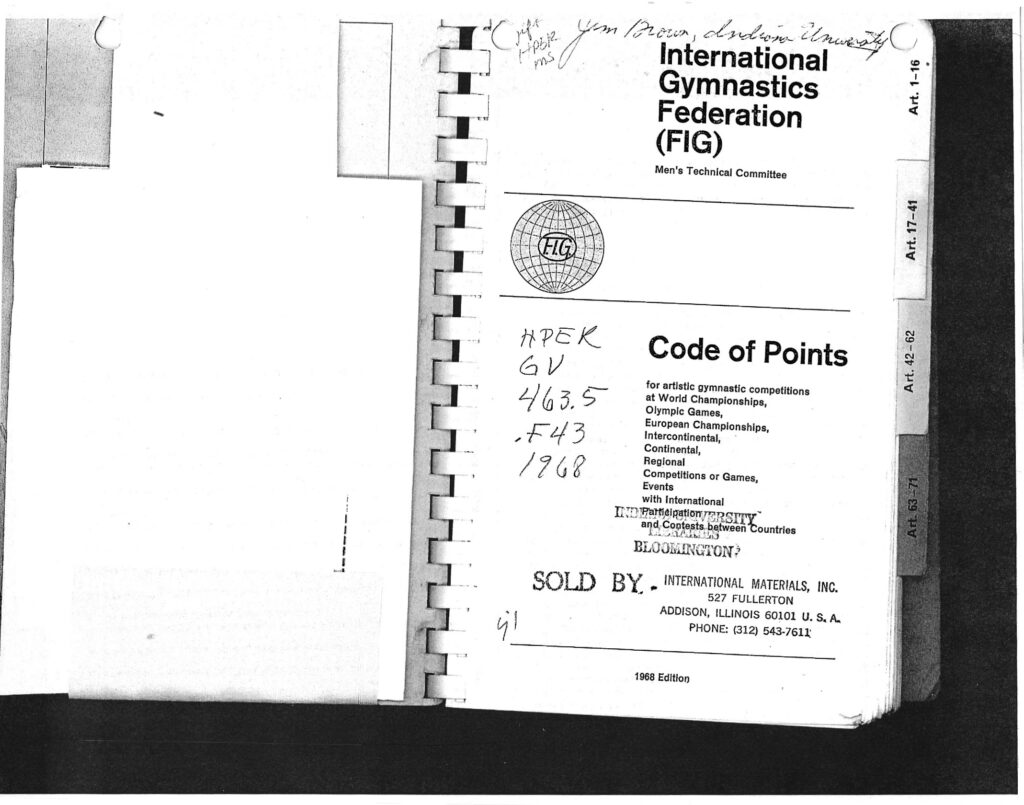
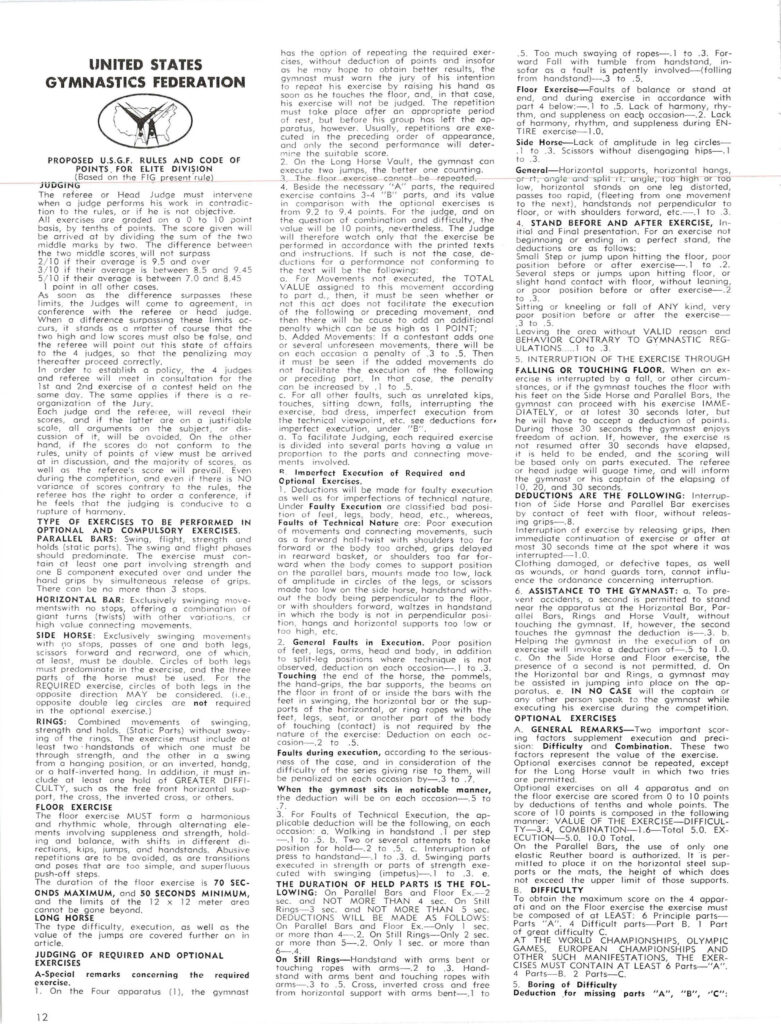
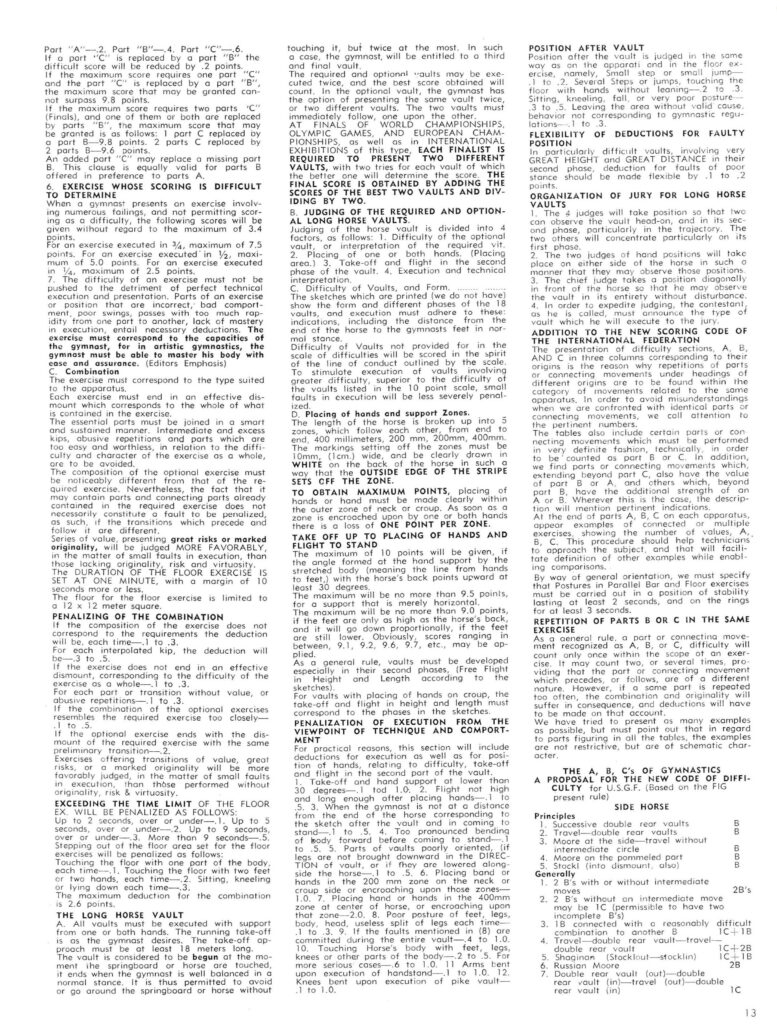
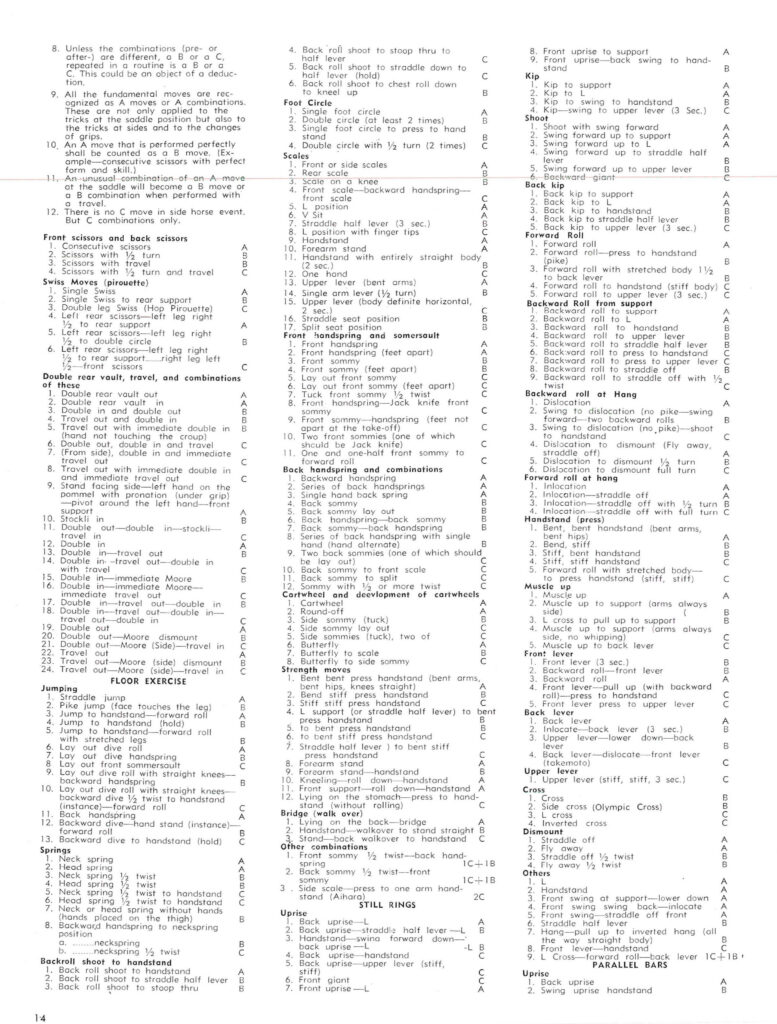
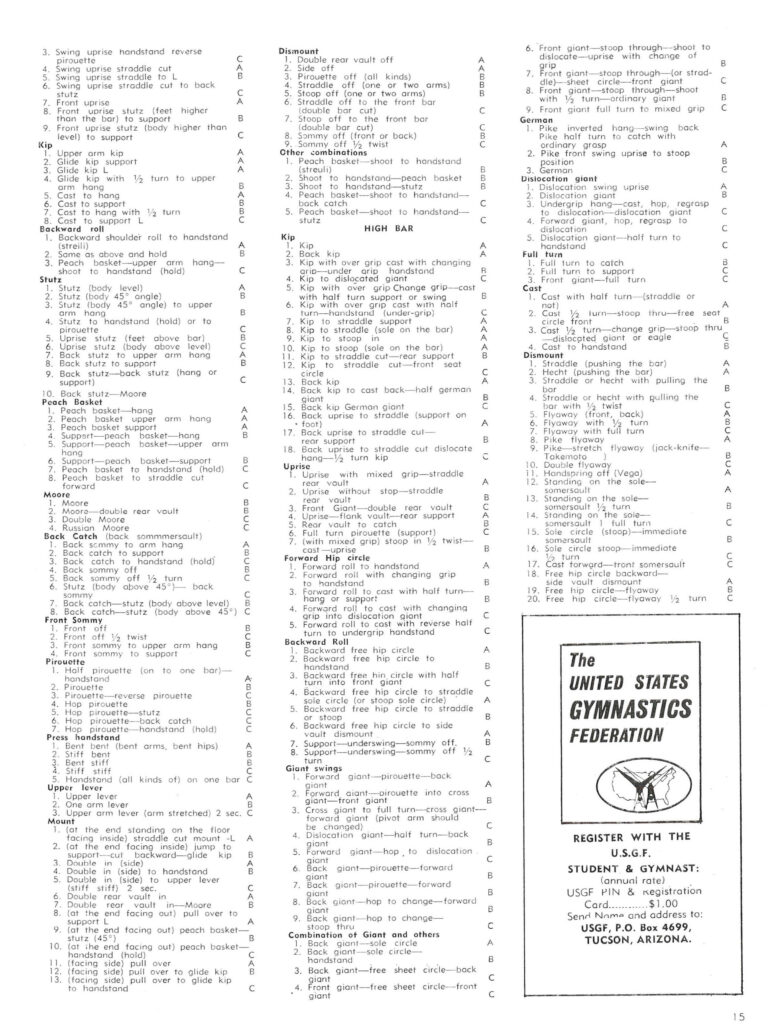
The 1968 men’s Code of Points exploded.
Gymnastics was quickly evolving, and the Men’s Technical Committee was trying to be more prescriptive on what they wanted to see and in which direction they wanted the sport to go.
I’ll do my best to give you the CliffsNotes version of a 194-page document.

In July of 1976, newspapers around the world reported that Nadia Comăneci scored the first 10 in Olympic history.
Nadia Comaneci, a 15‐year‐old Rumanian girl, scored the first perfect 10 in Olympic gymnastic history in the women’s uneven parallel bars competition.
New York Times, July 19, 1976
Nadia received a perfect score of 10.00 — the first perfect 10 in Olympic history.
The Daily Yomiuri, July 20, 1976
Unfortunately, what they reported was wrong.
Comăneci was the first female gymnast to score a 10 in Olympic history, but she was not the first gymnast to score a 10. (To be fair, information was much harder to come by in the 1970s.)
In early April, Artur Dalaloyan tore his Achilles. In July, he competed and helped his team win an Olympic gold medal at the Tokyo Olympics in 2021.
It’s a jaw-dropping story, but it’s not the only jaw-dropping Achilles story in Olympic gymnastics history.
From the women’s competition at the 1964 Tokyo Olympics, we head to the men’s competition.
Spoiler alert: Once again, there was a big judging controversy that sparked debate about abandoning the 10.0.
Leading up to the Tokyo Olympics, the FIG republished its Code of Points. You can download the entire 1964 Code of Points at the bottom of this post.
Here are a few of the highlights.

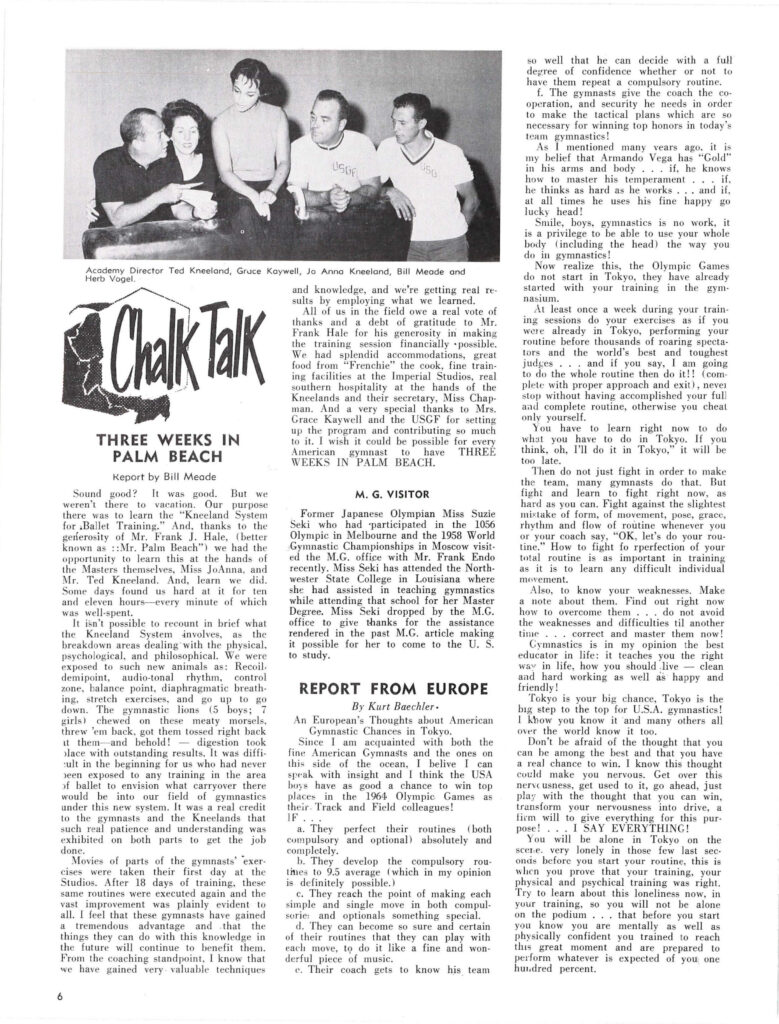
In the “Chalk Talk” section of the 1963 September issue of Modern Gymnast, Kurt Bächler, who became known as the “Father of Trampolining,” wrote an entire plan for the Americans to succeed in Tokyo.
One of the items: “They develop the compulsory routines to 9.5 average (which in my opinion is definitely possible
9.5 average? Simple enough, right?
Umm… Have you seen the 1964 compulsories? They were called “perhaps the most difficult ever.” (Modern Gymnast, March 1964)
(To be fair, if you asked any elite gymnast who competed compulsories, they would tell you that their quad’s compulsories were the most challenging.)
Since my first blog post started in 1962, let’s continue down the 1962 rabbit hole by doing a Cliffs Notes version of the 1962 World Championships for the men.