Flying rings? Track and field events like javelin throwing?If you’ve been reading this site, you might be wondering about the evolution of the women’s program at FIG competitions.
So, here’s a quick rundown of the women’s programs at the major FIG competitions. Here we go…
The women’s competition at the 1928 Olympic Games was solely a team competition. As was the women’s competition at the 1934 World Championships. As was the women’s competition at the 1936 Olympic Games.
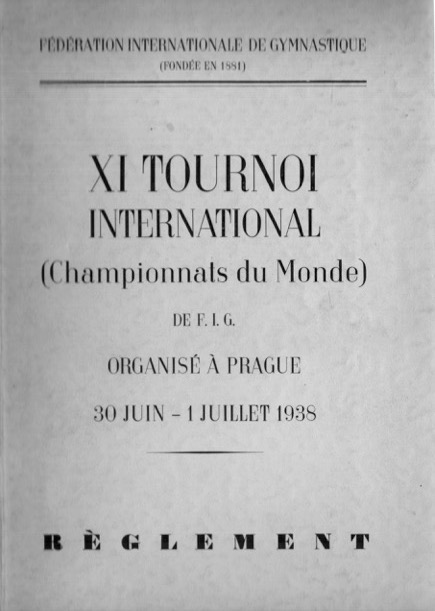
At the 1938 World Championships, in addition to the team results, a women’s individual all-around champion was crowned for the first time at a major FIG competition. (Note: Previously, there had been individual champions at competitions like the Workers’ Olympics, which were unaffiliated with the FIG.)
Let’s take a look at what happened on June 30 and July 1.
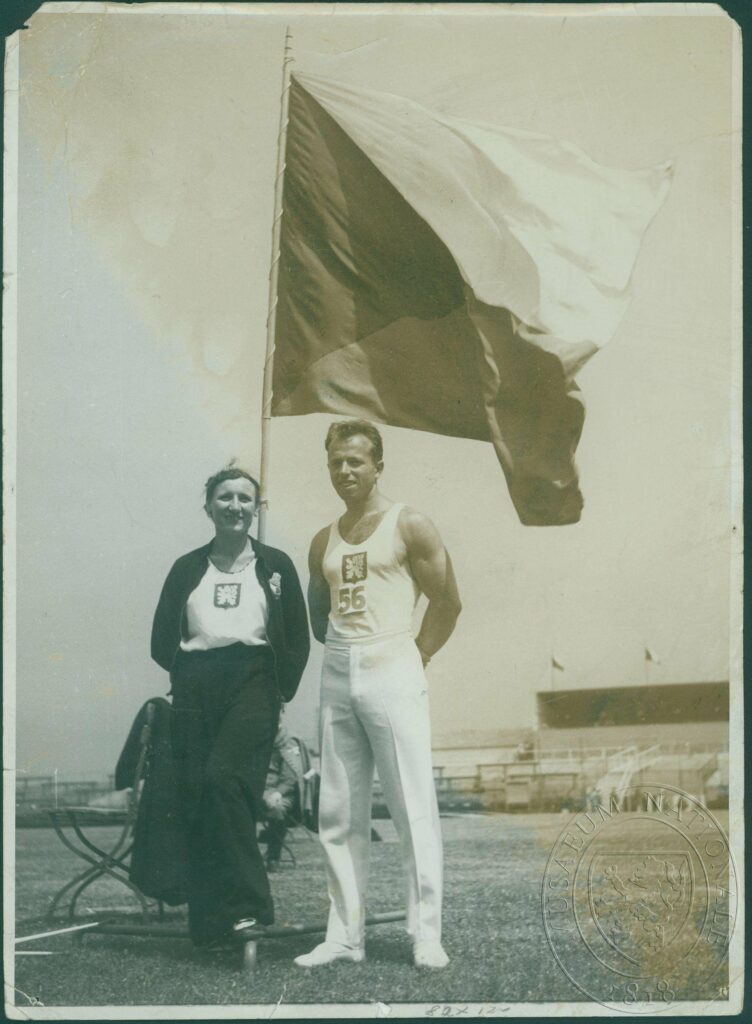
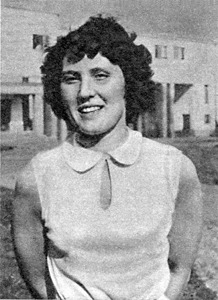
Vlasta Děkanová and Alois Hudec, 1938, Národní muzeum – Historické muzeum, Czech Republic
Confusion bookended the 1934 World Championships in Budapest.
Before the competition started, Germany showed up at the FIG Congress, wanting to become a member of the FIG and participate in the 1934 World Championships.
That was not the typical protocol. Usually, countries didn’t seek admission just hours before a competition started. So, the FIG Congress had to answer the question: if the German federation becomes a member one day, can German gymnasts compete at the World Championships the next day?
That was the first source of confusion. After the competition ended, the second source of confusion cropped up. The gymnastics community realized that the initial results had been miscalculated, and all the results had to be recalculated.
The 1934 World Championships were the first time that the competition was called the “World Championships.” Previously, the competition had been known as the “International Tournament.”
In 1934, the men competed on the six apparatus that modern gymnastics fans know and (maybe) love. In addition, there were three track and field events.
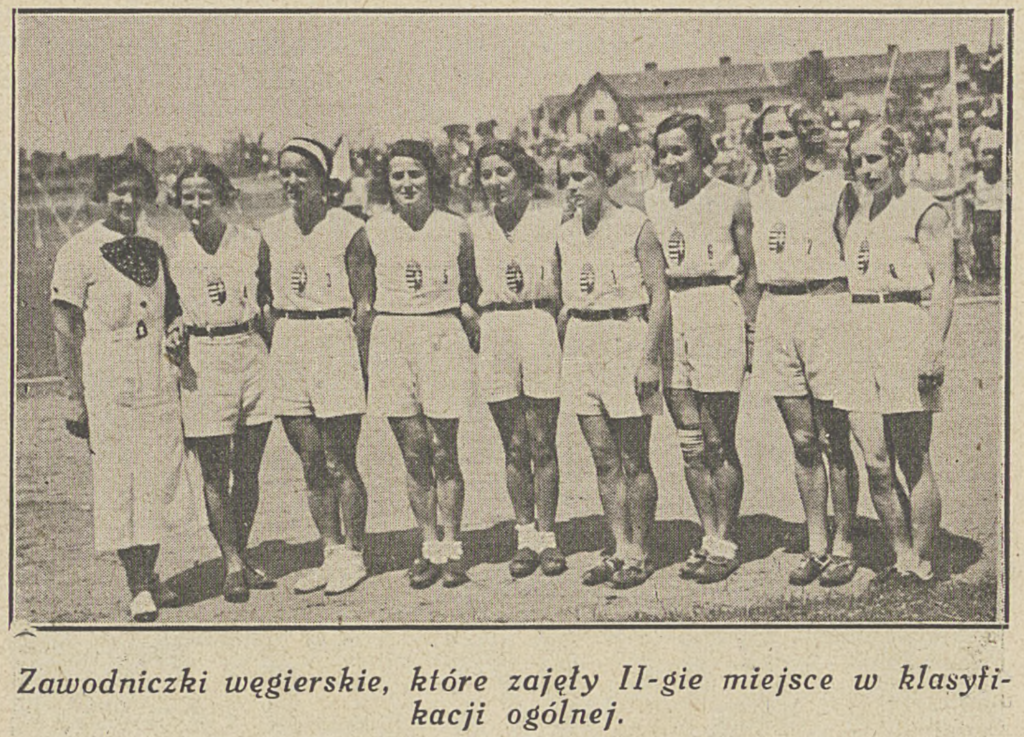
At the 1934 World Championships in Budapest, women at the World Championships for the first time.
Only five women’s teams participated, but remember that only four men’s teams participated at the first International Tournament, the competition that would become known as the World Championships. (In fact, 1934 was the year that the International Tournament was renamed, becoming known as the World Championships.)
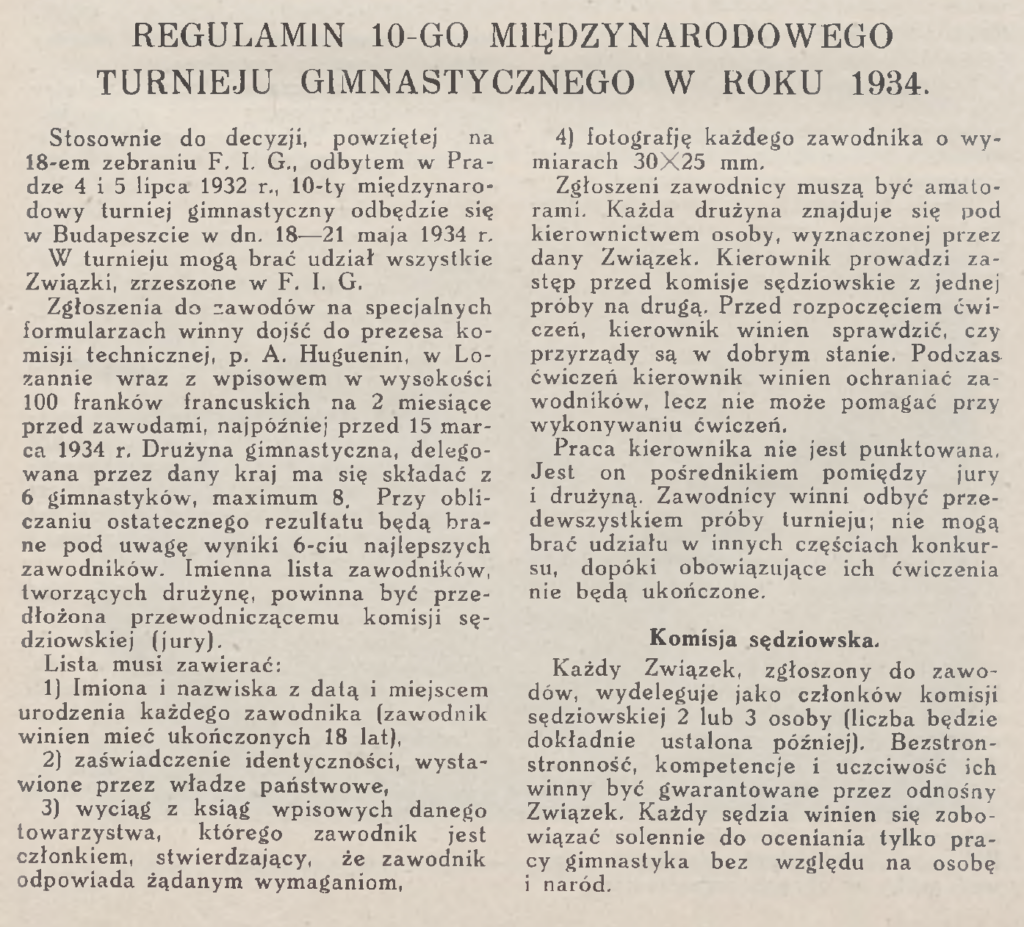
The format for the women’s competition was quite different from modern competitions. There were javelin throws, partner acro exercises, and national dances.
While the men had a Code of Points in place for the 1950 World Championships, the women did not. But they did have a book of General Instructions. What follows are the highlights.
In 1950, Hans Eugster scored a perfect 10 on the parallel bars at the World Championships. It was the first 10 under the very first men’s Code of Points (1949).
The competition wasn’t without its judging controversies that spilled over into the pages of the French and Swiss newspapers.
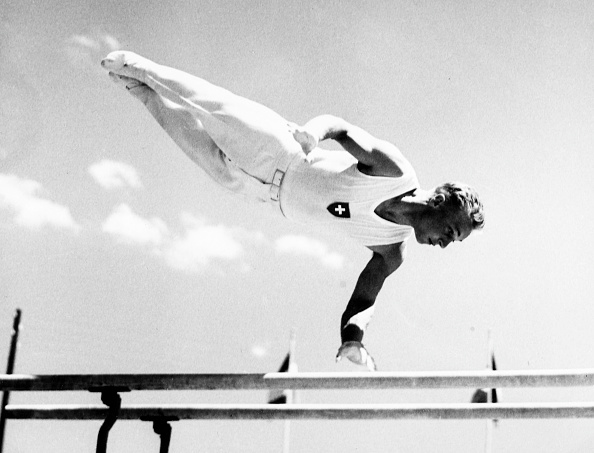
Kunstturn-WM in Basel 1950: Barren-Sieger Hans Eugster (Photo by RDB/ullstein bild via Getty Images)
Even before the 1950 World Championships started, there was drama at the World Championships. Hungary was supposed to send a large delegation of gymnasts, but they didn’t. Instead, a small group of officials reportedly came and tried to bar Yugoslavia from competing.
Competition previews are a tried and true genre of gymnastics sports writing. They give you a snapshot of who are the favorites, how certain countries’ gymnasts are perceived, and what the supposed expectations of the judges are. Plus, they are fun to read after the competition and see how much the author got right and wrong.
Let’s take a look at the preview for the 1950 World Championships in Basel, Switzerland. It was written by Jean A. Latte and was printed in the French Moroccan newspaper La Vigie Marocaine on July 7, 1950.