Categories
Evolution MAG Olympics World Championships

1896-1950: The Events of Men’s Gymnastics

Male gymnasts have always competed on floor, pommel horse, rings, vault, parallel bars, and high bar, right? 

Wrong.

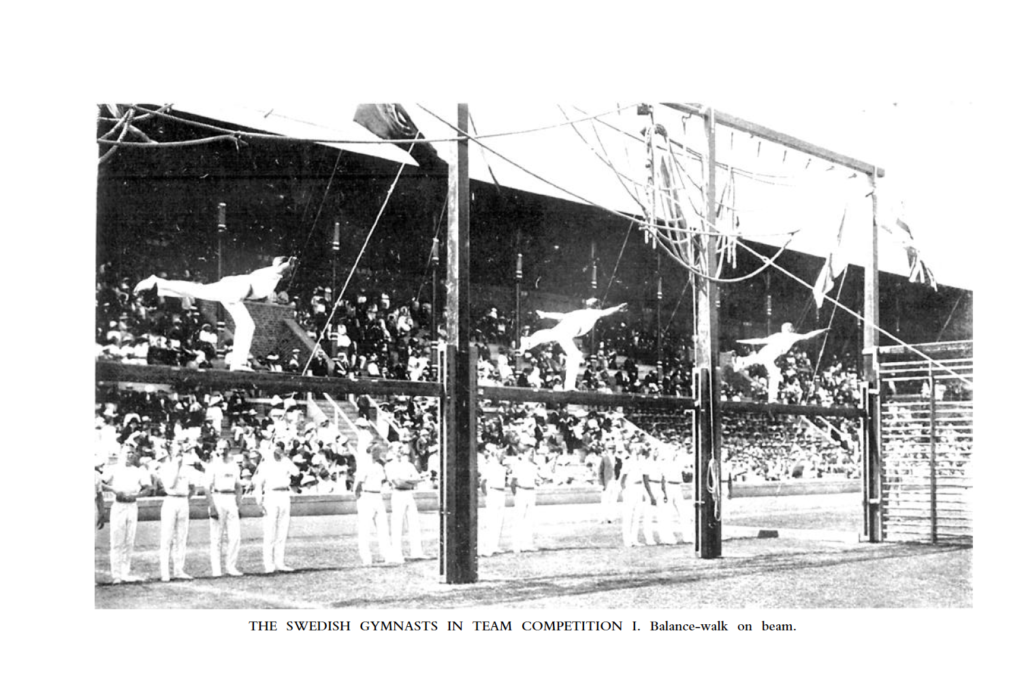
Male gymnasts had quite the journey to today’s competitive format. Here’s a look at events in which the men competed in the early years of the Olympic Games and World Championships.

The Official Report, 1912
Categories
2000 Apparatus Norms Olympics

2000: The Sydney Vault Debacle and the Apparatus Norms Hypothesis

During the women’s all-around at the Sydney Olympics, the vault was set 5 cm too low. Multiple gymnasts vaulted on a horse set at 120 cm when it should have been set at 125 cm. As a result, several gymnasts fell, including the favorite for the all-around title, Svetlana Khorkina.

During the third rotation’s warmup, Allana Slater insisted that something was wrong, and eventually, the vault was raised to the correct height (125 cm). After the competition, Kym Dowdell, the competition manager, issued a statement:

“Unfortunately, equipment personnel failed to set the vault at the appropriate height.”

Qtd in. International Gymnast, November 2000

But how? How do equipment personnel fail to set the vault correctly?

That’s the question that the gymnastics community has been asking for over two decades.

Well, I have a hypothesis. It has to do with the apparatus norms that were printed in 2000. 

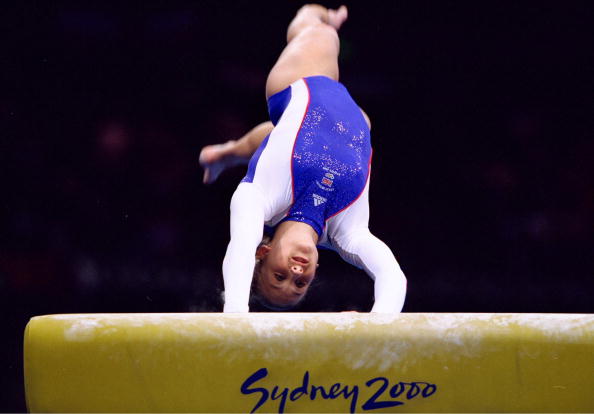
17 Sep 2000: Annika Reeder of Great Britain in action on the vault during the Women’s Gymnastics Qualification at the Sydney Superdome on Day Two of the Sydney 2000 Olympic Games in Sydney, Australia. \ Mandatory Credit: Billy Stickland /Allsport

Note: Reeder was injured on her vault landing during the all-around final.
Categories
European Championships MAG Olympics Perfect 10 WAG World Championships

The Perfect Scores before Nadia Comăneci and Nellie Kim

Before Nadia Comăneci’s and Nellie Kim’s perfect 10s at the 1976 Olympic Games, there was a long line of gymnasts who obtained perfect scores at the Olympic Games, the World Championships, or the European Championships. (Originally, the World Championships were called the International Tournament.)

Some of them even managed perfect totals, meaning that they received the maximum score for their compulsory and optional routines combined.

So, here’s a chronological list of the gymnasts who were “perfect” before Comăneci and Kim.

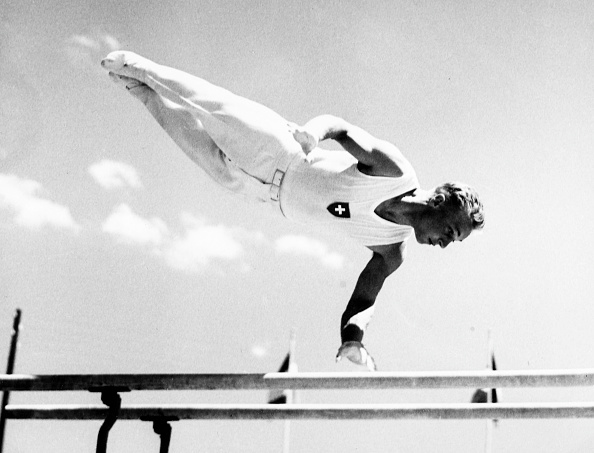
Kunstturn-WM in Basel 1950: Barren-Sieger Hans Eugster (Photo by RDB/ullstein bild via Getty Images)
Categories
Evolution Olympics WAG World Championships

1928-1956: The Events of Women’s Gymnastics

Flying rings? Track and field events like javelin throwing? If you’ve been reading this site, you might be wondering about the evolution of the women’s program at FIG competitions.

So, here’s a quick rundown of the women’s programs at the major FIG competitions. Here we go…

Categories
1928 MAG Olympics Perfect 10

1928: A Costly Math Error during the Men’s Competition at the Amsterdam Olympics

The men’s competition at the 1928 Olympics was a close battle between Czechoslovakia and Switzerland. It came down to the very last event, vault, on which Czechoslovak gymnast Šupčík fell and on which Swiss gymnast Eugen Mack received a perfect score for his compulsory routine.

Modern gymnastics fans might be surprised to know that one of the countries performed to music. During its ensemble floor routine, Yugoslavia told the history of its nation through music and movement. (Technically, it wasn’t Yugoslavia at the time but rather the Kingdom of Serbs, Croats, and Slovenes or SHS for short.)

Of course, there was a fair share of judging drama. It’s gymnastics.

Unfortunately, there were some organizational problems, too. Due to a mathematical error, the wrong person received the bronze medal on rings.

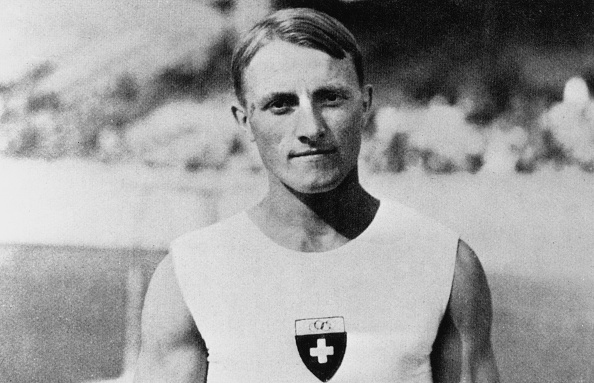
Swiss gymnast Georges Miez (1904-1999) at the 1928 Summer Olympics, held at the Olympisch Stadion (Olympic Stadium) in Amsterdam, Netherlands, August 1928. Miez won gold in the Men’s artistic individual all-around, Men’s artistic team all-around, Men’s horizontal bar, and won silver in the Men’s pommel horse. (Photo by Bob Thomas/Popperfoto/Getty Images)
Categories
1928 MAG Olympics

1928: The Rules for Men’s Gymnastics at the Olympic Games

At the Olympic Games prior to 1928, the men competed in track and field events, rope climbing, or even an obstacle course (1920).

The Amsterdam Olympics marked a turning point in men’s gymnastics. For the first time, the athletes competed only on gymnastics apparatus at the Olympic Games. No rope climb. No sprints. No high jump. Just apparatus gymnastics.

However, the Olympic program still hadn’t taken its modern form. In 1928, male gymnasts didn’t perform individual floor routines. They did, however, perform on the floor as an ensemble, and, as we’ll discuss in the next post, the Yugoslav team had a remarkable ensemble routine.

Categories
1928 Olympics WAG

1928: Women Compete in Gymnastics at the Olympics for the First Time

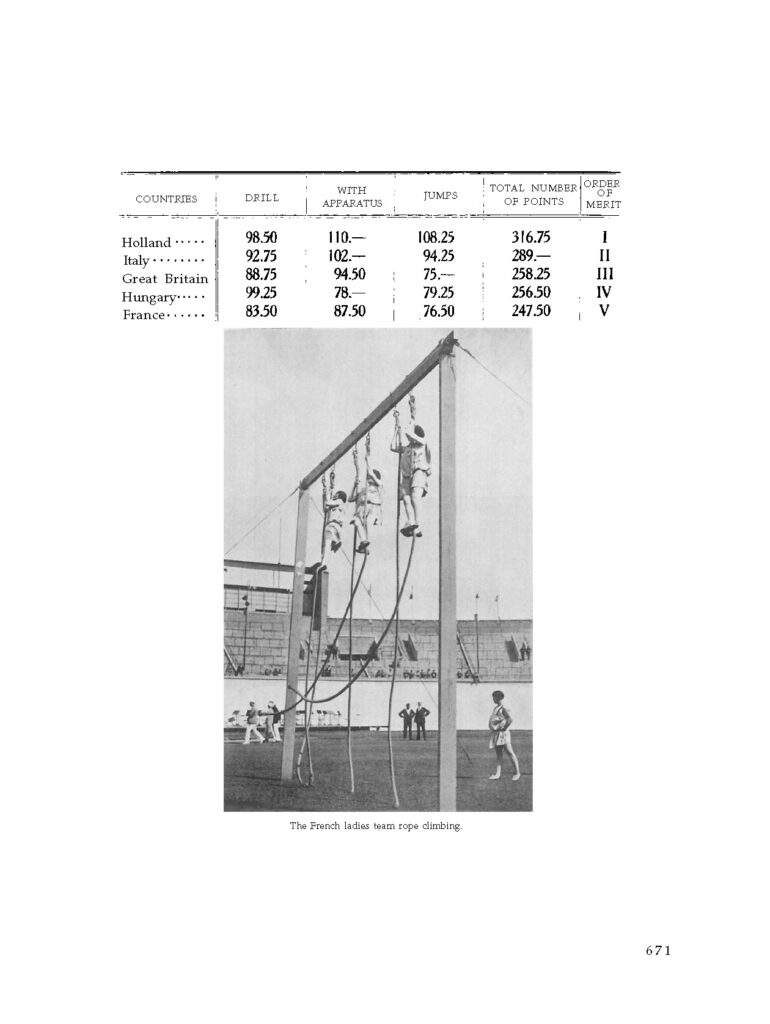
Whereas men competed in gymnastics at the very first Olympic Games in 1896, women had to wait until the 1928 Games in Amsterdam. Unfortunately, the Official Report provides little commentary on the women’s competition — save for the results, the names of the athletes, and a photo of the French team climbing the double ropes.

But there were newspaper accounts of the events.

In this post, we’ll dive a bit deeper and look at two perspectives: that of the Dutch and that of the French. (The former was written for a general audience, while the latter was written for the gymnastics nerds.)

As we’ll see, there were some glaring issues that needed to be addressed in women’s gymnastics.

Categories
1928 Olympics WAG

1928: Rules for the First Women’s Gymnastics Competition at the Olympic Games

In 1928, women finally competed in gymnastics at the Olympic Games. Previously, they had been allowed to perform exhibitions, but they weren’t part of the competitive program.

The rules for the women’s competition at the 1928 Olympic Games were vague at best. After reading this post, you’ll probably have more questions than answers.

So, here are the rules…

Categories
1925 Olympics

1925: Gymnastics at the First Workers’ Olympiad

Over the years, there have been many versions of the Olympic Games. One version was the International Workers’ Olympiads, which positioned itself in opposition to the “bourgeois” Olympics.

(For a list of Olympics that happened before the 1896 Olympics in Athens, check out this post.)

As I stated in my previous post, the International Workers’ Olympiads gave Swiss women the opportunity to compete internationally at a time when the FIG didn’t allow women to compete. (At the Olympic level, women first competed in gymnastics at the 1928 Olympics.)

So, let’s take a look at what happened at the First International Workers’ Olympiads in 1925.

Categories
1896 19th Century MAG Olympics

1896: Gymnastics at the Olympic Games

Nowadays, we see the Olympic Games as the pinnacle of sports, and we have romanticized the first modern Olympics in Athens.

But, to understand the gymnastics competition at the 1896 Olympic Games, we need to set aside those notions.

By and large, the gymnastics community didn’t see the first Olympic Games as a glorious revival of an ancient tradition. In fact, most of the European gymnastics federations turned down their invitations.

Weingärtner