By the end of 1991, Li Chunyang had established himself as the world’s premier horizontal bar specialist. He won back-to-back world titles in Stuttgart (1989) and Indianapolis (1991), helped China to consecutive World Championship team silver medals, the men’s team gold at the 1990 Asian Games, and Olympic team silver at Barcelona in 1992.
This profile appeared in New Sports in early 1990, shortly after Li’s breakthrough victory in Stuttgart. Rather than focusing on the competition itself, it traces the making of a champion—from his discovery as a schoolboy in Shantou and his development under Gao Jian and Huang Yubin to his emergence as the new “King of the Horizontal Bar.” Along the way, it also captures a defining feature of Chinese gymnastics in the 1980s: its determination to match and surpass the Soviet Union in technical innovation, exemplified by Li’s pursuit of the triple back on floor exercise after seeing Valeri Liukin debut the skill in Europe.
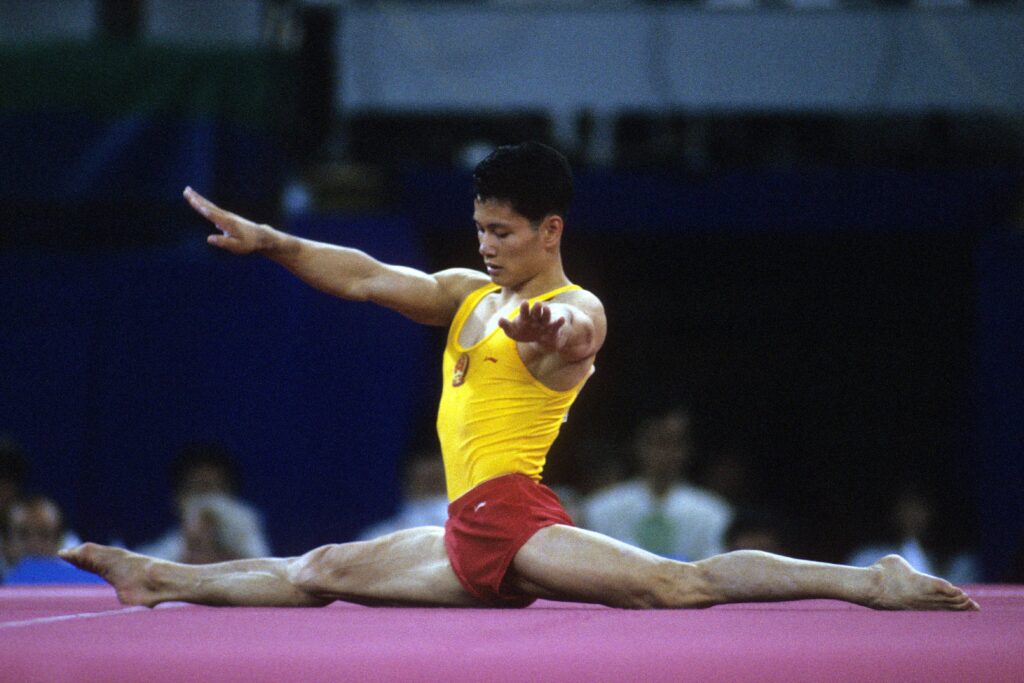
“The King of the Horizontal Bar” — Li Chunyang
Tian Yuyue
China Sport Science and Technology, 1990-04-01
“Between Dream and Play.” In 1976, the Shantou District Amateur Sports School went to local primary schools to select promising young “seedlings.” Li Chunsheng and Li Chunyang were selected at the same time.
A year later, Chunyang had put down roots at the sports school. His ambitions at that point were modest. The Shantou Amateur Sports School simply wanted to make a name for itself in Guangdong gymnastics circles — being able to send someone to compete in the World Student Games once or twice over would have counted as success.
The 1978 Guangdong Provincial Games gave Chunyang his first opportunity to stand out. At his age, being able to perform movements in competition virtually indistinguishable from those of provincial team members was no small thing. The moment the competition ended, the provincial team put forward a request to bring him in for training. But Coach Zheng at the sports school had always had his heart set on letting Chunyang compete in the World Student Games and was reluctant to let him go. Then the Beijing Institute of Physical Education also sent someone to Guangdong to recruit him. Guangdong’s refusal was blunt: not releasing him. In January 1980 he officially joined the Guangdong Provincial Gymnastics Team.
In 1984, he won the floor exercise silver medal at the national championships.
One evening, the provincial team’s veteran coach Wang Haotao called him over: “Son, you should go to the national training squad’s Gao Jian group — Director Gao will definitely be able to coach you well.” But he didn’t want to go. He had not yet grasped that the door determining the course of his entire life had already opened.
Yet in the end, he went. That was January 5, 1985.
“Awakening from the Dream.” The first thing Coach Gao said when he met Chunyang was: “Chunyang, never mind winning glory for the country for now — just looking at the fine fellows surnamed Li on this gymnastics team, you ought to train properly and not disgrace the ‘Li clan.'” At the national training squad, there were already world champions surnamed Li — Li Yueju, Li Xiaoping, and Li Ning. Training alongside them every day, Chunyang found it tremendously motivating.
On first arriving at the national training squad, the work was foundational — going back to basics. And so Chunyang’s life on the team began.
The following year, with the foundation laid, difficulty work began. Chunyang proved a quick study, performing with flair and elegance. In June 1987, Chunyang traveled to West Germany for an exhibition competition. On returning home, he learned that the Soviet Union’s Liukin had performed a triple back on floor exercise at the European Championships. Compared with the Soviets, the Chinese team had always been strong on floor exercise — yet this time, the Soviets had gotten there first. Chunyang was not going to accept that, and nor was the Chinese team. The coaching staff decided: Chunyang would also train the triple.
Chunyang proved equal to the challenge. After several practice sessions he could complete three rotations in the air. It was with this triple that Chunyang traveled to the 1987 World Championships in Rotterdam.
In the pre-competition podium training, Chunyang was nothing short of a sensation. The moment his triple appeared, the entire arena erupted. No one had anticipated that a mere three months after the Soviet Liukin had debuted the triple, the Chinese had produced it too. From that moment on, everyone at the World Championships knew who Li Chunyang was.
The disappointment was that in actual competition, the triple was not used. The triple is the absolute pinnacle of floor exercise difficulty — no one dared deploy it lightly, for fear of a disastrous fall.
“My Future Is Not a Dream.” After the Olympics, Chunyang naturally stepped into a leading role. Through the winter training camp, Coach Huang Yubin drove him especially hard. The World Championships were waiting for them — that was the wall they had to break through. Chunyang focused on building difficulty and mastering the new compulsory elements. His physical conditioning was a weak point; his strength was inadequate. Huang Yubin took him to the athletics track…
With the warm autumn breeze of October, Chunyang set off with the Chinese gymnastics team for Stuttgart and the 25th World Championships.
Every one of them was biting his lip, the whole team assuming the posture of fighters resolved to give everything. A fierce competitive drive surged through Chunyang — he wanted nothing more than to get out there right then and win it cleanly. And he competed superbly. On parallel bars, horizontal bar, floor exercise, and pommel horse, he qualified for the event finals in all four.
In the event finals, the floor exercise gold that Chunyang most wanted eluded him — he took bronze. That same day, the women’s team’s Fan Di won the uneven bars title. After the competition, Fan Di came over to Chunyang and said: “Come on, guys — go for it!” Chunyang smiled with easy confidence: “Tomorrow’s horizontal bar final — I’m definitely taking gold!”
The horizontal bar final was the closing act, and Chunyang was again the last to perform. He took the floor with spirit blazing. As he moved through his routine he was like a cloud drifting across a blue sky — so fluid and free, seamlessly unified, carrying the audience through moments of astonishment and danger into a realm of beauty… Then silence, followed by thunderous applause. With a score of 9.95, Chunyang had won the horizontal bar gold.
(Excerpted from New Sports)
“ 单杠王” 一一李春阳
田玉约
“梦与游戏之间”。1976年,汕头地区业余体校到所属地区的小学选”苗子”,李春生,李春阳同时被选中。
一年后,春阳在体校扎了根。那时春阳的目标倒没有多大。汕头业余体校想在广东的体操圈内出人头地,能派出一二届下参加世界中学生运动会便是成功。
1978年的广东省运动会,给了春阳崭露头角的机会。以他的年龄,在比赛中能做出与省队队员相差无几的动作,已是非同小可。比赛刚结束,省队便提出要调他参加集训。但体校的郑教练心中一直想着要让春阳参加世界中学生运动会,舍不得。随后,北京体院也派人到广东要他。广东省回绝得很痛快:不放。1980年1月他正式参加广东省体操队。
1984年,他在全国比赛中获得自由体操亚军。
一天晚上,省队的老教练王海涛把他叫到身边:”孩子,你应该到国家集训队的高健组去,高指导一定能教好你。”可是,他并不想去,他没意识到,决定自己一生命运的门已经打开了。
然而,他毕竟去了。那是1985年1月5日。
”梦醒的我”。高教练见到春阳的第一句话就是:”春阳啊,咱还别说是为国争光,就从体操队姓李的这几员好汉来说,你也应当好好练,别给’李氏家族’丢脸。”在国家集训队,当时已有李月久、李小平、李宁这样的李姓世界冠军。在队里,春阳每天与他们同场训练,感到挺来劲。
刚到国家集训队,先是进行基本动作的训练,重新打基础。就这样,春阳开始了在队里的生活。
转年,基础打好了,开始上难度。春阳果真上得快,玩得潇洒、漂亮。1987年6月,春阳出访联邦德国进行表演赛。回国后,他才知道,苏联的留金在欧洲锦标赛上做出自由体操的3周动作。中、苏相比,中国队在自由体操上一贯是强项。这次,却让苏联占了先。春阳不甘心,中国队更不甘心。体操队的教练们决定,让春阳也上3周。
春阳果然灵。经过数次练习,能在空中翻3个跟头。春阳正是带着这个”3周”参加1987年鹿特丹世锦赛的。
赛前的赛台训练,春阳可算出尽风头。他的3周一亮相,全场哗然。谁也没想到,在苏联留金刚刚做出”3周”之后,短短3个月的时间,中国人也拿出了”3周”动作。这下,参加世锦赛的所有人,都认识了李春阳。
可惜的是,在正式比赛时,这个”3周没用上。”3周”实在是到了自由体操高难动作的尖端,谁也不敢轻易用,怕万一失败。
”我的未来不是梦”。奥运会后,春阳自然而然挑起大梁。冬训,春阳由黄玉斌教练带着,练的特别狠。世锦赛等着他们,那是一道关,必须冲过去。春阳重点发展难度,练新规定动作。他身体素质较差,力量不行。黄玉斌带他上了田径场……
伴着10月和煦的秋风,春阳随中国体操队奔赴斯图加特参加25届世锦赛。
中国队在规定动作比赛中,得分大大超过了日本队。但在自选动作单杠比赛的关键时刻,王崇升从单杠上掉下来,受伤了。他看了站在周围的队友们一眼,只见每个人都咬着嘴唇,大家摆出誓死一拼的架势,一种强烈的比赛欲望驱使着春阳,他真想马上去比,干净利索地拿下来!他比得很成功。双杠、单杠、自由体操、鞍马都取得单项决赛权。
单项决赛,春阳最想拿的自由体操冠军没拿到,得了块铜牌。同一天,女队的樊迪却获得了高低杠冠军。比赛结束后,樊迪走到春阳身边说:”哥儿们,加油啊!”春阳笑得自在:”明天的单杠,一定拿个冠军!”
单杠决赛是压轴戏,春阳又是最后一个做。他精神抖擞地上场了。他作动作时象一片飘荡在蓝天的云,那么流畅自由,浑然如一体,在惊与险中将观众带入了美的境界……沉默之后是震天动地的掌声。9.95分,春阳拿到了单杠冠军。
(摘自《新体育》)
Appendix: More on the Triple Back in 1987
September 1986: Sovetsky Sport reported that Vladimir Gogoladze was training a triple back.
Going Their Own Way
The all-around champion of the Spartakiad tournament was the well-known gymnast Vladimir Artemov. He delivered a flawless performance in the all-around final.
But what interesting things did the other young masters demonstrate? The performances of the 36 finalists are reviewed by Honored Coach of the USSR Vladimir Popov.
[…]
Perhaps I’m overstating the case a bit. But it seems to me that the 24-year-old world all-around champion Yuri Korolev is more versatile in his routines than the generation coming up today. I know that Valentin Mogilny is working on new elements (though he is not competing because of an injury), Vladimir Gogoladze is attempting a triple salto on floor exercise, and the other members of the national team are also searching for new skills. They are training with the future in mind, thinking about how not to let others overtake them. As footballers say, they are “getting to the ball first.”
Sovetsky Sport, September 27, 1986
ИДТИ СВОИМ ПУТЕМ
Абсолютный чемпион спартакиадного турнира — известный гимнаст Владимир Артемов. Он безупречно выступил в финале многоборья.
А что интересного продемонстрировали другие молодые мастера? Выступления 36 финалистов комментирует заслуженный тренер СССР Владимир ПОПОВ.
[…]
Возможно, я несколько сгущаю краски. Но мне кажется, что 24-летний абсолютный чемпион мира Юрий Королев более разнообразен в своих упражнениях, чем сегодняшняя смена. Знаю, что разучивает новинки Валентин Могильный (он не участвует из-за травмы), пробует тройное сальто на вольных Владимир Гоголадзе, ищут новинки другие члены сборной страны. Они тренируются с перспективой, думают о том, чтобы не дать обойти себя, как говорят футболисты, «сами выходят на мяч».
Note: Gogoladze competed the triple back on floor at the 1988 Olympics.
March 1987: Liukin landed a triple back at the Moscow News tournament.
Climbing to the Third Floor
Valeri Liukin of Alma-Ata wins the Moscow News International Tournament
Spring is in the air in Moscow. During the day, melting snow drips from the rooftops, and rays of sunshine sparkle in the puddles. But inside the Olimpiysky Sports Complex, it feels like summer—thanks to the blazing spotlights, generous smiles, and warm handshakes. We had missed gymnastics. We eagerly awaited another meeting with the sport’s rising generation.
After congratulating Olympic champion Mikhail Voronin on his birthday, I asked what he thought about the new skills we might see.
“There will definitely be new skills,” Mikhail Yakovlevich replied. “I advise you to watch 21-year-old Valeri Liukin very carefully. I’m convinced that this season he will challenge all of our established stars.”
The wait for the competition was anything but tedious. The Olimpiysky, which had already hosted many major competitions, had done everything possible to make its guests feel at home. Without exaggeration, every team, every competitor, every coach received exceptional attention.
Everyone greeted Nikolai Kirillovich Popov, the elder statesman of Soviet gymnastics, with particular respect. For many years, he had served as vice president of the International Gymnastics Federation and also headed the All-Union Gymnastics Federation. He was in his eighty-third year, yet Nikolai Kirillovich remained youthful, cheerful, and vigorous, delighted to see his beloved sport flourishing.
Following the opening parade, we were treated to exhibition performances by gymnasts and breakdance virtuosos, while Moscow hairstylists showcased the latest fashions in hairstyles.
I spotted two friends from Vladimir in the stands—Yuri Korolev and Vladimir Artemov. They, too, were waiting for something special. Volodya cocked the shutter of his camera; the photographs would soon appear in the wall newspaper at the Vladimir sports school.
Then announcer Vladimir Zaglada, in a voice reminiscent of the legendary Levitan, proclaimed: “Dear spectators! Just moments ago, Valeri Liukin became the first person in the world to perform a triple salto on floor exercise in an international competition!”
Korolev and Artemov applauded louder than anyone.
When the double salto first became common, gymnasts liked to joke that they had moved the salto “up to the second floor.” Now Liukin had climbed all the way to the third floor, and that was a landmark event for our sport.
Valeri recalled with a smile how, when he lived in Aktobe, his older brother Sasha decided to join a gymnastics club but refused to take him along. Young Valeri secretly followed his brother and unexpectedly appeared before coach Yuri Gorelnikov. Both boys were accepted into the program.
For the past seven years, he had studied at the sports boarding school in Alma-Ata, where he and coach Eduard Yarovy dreamed of making the national team. The dream came true. Last year, Liukin made his first appearance for the Soviet team at the Goodwill Games, winning the vault title.
This year, in the opinion of Olympic champion Alexander Tkachyov, Liukin possesses one of the world’s most difficult and harmonious all-around programs.
And, of course, the triple salto is the jewel of his floor exercise.
Valeri himself, however, believes there is nothing extraordinary about it. “If you want to win, you have to keep surprising people.”
He remembers that on December 19 of last year, he first landed the triple salto on floor—but only in practice. Now another date will remain forever in his memory: March 27, 1987, when the crowd at the Olimpiysky applauded the daring and innovation of this romantic of gymnastics.
Our young men looked magnificent on the competition floor. Not one of them—neither Liukin, nor fellow Almaty gymnast Vladimir Novikov, nor Ravil Adeyev of Cherkessk, nor Leningrad’s Maksim Demkin—made a mistake. Their consistency was admirable. All of them could contend for places on the team for the World Championships this autumn, while Valeri Liukin appears headed for the European Championships in May.
It is remarkable how quickly gymnasts from countries where this sport was once virtually unknown have mastered difficult skills.
“Did you see that?” an excited Viktor Sultanov, a Master of Sport, nudged me. “The Syrian Muhamed Namir performed a Tsukahara on rings!”
Only a year earlier, Yerevan native Vartgez Arakelyan, the coach who had developed Olympic champion Eduard Azaryan, had begun working in Syria. His new students had already made noticeable progress. The Cubans impressed with their original combinations on individual apparatus, as did the gymnasts from East Germany, the United States, and North Korea.
I can only imagine how exciting the apparatus finals will be when the event titles are decided.
V. Golubev
Master of Sport
Technical Results
14th Moscow News International Artistic Gymnastics Tournament
Moscow, Olimpiysky Sports Complex — March 27Men’s All-Around Final (Optional Exercises)
Sovetsky Sport, March 29, 1987
- Valeri Liukin (USSR) – 58.30
- Vladimir Novikov (USSR) – 57.80
- Ravil Adeyev (USSR) – 57.65
- Maksim Demkin (USSR) – 57.40
- Diyan Taskov (Bulgaria) – 56.75
- Li Chol Hong (North Korea) – 56.50
Взобрался на третий «этаж»
Алмаатинец Валерий Люкин — победитель международного турнира на призы газеты «Московские новости»
В Москве пахнет весной, днем звенит капель, лучики солнца отражаются в лужах. А в спорткомплексе «Олимпийский» по-летнему жарко — от мощных юпитеров, от щедрых улыбок, от дружеских рукопожатий. Мы соскучились по гимнастике. Мы с волнением ждали встреч с гимнастической молодостью.
Поздравив олимпийского чемпиона Михаила Воронина с днем рождения, интересуюсь его мнением относительно показа новинок.
— Новинки обязательно будут, — ответил Михаил Яковлевич. — Советую внимательно следить за выступлением 21-летнего Валерия Люкина. Уверен, что в этом сезоне он составит конкуренцию всем нашим знаменитостям.
Ожидание старта было совсем неутомительным. В «Олимпийском», который уже не раз проводил крупные соревнования, сделано все, чтобы гости чувствовали себя непринужденно. Без преувеличения — каждой команде, каждому участнику, тренеру — повышенное внимание.
С особым почтением все здоровались с Николаем Кирилловичем Поповым, старейшиной нашей гимнастики. Многие годы он был вице-президентом международной федерации, возглавлял и всесоюзную федерацию. Ему идет 83-й год, а Николай Кириллович молод, улыбчив, крепок, и он счастлив, что его любимая гимнастика так хорошеет.
А еще после парада открытия мы увидели и показательные выступления гимнастов, виртуозов брейк-данса, московские парикмахеры продемонстрировали модели современных причесок.
Вижу на трибуне двоих друзей из Владимира — Юрия Королева и Владимира Артемова. Они тоже ждали открытий. Володя «взвел курок» фотоаппарата — снимки появятся в стенгазете владимирской спортшколы.
И когда диктор Владимир Заглада «левитановским» голосом объявил: «Дорогие зрители! Только что Валерий Люкин впервые в мире на международных соревнованиях исполнил на ковре тройное сальто», Королев и Артемов аплодировали, казалось, громче всех.
Когда в обиход вошло двойное сальто, гимнасты любили говорить: «скрутили сальто на втором “этаже”». И вот теперь Люкин взобрался аж на третий «этаж», и это событие в нашем виде знаменательное.
…Валера с улыбкой вспоминал, как, живя в Актюбинске, его старший брат Саша решил записаться в секцию гимнастики, а его ни за что не хотел взять с собой. Тогда Валерка «выследил», куда направился брат, и тоже неожиданно предстал перед тренером Юрием Горельниковым. В секцию приняли обоих. А последние семь лет он учился в Алма-Ате в школе-интернате спортивного профиля и с тренером Эдуардом Яровым мечтал попасть в сборную страны. Мечта сбылась. В прошлом году Люкин впервые в составе команды выступил на Играх доброй воли и победил в опорном прыжке. Нынче же у него, по мнению олимпийского чемпиона Александра Ткачева, одна из самых сложных и гармоничных программ в мире.
И конечно, тройное сальто — украшение его вольных упражнений. Сам же Валера считает, что в этом нет ничего необычного, ведь если хочешь побеждать, надо все время удивлять. Он помнит: 19 декабря прошлого года впервые сделал тройное сальто на ковре, но на тренировке. Теперь запомнит и другой день — 27 марта 1987 года «Олимпийский» рукоплескал дерзости и новаторству романтика гимнастики!
Наши ребята, что и говорить, выглядели на помосте прекрасно. Никто — ни Люкин, ни алмаатинец Владимир Новиков, ни Равиль Адеев из Черкесска, ни ленинградец Максим Демкин — нигде не ошибся. Похвальная стабильность молодых. Все они могут претендовать на участие в осеннем чемпионате мира, а Валерий Люкин — в майском первенстве континента.
Поражаешься, как быстро осваивают сложные трюки гимнасты тех стран, где раньше об этом виде толком ничего и не знали.
— Ты видел? — восхищенный Виктор Султанов, мастер спорта, толкнул меня в бок. — Сириец Мухамед Намир выполнил на кольцах «лунное» сальто!
Всего год работает в Сирии ереванец Вартгез Аракелян, воспитавший олимпийского чемпиона Эдуарда Азаряна. А его новые ученики уже добились заметного прогресса. Удивляли оригинальными связками на отдельных снарядах кубинцы, гимнасты ГДР, США, КНДР.
Представляю, каким интересным может быть финал, когда будут разыгрываться призы в отдельных видах многоборья!
В. Голубев,
мастер спорта.
ТЕХНИЧЕСКИЕ РЕЗУЛЬТАТЫ
XIV международный турнир по спортивной гимнастике на призы газеты «Московские новости». Москва. Спорткомплекс «Олимпийский». 27 марта.
Мужчины. Финал многоборья. Произвольная программа.
В. Люкин — 58,3;
В. Новиков — 57,8;
Р. Адеев — 57,65;
М. Демкин (все — СССР) — 57,4;
Д. Тасков (Болгария) — 56,75;
Ли Чол Хон (КНДР) — 56,5.
May 1987: Valeri Liukin competed the triple back at the European Championships.
Different Paths Toward the Same Goal
Olympic champion and Honored Master of Sport Vladimir Markelov comments on the men’s all-around competition.
The strongest impression of the second day of the championships was, for me, undoubtedly the triple salto performed by Valeri Liukin in his floor exercise. It was not simply because the element itself was unique (nor was this Valery’s first attempt at it), but above all because of the confidence with which the young gymnast executed such an extraordinarily difficult acrobatic skill. That confidence suggests that world gymnastics is entering a new phase—a new turn in the spiral of increasing difficulty.
Does difficulty have a limit? I am convinced it does not. But it must always be balanced, because when difficulty is elevated to an absolute, the sport begins to look strained and distorted. In women’s gymnastics, elegance and grace serve as a counterweight to the relentless pursuit of greater difficulty. But who says those qualities belong exclusively to women? Isn’t precision and completeness of movement simply another form of grace, expressed in a masculine way? Isn’t a finely honed routine graceful in its own fashion—not with soft feminine strokes, but with firm, confident masculine lines?
Nevertheless, it is difficulty that drives the progress of our sport. Once a new step has been taken, the next stage becomes one of “consolidating the territory that has been won.” Much depends on how the gymnast and coach approach their work, on the individual traits of their personalities—in short, on everything we include in the concept of style.
Our team at the European Championships has three athletes—and three very different styles.
Yuri Korolev is a self-confident competitor who, when necessary, can compensate for small imperfections in his routines through sheer determination and a uniquely gymnastic boldness, sometimes even turning those imperfections to his advantage. He is the team’s leader—not merely because of his age or experience. One can and should learn from him how to enter a contest without the slightest doubt of victory, to anticipate possible setbacks, and to overcome them.
Valentin Mogilny is meticulous and exceptionally clean in his execution. Whatever he knows, he knows thoroughly; whatever he can do, he does excellently. But if even one difficult “nut remains to crack,” it may overpower him at a decisive moment and throw him off course. If we speak of the reserves for improving Mogilny’s mastery, they lie first and foremost in developing the competitive confidence possessed by Korolev.
Valeri Liukin, by contrast, is an adventurous risk-taker, always eager to gamble. What Mogilny would spend weeks mastering in the gym, Liukin, once he has only just grasped it, is eager to try before an audience under the pressure of competition.
Perhaps I am exaggerating somewhat in these character sketches. I simply want to express as fully as possible my impressions of these young men. I neither praise nor criticize any of them; they are simply different. Nor would I presume to say which of these personalities comes closest to my idea of the “ideal gymnast.”
Returning to the events of the second day of the European Championships, I must say that more gymnasts than ever before took the floor ready to push beyond today’s boundaries of difficulty and move the sport to its next level.
Holger Behrendt of East Germany attempted a triple salto with a pirouette in his high bar dismount. The combinations of Sweden’s Jon Johansson, France’s Laurent Barbieri, Romania’s Marius Gherman, and athletes from other countries not traditionally regarded as gymnastics powers all featured impressive collections of difficult elements. These are the signs of today pointing toward tomorrow.
The average level of difficulty in European gymnastics has risen dramatically, and anyone who hopes to stand at the top must be prepared to become a pioneer, scaling ever higher peaks.
Sovetsky Sport, May 24, 1987
РАЗНЫМИ ПУТЯМИ — К ОДНОЙ ЦЕЛИ
Соревнования в многоборье среди мужчин комментирует олимпийский чемпион, заслуженный мастер спорта Владимир МАРКЕЛОВ.
Самое сильное впечатление во второй день чемпионата произвело на меня, пожалуй, тройное сальто, исполненное Валерием Люкиным в вольных упражнениях. И дело не только в уникальности этого элемента (да и попытка эта у Валерия не первая), а главное, в том, с какой уверенностью проделал молодой гимнаст сложнейший акробатический трюк. Она, эта уверенность, говорит о том, что в мировой гимнастике наступает новый этап, «заход» на очередной виток сложности.
Сложность, — есть ли ей предел? Уверен, что нет. Но ее все время следует уравновешивать, ибо сложность, возведенная в абсолют, делает лицо спорта вымученным и искаженным. В женской гимнастике роль антипода беспрерывному наращиванию сложности отводят изяществу и грации. Но кто сказал, что это исключительно женские качества? Разве строгость и завершенность движений не есть та же грация, но в мужском преломлении? И разве не изящен по-своему отточенный рисунок, выполненный не мягкими женскими штрихами, а уверенной мужской линией?
И все же в прогрессе нашего вида спорта авангардная роль отводится именно сложности, и, лишь когда сделан новый шаг, наступает этап «освоения захваченной территории». И тут многое зависит от подхода гимнаста и тренера к своему труду, от индивидуальных особенностей их характеров, словом, от всего того, что мы вкладываем в понятие — стиль исполнения.
Три спортсмена в нашей команде на чемпионате Европы — и три разных стиля. Юрий Королев, уверенный в себе боец, умеющий, если надо, за счет напора, своеобразного гимнастического куража не только компенсировать мелкие огрехи в своих комбинациях, но иногда даже обернуть их себе на пользу. Он — лидер команды (и не просто по возрасту и опыту), у него можно и нужно учиться умению выходить на борьбу без тени сомнения в победе, предвидеть возможные неприятные случайности и преодолевать их.
Валентин Могильный — аккуратист и чистюля. То, что он знает и умеет, он знает и умеет на «отлично». Но стоит остаться какому-то ореху, как он может в ответственный момент взять верх над гимнастом, выбить его из седла. И если говорить о резервах совершенствования мастерства Могильного, то они прежде всего в обретении бойцовской уверенности, присущей Королеву, Валерию Люкину — азартный задира, всегда готовый на риск. То, что Могильный будет неделями разучивать в тренировочном зале, Люкин, едва «ухватив», стремится опробовать на людях, в экстремальных условиях турнира.
Вероятно, я несколько «пережимаю» в своих оценках, просто мне хочется как можно полнее выразить свои представления о характерах этих ребят, не одобряя и не осуждая ни одного из них, просто они такие и все. И утверждать, какой из этих характеров ближе к моему представлению об «идеальном гимнасте», я также не берусь.
Возвращаясь к событиям второго дня европейского первенства, должен сказать, что на этот раз на помост вышло, как никогда раньше, много гимнастов, готовых перешагнуть сегодняшние рубежи сложности, выйти на ее новый виток. Попытка Хольгера Берендта из ГДР сделать при соскоке с перекладины тройное сальто с пируэтом, набор сложных элементов в комбинациях шведа Йона Юханссона, француза Лорана Барбьери, румына Мариуса Германа и других спортсменов из так называемых негимнастических стран — все это приметы сегодняшнего дня, обращенного в день завтрашний.
В европейской гимнастике резко вырос средний уровень сложности, и для того, чтобы первенствовать в ней, необходимо быть готовым к первовосхождениям на новые вершины.
1987: Liukin twisted his ankle on vault at the World Championships.
Where Are We Hurrying To?
The speedometer needle quivers nervously at 160 kilometers per hour. The headlights carve white patches of fog out of the darkness. Beneath the wheels of our Volvo, the anthracite-colored Amsterdam–Rotterdam highway races by. And I catch myself thinking, almost irrationally, that somewhere along this very stretch of road—flat as a tabletop—my old acquaintance, the famous Dutch speed skater Hilbert van der Duim, was killed in a crash six months ago. On a night just like this, he, too, was hurrying to the World Speed Skating Championships, but we never saw him arrive.
We hurry because we are driven by the desire to see everything with our own eyes, by a thirst for adventure. There is nothing to be done about it; that feeling is stronger than we are. We are born with it.
We are hurrying to Rotterdam for a rendezvous with gymnastics.
Small Holland, a great lover of sport, has hosted every kind of championship imaginable—football, chess, cycling, and, needless to say, speed skating, which seems to visit almost every year. I myself have attended more than one of them. But major artistic gymnastics is coming to the Netherlands for the first time.
The rendezvous will last seven days in Rotterdam’s Ahoy arena, where the 24th World Championships opened yesterday.
As I send these lines to the редакция, behind the partition of the press center, in the vast competition hall, the gymnasts are working through the compulsory exercises, what they simply call “school.” The men have taken the floor first.
[…]
It took us quite a while to find our team in the maze of Ahoy.
The training area has been divided into countless separate sections, each partitioned off from the next, like rooms in an old communal apartment—it’s easy to lose your way. Only after passing the last partition did we finally spot Yuri Korolev, who greeted us with a friendly wave.
The gymnasts are carefully protected here. The arena staff admitted us into the training area only after extracting our word of honor that we would stay no more than five minutes. Barely enough time for two brief interviews.
“Everything is going according to plan,” says Alexander Alexandrov, coach of Dmitry Bilozerchev. “There has been only one unforeseen complication: during vault training, Valeri Liukin twisted his ankle. Will he now be able to repeat the unique triple salto that captivated everyone at the European Championships in Moscow this past May? It’s hard to say. But we haven’t lost hope.“
[…]
Sovetsky Sport, October 21, 1987
КУДА МЫ СПЕШИМ
Стрелка спидометра нервно дергается у отметки 160. Фары выхватывают из ночи белые озерки тумана. Под колесами «вольво» летит антрацитового цвета шоссе Амстердам — Роттердам. А я ловлю себя на шальной мысли, что полгода назад где-то в этих местах, на этой плоской, как стол, трассе разбился мой старый знакомый — знаменитый голландский скороход Хильберт ван дер Дюйм. Такой же ночью он спешил на конькобежный чемпионат мира, но мы его так и не дождались.
Мы спешим — нас гонят в путь желание все увидеть своими глазами, жажда приключений. И ничего тут не поделаешь, это чувство сильнее нас, с ним мы являемся на свет.
Мы спешим в Роттердам на свидание с гимнастикой.
Маленькая Голландия, большая поклонница спорта, повидала на своем веку всякие чемпионаты. И футбольные, и шахматные, и велосипедные, а уж о конькобежных и говорить нечего — они тут гостят едва ли не каждый год, сам не один из них видел. А вот с большой гимнастикой Голландия встречается впервые. Свидание с ней будет продолжаться семь дней в роттердамском дворце «Ахой» — вчера здесь открылся 24-й по счету чемпионат мира.
Когда я передаю эти строки в редакцию, за перегородкой пресс-центра в огромном зале гимнасты упражняются в «школе» — обязательной программе. Первыми помост заняли мужчины.
[…]
Наших ребят с трудом отыскали в лабиринтах «Ахоя».
Тренировочная половина дворца разбита на множество отсеков, каждая отделена перегородками, словно в старой коммунальной квартире, — немудрено и заблудиться. Только за последней перегородкой вдруг увидели Юрия Королева — он приветливо помахал рукой. Гимнастов оберегают здесь тщательно, служители дворца пропустили в отсек только под честное слово — пять минут на все разговоры. Их едва хватает на два коротких интервью.
— Все идет по плану, — говорит Александр Александров, тренер Дмитрия Билозерчева. — Одно лишь непредвиденное обстоятельство: на тренировке во время опорного прыжка подвернул ногу Валерий Люкин. Сможет ли он теперь повторить свое уникальное тройное сальто, которым покорил всех в мае в Москве на чемпионате Европы? Трудно сказать. Но мы надежды не теряем.
October 1987: Will both Valeri Liukin and Li Chunyang perform a triple back at the World Championships?
Who Will Pluck the “Crown”?
— Observing Pre-Competition Training of the Chinese and Soviet Men’s Teams
As the opening of the World Artistic Gymnastics Championships draws ever closer, the 16th marked the final practice session for the men’s teams on the competition floor. That evening, the two groups containing the Chinese and Soviet teams took turns entering the arena.
The Chinese team trained optional routines that day. As the young men marched out in formation to the music, they immediately conveyed a sense of energy and momentum, each gymnast eager to unveil his own signature skill. Most striking was Guangdong newcomer Li Chunyang, who performed a triple back somersault on floor exercise. When he landed successfully and held the landing, athletes from other countries could not help applauding and giving him a thumbs-up.
This skill is known as the “crown” among today’s most difficult and innovative gymnastics elements. Without any assistance from a springboard, leaping from the floor, completing three full backward rotations in the air, and landing upright was once almost unimaginable. Even for divers, performing a triple somersault from the 10-meter platform is considered extremely difficult—let alone from a standing takeoff on flat ground. If the rotation is incomplete and the head lands first, the risk of serious injury is enormous.
At present, only Valeri Liukin of the Soviet men’s team has completed this element, though his landing was only just managed in a squat. Whether Li Chunyang or Liukin will dare to attempt this risky skill in the actual world championships is something even the coaches of both teams cannot yet say. Whoever successfully completes it in formal competition will be the one to pluck the “crown.”
Reporter: Liu Xiaoming
People’s Daily, October 18, 1987
(Dateline: Rotterdam, October 17)
谁能摘取“皇冠”?
——看中苏体操男队赛前训练
离世界体操锦标赛开幕的日子越来越近。16日是各男队在比赛场地的最后一次练习。晚上,中国队和苏联队所在的两个组先后登场。中国队这天练自选动作,小伙子们列队随着音乐一出场,就给人一种劲头十足的感觉,他们一个个争相拿出自己的绝招。特别是广东新秀李春阳在自由体操中表演了后空翻3周的高难动作。当他成功地落地站住之后,各国选手情不自禁地鼓掌并翘起大拇指。
这个动作被称为当今体操难新动作中的“皇冠”。要知道,不借助任何跳板,从地面跳起后在空中翻3个跟头再落地站住,过去简直不可想象。跳水运动员从高高的10米跳台上做空翻3周都被列为高难动作,何况平地跳起呢?如果翻不满3周,头先落地,就将严重受伤。目前世界上仅有苏联男队的柳金完成过这个高难动作,不过,他落地时只勉强蹲住。
李春阳和柳金敢不敢冒险在世界大赛中使用这个高难动作,现在连两队教练也不好说。谁成功地在正式比赛中完成这个动作,谁将摘取“皇冠”。
本报记者 刘小明(本报鹿特丹10月17日电)
1987: In the end, neither Liukin nor Li competed the triple back in Rotterdam.
Among the men, genuinely original ultra-difficult skills were rare. Only the Soviet Valeri Liukin and China’s Li Chunyang attempted a tucked triple back somersault in training, but neither used it in competition.
People’s Daily, October 29, 1987
男选手中独创的高难动作这次并不多见,仅有苏联的柳金和中国的李春阳在赛前练习时做过团身后空翻三周,不过他们在比赛中都没有使用。此外,古巴运动员在跳马中做过前手翻接团身前空翻两周,也相当难,可惜落地不稳。苏联名将比洛泽尔采夫在单杠上连续四个左右开弓单臂大回环,中间还包括左右转体180度,然后是特卡切夫腾越接京格尔空翻。这套动作难度大,编排有新意,裁判给了9.9分的高分。
1987: Reportedly, Natalia Lashchenova was capable of doing a triple back on floor.
Where Has Your Confidence Gone, Coach?
The final notes of the World Championships in Artistic Gymnastics in Rotterdam have faded away, and with them has come a time for the coaches of our women’s national team to reflect—bitterly.
Bitterly, because it has been a long time since our women endured such a disappointing season: defeat at the European Championships, and only silver medals in both the team competition and the all-around in Rotterdam.
Our readers are asking with concern:
What is happening to Soviet women’s gymnastics?
Today we give the floor to Mikhail Klimenko, an Honored Coach of the USSR. Many of his observations are controversial and uncompromising in their judgments. But, as the saying goes, let us get to the truth. Let us argue the issues openly.
After all, there is less and less time left to correct our mistakes.
The Olympic clock is ticking ever faster.
[…]
A generational transition on any team is always a painful process. Our duty as coaches is to make that transition as smooth as possible.I would like to ask Andrei Radionenko a question: Why is it that gymnasts performing routines more difficult than even those of our established stars are unable to prove themselves on the international stage?
Where is Natalia Lashchenova, who is already capable of performing a triple salto? Why wasn’t Aleftina Pryakhina selected for Rotterdam, when she introduced more new and original elements than anyone else at the European Championships?
Our principal rivals are looking toward tomorrow, while we stubbornly continue to mark time, refusing to allow gymnasts like these to fully develop their talent. Only with athletes like them will we be able to succeed at the Olympic Games.
[…]
ГДЕ ВАША УВЕРЕННОСТЬ, ТРЕНЕР?
Отзвучали последние аккорды чемпионата мира по спортивной гимнастике в Роттердаме, а с ними пришло время для горьких раздумий тренерам нашей женской сборной команды. Горьких, потому что давно не было такого неудачного сезона для наших девушек: проигрыш на чемпионате Европы, только «серебро» в команде и в абсолютном первенстве в Роттердаме.
Встревожены читатели — что творится с нашей женской гимнастикой?
Сегодня мы предоставляем слово заслуженному тренеру СССР Михаилу КЛИМЕНКО. Во многом его заметки полемичны, резки в суждениях. Но, как говорится, давайте докапываться до истины, давайте спорить. Ведь времени для исправления ошибок остается все меньше, Олимпийские часы ускоряют бег.
[…]
Смена поколений в команде всегда проходит болезненно. И наш тренерский долг в том и заключается, чтобы облегчить этот процесс, Хочу задать вопрос Андрею Радионенко: почему гимнастки, которые показывают более сложные упражнения, чем даже известные мастера, не могут проявить себя на международной арене? Где Наталья Лащенова, которая уже сегодня может исполнить тройное сальто? Почему не выступала в Роттердаме Алевтина Пряхина, которая показала самое большое число новых, оригинальных элементов на чемпионате Европы? Наши основные соперники смотрят в завтра, а мы упорно топчемся на месте, не позволяя раскрыть талант полностью таким гимнасткам. Только с ними мы сможем успешно выступить на Олимпийских играх.
More on Chinese gymnastics