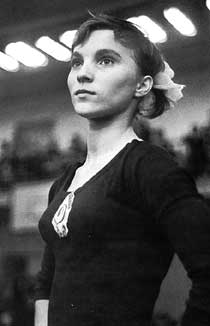
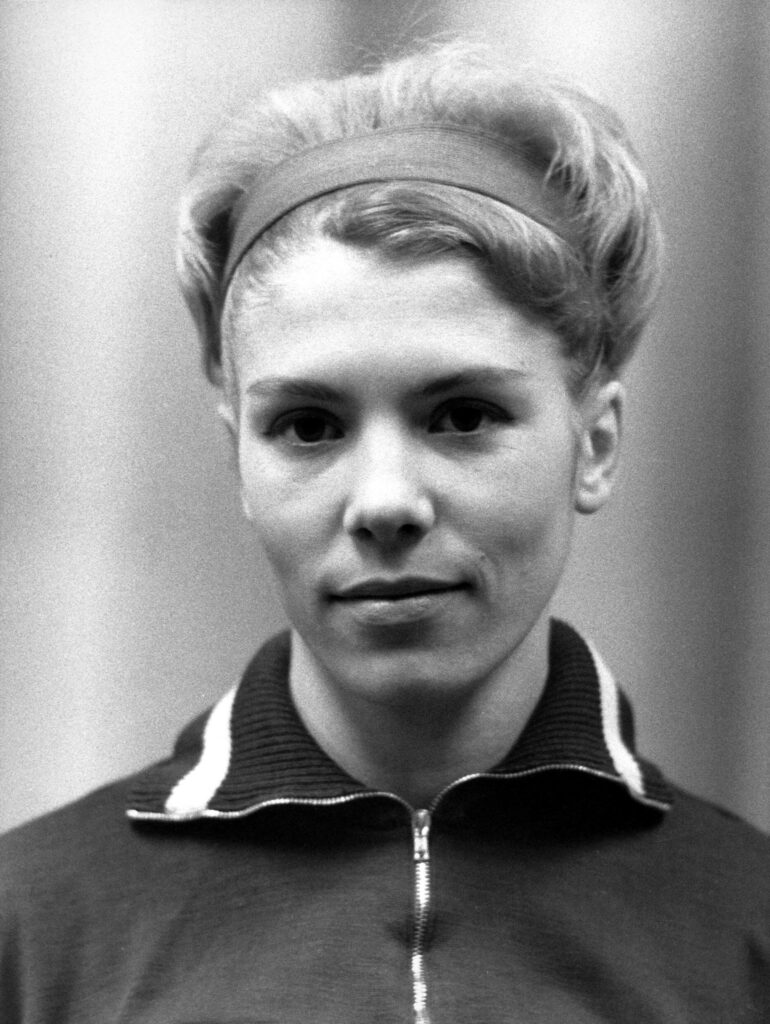
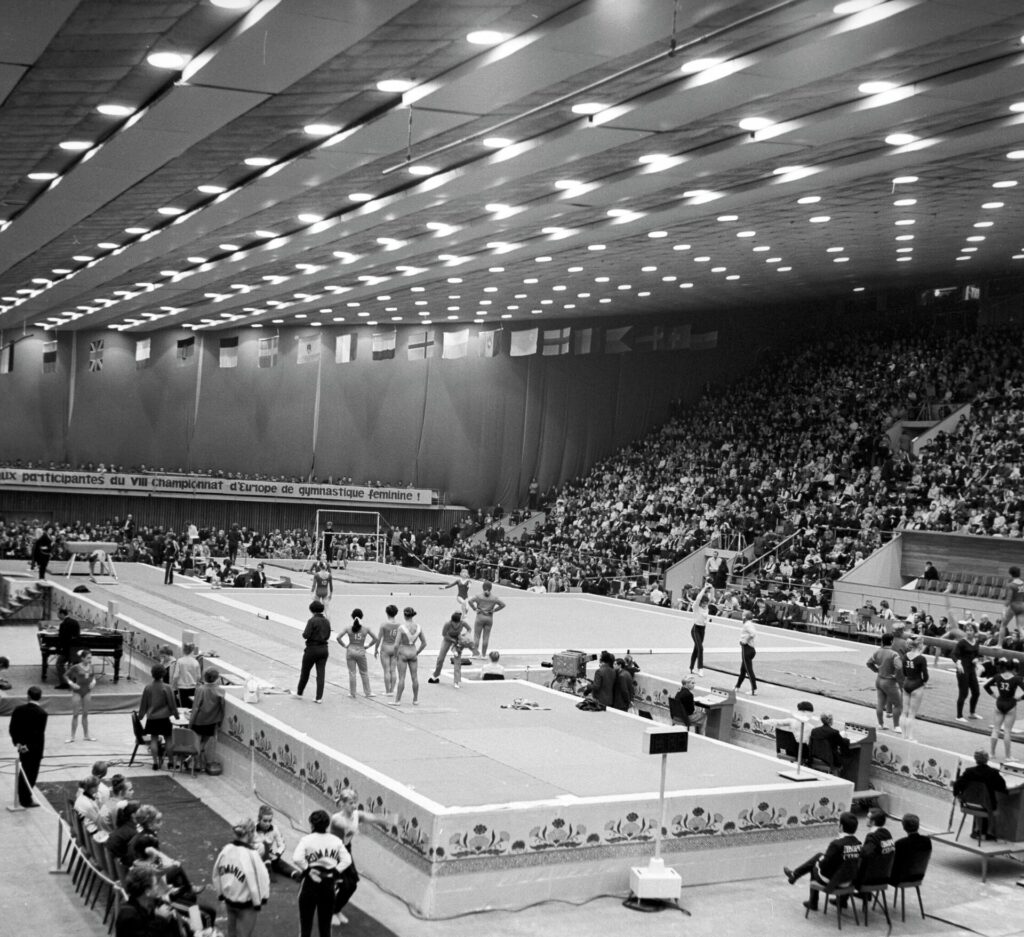
Even though Čáslavská won the all-around and vault titles, and even though the Czechoslovak team defeated the Soviet team, the 1966 World Championships were still a low point for her — one that she hardly remembers. When she returned home from the competition, she received many letters, some of which were hate mail.
What follows is a translation of The Road to Olympus (Cesta na Olymp), Čáslavská’s 1972 autobiography. Here’s how she remembers Dortmund…
Note: You can read the main article on the 1966 World Championships here.
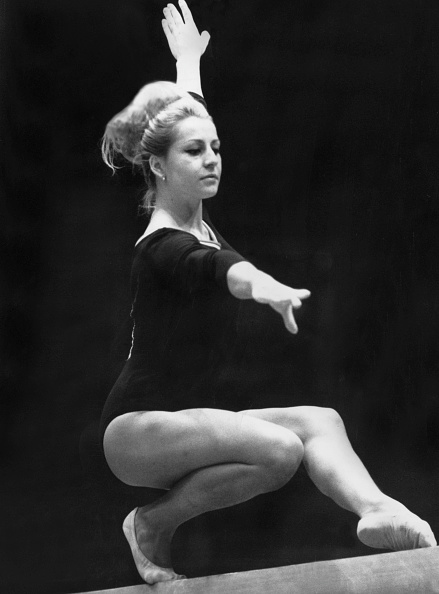
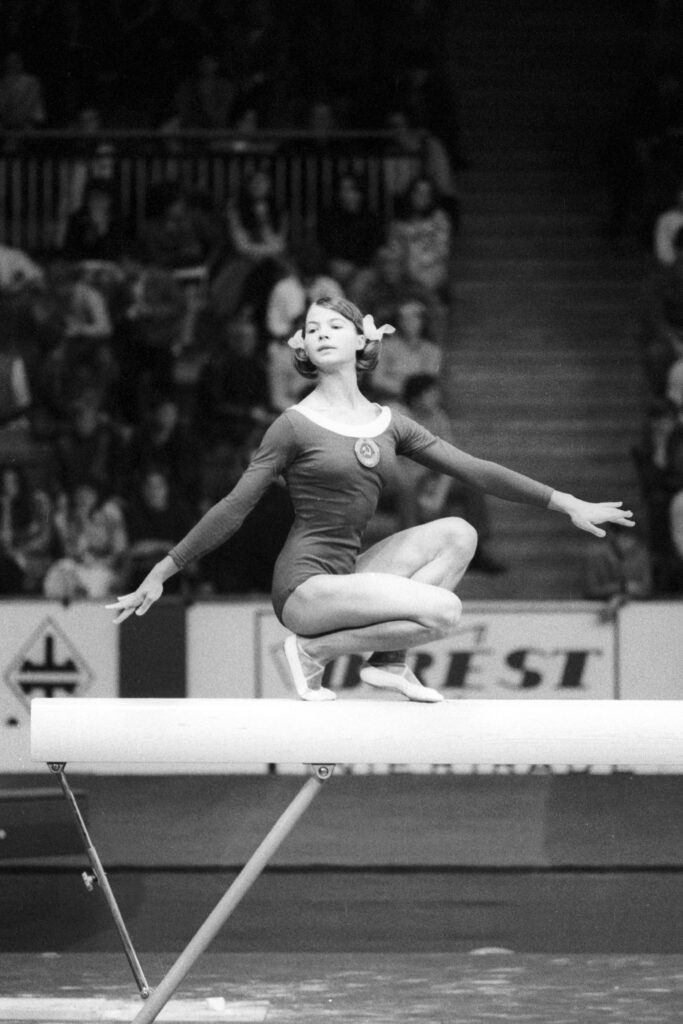
(GERMANY OUT) Die tschechische Kunstturnerin Vera Caslavska auf dem Schwebebalken, aufgenommen bei den Kunstturn-Weltmeisterschaften in Dortmund am 24.09.66. . (Photo by Schirner/ullstein bild via Getty Images)
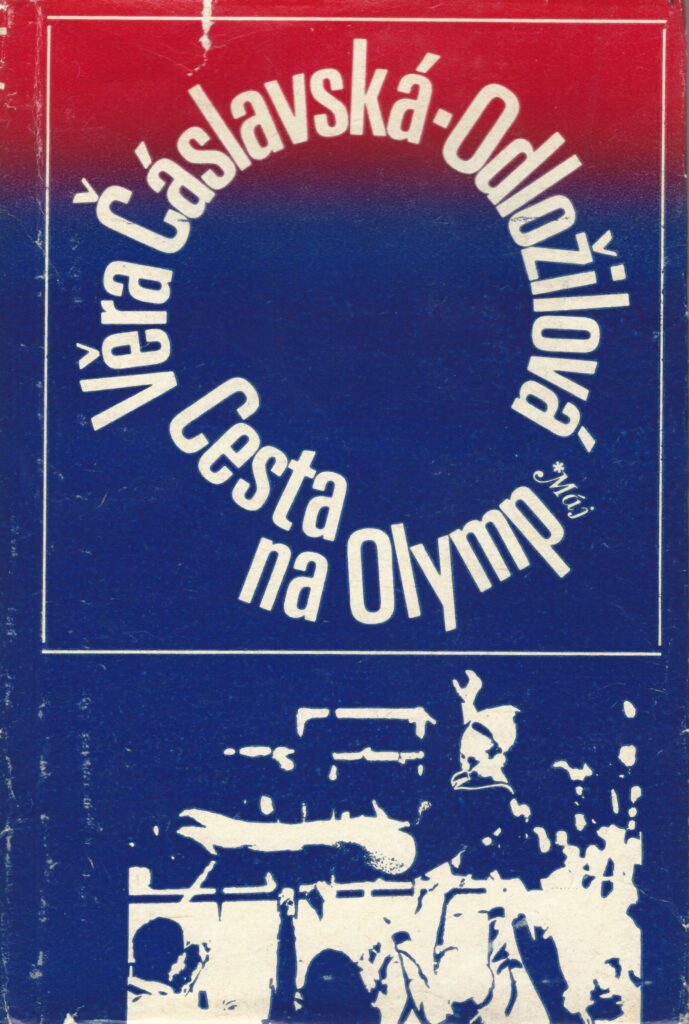
In 1972, Věra Čáslavská published her autobiography, The Road to Olympus (Cesta na Olymp). It provides a detailed recounting of her early days through the 1968 Olympics in Mexico City.
As a child, Čáslavská was a mischievous and funny child. Though a performer at heart, she struggled with stage fright until her mother helped her work through it, and as an adult, she came to see it as an asset.
Čáslavská started with ballet, then added ice skating, and finally found gymnastics. Initially, she trained under Czechoslovak gymnastics legend Eva Bosáková, and when Bosáková was away with the national team, Čáslavská used to sneak into the gym to train. Given her relationship with Bosáková, Čáslavská found it difficult to beat her mentor.
From the start, the international crowd loved Čáslavská. At the age of 16, during her first World Championships in 1958, Čáslavská wowed the audience in Moscow — so much so that the public demanded a performance by Čáslavská, even though she didn’t make the floor finals.
Below, I’ve translated sections of Čáslavská’s autobiography, tracing her early years in sports through to her first World Championships in Moscow in 1958.
In 1964, Larisa Petrik, who was 15 at the time, defeated Larisa Latynina at the USSR Championships. It was big news within the Soviet Union. Months later, both Larisas were set to attend the European Championships in Sofia, Bulgaria, where Latynina ended up finishing second in the all-around while Petrik was fourth. (Petrik tied for third on beam, winning her first medal at a major international competition.)
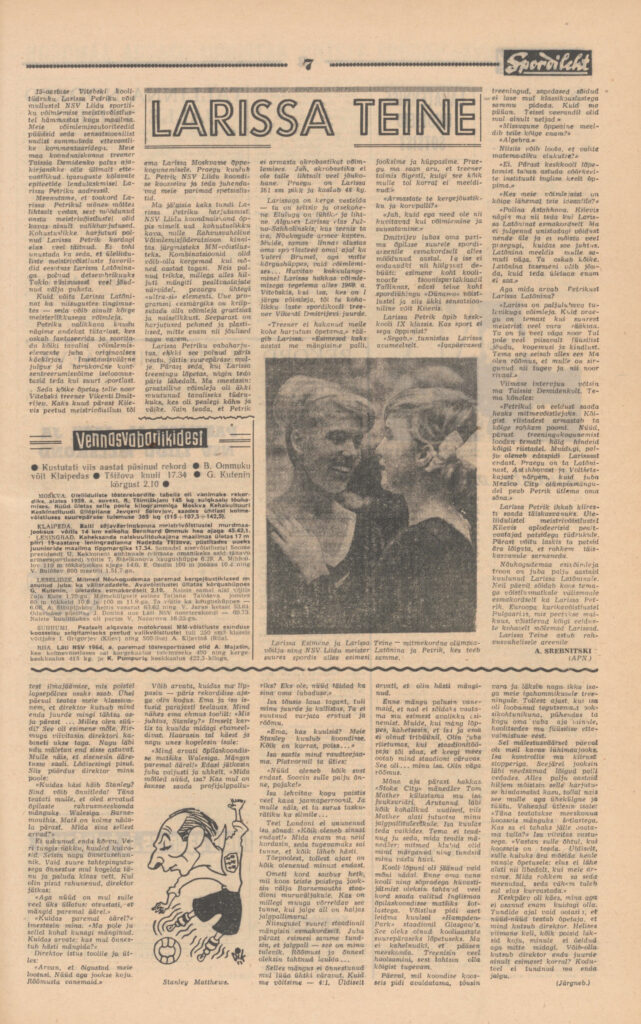
As you can imagine, the media enjoyed having two gymnasts with the same name. The Estonian newspaper Spordileht ran an interview with Larisa Petrik, calling her “Larisa the Second.”
The gymnastics world had many questions for Latynina in the lead-up to the 1965 European Championships.
What did Latynina think about taking second place to Věra Čáslavská at the 1964 Tokyo Olympics? What did she think about taking second place to Larisa Petrik at the 1964 USSR Championships? Did she think she still had a chance to win the European Championships in 1965? What did she think of the current state of gymnastics with its ever-increasing difficulty, as epitomized by Čáslavská?
These are some of the questions that Latynina addressed in an interview printed in the Estonian sports magazine Spordileht on May 14, 1965, right before the European Championships in Sofia, where Latynina finished second behind Čáslavská.
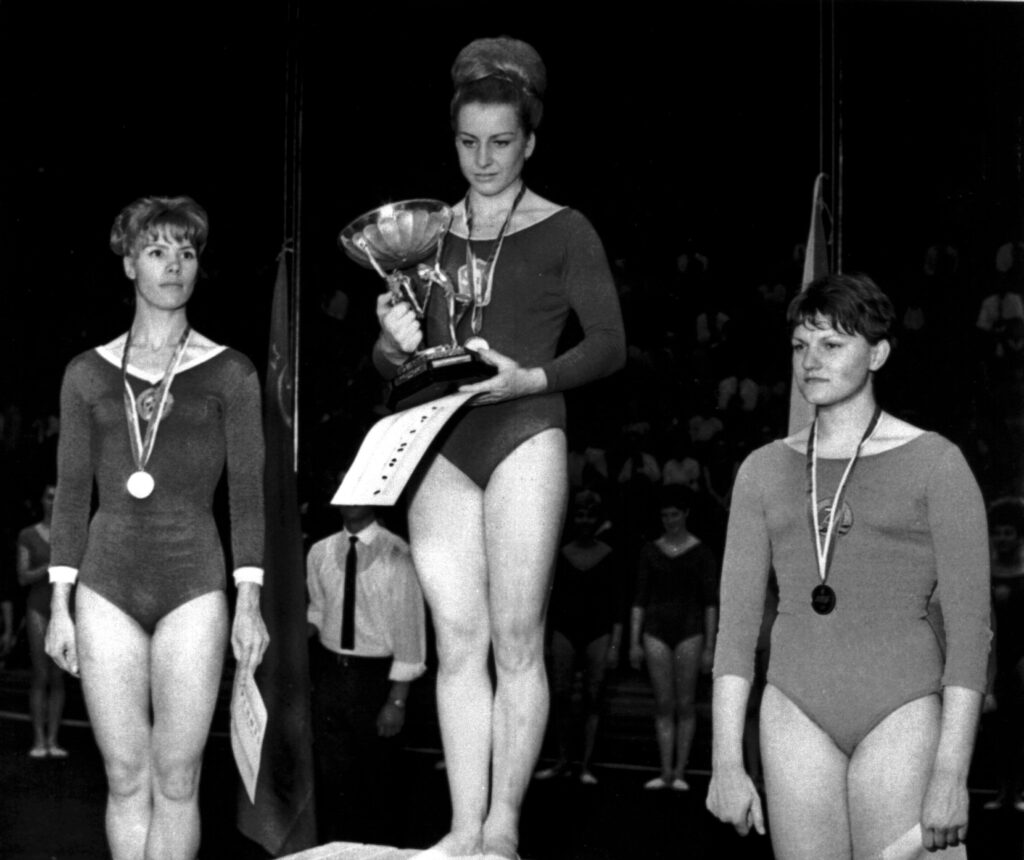
Copyright: imago/United Archives; European Gymnastics Championships, 1965, Sofia, Bulgaria. Pictured on the podium are gold medalist Věra Čáslavská of Czechoslovakia, silver medalist Larisa Latynina of the Soviet Union (left), and bronze medalist Radochla of the German Democratic Republic. 22nd May 1965.
From 1956 until 1962, Larisa Latynina seemed unstoppable. She won the all-around at every major gymnastics competition: the 1956 Olympics, the 1957 Europeans, the 1958 World Championships, the 1959 Europeans, the 1960 Olympics, the 1961 Europeans, and the 1962 World Championships. (The Soviet Union did not participate in the 1963 Europeans.)
But her luck changed in 1964 when Věra Čáslavská won the all-around gold medal at the Tokyo Olympics, and Latynina had to settle for silver.
After the Olympics, just a few days shy of her 30th birthday, Latynina had to settle for silver once again at the USSR Championships. This time, she lost to 15-year-old Larisa Petrik, a gymnast half her age.
This was a watershed moment in the history of women’s gymnastics — not simply because it marked the beginning of the end of Latynina’s dominance but also because it marked a shift in women’s gymnastics toward younger gymnasts.
While there had been teenagers at major international competitions after World War II — 16-year-old Čáslavská, for example, became a crowd favorite when she won team silver at the 1958 World Championships — Petrik’s victory was different. The Soviet Union was the indisputable leader in women’s gymnastics, and for over a decade, their teams had relied primarily on adult women. Then, in 1964, a teenager became the best gymnast in the country and was victorious over someone who had seemed unbeatable internationally for years.
Note: From 1956 until 1962, there were several domestic competitions that Latynina did not win, including the USSR Championships. But this was the first time that she lost to a gymnast half her age.
The news of Petrik’s win made headlines in many of the Soviet Union’s prominent newspapers. In this post, we’ll look at some of those news accounts from December 1964.
Note: For men’s gymnastics fans, don’t worry; the news articles do touch upon the men’s competition, as well.
In 1963, the Estonian newspaper Spordileht (Sports Magazine) printed a profile of Larisa Latynina. It portrayed Latynina as a well-rounded, caring individual, who fulfilled her responsibilities not just to her sport but also to her daughter, her community, and her country.
When the article was published, Latynina was the reigning World and Olympic all-around champion. On top of her training, she stayed up late answering her fans’ letters (and writing to some coaches with unsolicited advice). Beyond that, she was a “people’s deputy,” an elected position responsible for expressing and defending the public’s interests. (The position still exists in modern-day Ukraine.)
In a way, the article presented a 1960s Soviet version of the “You can have it all” narrative.
Note: Latynina was not the reigning European all-around champion when this article was published. The Soviet Union and other socialist countries refused to attend the 1963 European Championships in France because the East German gymnasts did not receive entry visas.
A peculiar situation arose at the 1971 European Championships in Minsk. Two gymnasts tied for the all-around title, but there was only one cup. Though the organizers did not break the tie for first place, they had to decide who should take home the European cup.
Let’s take a look at what happened in Minsk on Saturday, October 16, and Sunday, October 17.
Just days before the 1971 European Championships, Nedelia, a weekly illustrated newspaper, ran an interview with Tamara Lazakovich and Ludmilla Tourischeva. (By the way, Lazakovich quit gymnastics, and the coach had to convince her to come back.)
In the same issue, another article looked at the state of Soviet gymnastics, comparing Lazakovich’s and Tourischeva’s distinct styles: “Wave and stone, poetry and prose, ice and fire — Tourischeva and Lazakovich.”
In addition, the article lamented that 13-year-old Nina Dronova could not participate in the European Championships due to her age, and it worried that she might tire of gymnastics before she had her chance to shine on the international stage.
Reminder: At the 1970 FIG Congress, the women’s artistic gymnastics delegates voted to lower the competitive age to 14.
What follows is a translation of the article on the state of Soviet gymnastics, as well as the interview with Lazakovich and Tourischeva (Nedelia, October 11, 1971).
In 1971, Ilona Békési was a rising star in the European gymnastics community, and at the 1971 Hungarian Masters Championships, she won gold in every event. One year later, she would lead the Hungarian women’s team to a bronze medal at the Olympic Games.
Note: Békési and the Hungarian women often get overlooked in English-language histories of gymnastics. So, this is the first of many posts that will provide a glimpse into Hungarian gymnastics in the early 1970s.
In a competition advertised as “Japan vs. Europe” in Bern, Switzerland, the Japanese men and women were supposed to compete against Europe’s best gymnasts. In the end, the marketing overpromised. Only some of the top European gymnasts competed. Notably absent were the Soviets and East Germans.
Nevertheless, there was some excitement. On the men’s side, Kato Sawao, the 1968 all-around gold medalist, returned to competition after an Achilles tear. On the women’s side, Ilona Békési had a breakout performance, even after the uneven bars collapsed literally on top of her.
Reminder: This naming convention would be quite common at competitions like “The USSR vs. the World.”