In 2016, Chinese gymnasts once again faced questions about their ages. The domestic press responded swiftly, emphasizing that every member of the team met the eligibility requirements:
According to the FIG Council, female athletes must be at least 16 years old to compete in major international gymnastics competitions. Although this polished response successfully deflected what was framed as provocative questioning from foreign media, it also underscored a simple point: the five athletes who represented China in the women’s team final at the Rio Olympics were, on paper, all of age—Shang Chunsong, 20; Fan Yilin, 16; Tan Jiaxin, 19; Mao Yi, 16; and Wang Yan, 16. By this account, the doubts raised abroad appeared entirely unfounded, and China’s gymnasts had every reason to hold their heads high.
Archived here.
根据国际体联理事会的要求,女选手必须年满16周岁才能参加体操国际大赛。虽然漂亮的回答成功化解了外媒刁难,但事实上,中国队参加本次里约奥运会体操女团决赛的五名选手也完全符合年龄要求:商春松20岁、范忆琳16岁、谭佳薪19岁、毛艺16岁、王妍16岁。由此看来,外媒的质疑毫无依据,中国体操队员也应该理直气壮。
Yet the clarity of that official picture has become cloudy over time. With an official birthdate of November 11, 1999, Fan Yilin should have been 16 during the Rio Olympics, turning 17 afterwards. But in a recent social media video, she stated that she was 15 at the time. If taken at face value, that would place her birth year in either 2000 or 2001. (Chinese bloggers interpreted her remark to mean that she turned 15 in 2016, pointing to a 2001 birth year.) Under either scenario, being 15 in Rio would also imply that she was underage at the 2015 World Championships, where she shared the uneven bars gold with Madison Kocian, Viktoria Komova, and Daria Spiridonova.
The video was quickly deleted, and an apology was issued. A summary of the incident can be found below.
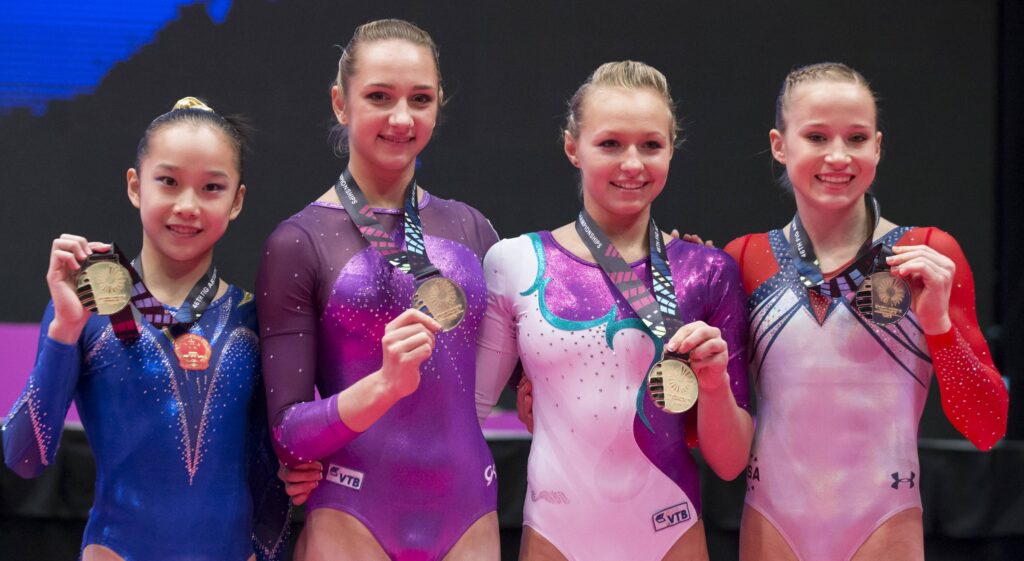
Gymnastics World Champion Misstates Her Age, Immediately Apologizes — A Painful Precedent Once Cost China an Olympic Medal
On May 20th, gymnastics world champion Fan Yilin issued a public apology after a careless error appeared in one of her short videos.
Fan Yilin won a bronze medal with the Chinese women’s gymnastics team at the 2016 Rio Olympics, took gold on the uneven bars at the 2015 and 2017 World Championships, and has a skill named after her — the “Fan Yilin.” Since retiring, she has regularly shared her life and athletic memories on social media.
In a video posted not long ago, on-screen text stated that Fan Yilin was 15 years old when she competed at the 2016 Rio Olympics. This drew considerable skepticism from sports fans, since the International Gymnastics Federation requires that Olympic gymnastics competitors turn 16 in the year of the Games — otherwise they are ineligible to compete. The FIG’s prohibition on underage athletes exists because younger gymnasts have more flexible bodies and find it easier to execute high-difficulty elements.
If Fan Yilin had truly been 15 at the Rio Olympics, that would have constituted a violation of the rules.
Fan Yilin therefore moved quickly to clarify the matter, recording a video apology in which she acknowledged it was an inexcusable mistake. She explained that her video post-production is handled by an outsourced team that was not fully familiar with gymnastics age regulations, and that she herself had failed to adequately review the content before publication. Once she spotted the error, she immediately took the video down.
Fan Yilin stated that she was born on November 11, 1999, and had already turned 16 by the time of the Rio Olympics — fully meeting the age requirements for competition.
Why was Fan Yilin so quick to address the controversy? Likely because China’s gymnastics program has a painful precedent from years ago that resulted in an Olympic medal being stripped.
At the 2000 Sydney Olympics, the Chinese women’s gymnastics team won a bronze medal in the team event. The squad consisted of Liu Xuan, Kui Yuanyuan, Ling Jie, Huang Mandan, Yang Yun, and Dong Fangxiao. In 2010, however, that bronze medal was stripped, and the American team — which had finished fourth — was elevated to receive it.
The reason: Dong Fangxiao’s date of birth was registered with the FIG as January 20, 1983. Yet during the 2008 Beijing Olympics, where she was serving as a technical official, her registration records listed her date of birth as January 23, 1986. After an investigation, the FIG determined that Dong Fangxiao had been under 16 at the time of the 2000 Sydney Olympics, in violation of FIG age regulations, and stripped China’s women’s team of their bronze medal.
In addition, Yang Yun had inadvertently mentioned in an early interview that she was only 14 years old when she competed at the Sydney Olympics — a remark that attracted the attention of the FIG. Yang Yun clarified on multiple occasions that it had been a slip of the tongue. The FIG ultimately ruled that an offhand verbal slip could not constitute “clear and objective evidence.”
(Mixiu Sports)
体操世界冠军写错年龄,立即道歉,曾有惨痛教训致奥运奖牌遭剥夺
5月20日,体操世界冠军范忆琳公开道歉,起因是自己的一段短视频里的低级错误。
范忆琳曾获得2016年里约奥运会体操女团铜牌,2015和2017年两届世锦赛高低杠金牌,并拥有以自己名字命名的动作“范忆琳下”。退役后,她经常通过社交平台分享生活以及昔日的运动员经历。
在范忆琳不久前的一段视频中,画面中的文字称她参加2016年里约奥运会的年龄是15岁。这引来了不少体育迷的质疑,因为国际体操联合会规定,参加奥运会体操比赛,必须在奥运举办年当年年满16周岁,否则无资格参赛。国际体联杜绝队员“以小充大”,是因为年龄小的运动员身体灵活,容易完成高难度动作。
那么,如果范忆琳在里约奥运会时真是15岁,属于违规行为。
因此,范忆琳赶紧澄清,录制视频公开道歉,说这是一个非常不应该的错误,视频的后期剪辑是外包团队做的,对体操年龄规则不大了解,她本人也没有做好内容审核。她发现问题后,立即把视频下架了。
范忆琳说自己是1999年11月11日出生的,参加里约奥运会的时候已年满16周岁,完全符合参赛年龄要求。
范忆琳为什么急于澄清年龄争议?可能是因为在多年前,中国体操队有过前车之鉴,导致奥运奖牌被剥夺。
2000年悉尼奥运会时,中国女子体操队获得了团体铜牌的好成绩,成员是刘璇、奎媛媛、凌洁、黄曼丹、杨云、董芳霄;但在2010年,这枚铜牌被剥夺,当时获得第四名的美国队递补获得铜牌。
因为当时中国女队选手董芳霄在国际体联的注册年龄是1983年1月20日。然而在2008年北京奥运会期间,身为技术官员的她在注册资料中显示,出生日期为1986年1月23日。国际体联经过调查,认定参加2000年悉尼奥运会的董芳霄时年不足16岁,违反了国际体联关于运动员年龄的规定,剥夺中国女队的奥运铜牌。
此外,杨云早年在接受采访时无意提到,自己参加悉尼奥运会的时候才14岁,这也引起了国际体联的关注。杨云多次澄清,称当时是口误。后来国际体联裁定,认为杨云的口误不能作为“明确的客观证据”。
(米修体育)
Archived here.
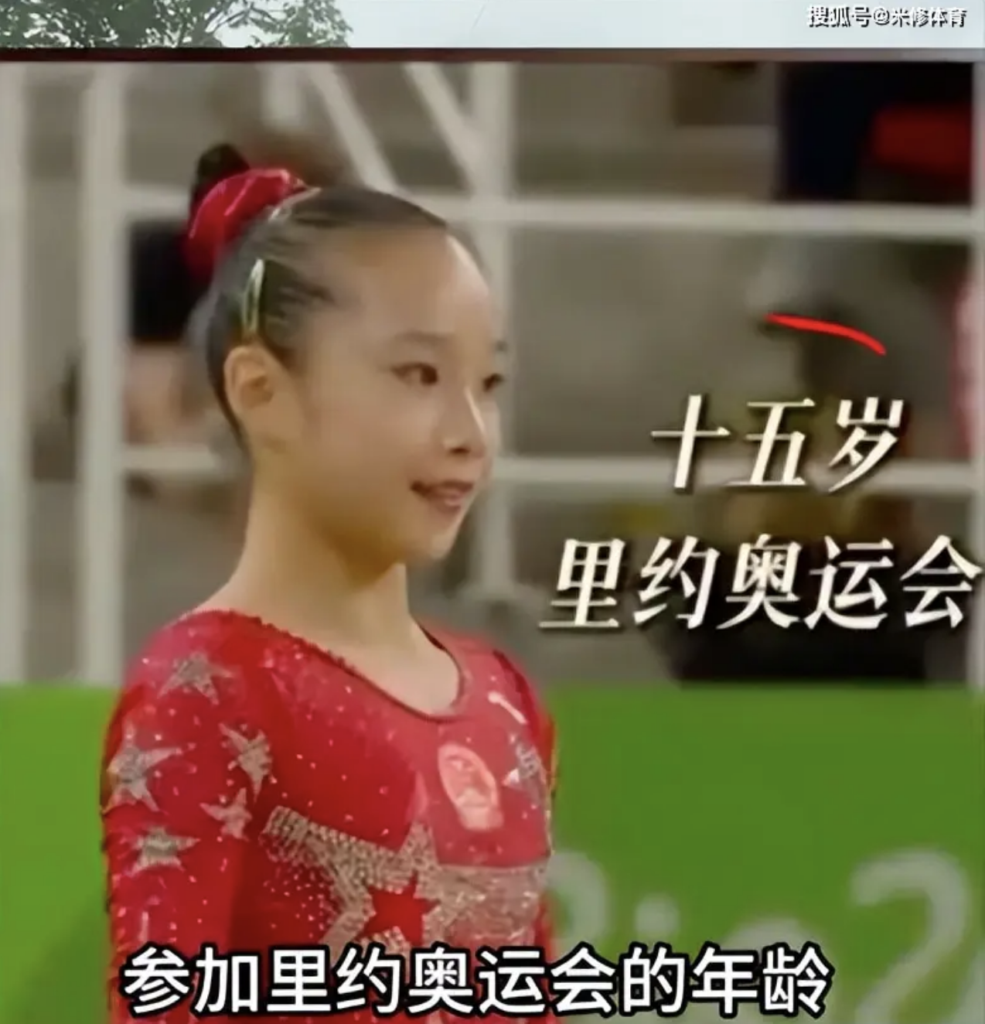
Text from the original video:十五岁 里约奥运会
→ 15 years old — Rio Olympics
Text added by the sports blog: 参加里约奥运会的年龄
→ Age when participating in the Rio Olympics
Notes
1. As the blog post indicated, this was not the first time a gymnast appeared to misspeak about her age on camera. In a CCTV interview, Yang Yun remarked that she had been only 14 at the Sydney Olympics. After an investigation, the FIG issued a warning, but the episode did not end there. Even Xinhua News Agency—China’s official news agency—indicated she had been 14 in Sydney:
At the same time, the International Gymnastics Federation sets a minimum age of 16 for Olympic participation. By that age, many gymnasts have grown taller or gained weight, losing some of their earlier lightness. To get around this, ages are adjusted upward.
偏偏国际体操联合会规定参加奥运会最低年龄限制在16岁。而16岁时大部分女队员已经出现个子长高或者发胖的迹象,不如以前灵巧了。为此就要将年龄改大。
This dynamic surfaced in a well-known incident involving Yang Yun. In a 2007 interview with CCTV, she let slip that she had won her Sydney Olympic medal at age 14. She later claimed it was a verbal mistake, but the implication was obvious.
其实女孩谁不喜欢年轻点呢?因此退役之后,很多队员又都把年龄改回去了,去年轰动一时的董芳霄被查出年龄造假,就是因为改回去时露了马脚。
Archived here.
2. At the end of 2018, Ye Zhennan, team leader of the national gymnastics squad, acknowledged that the women’s national team had entered a difficult period. One reason, he explained, was the lack of eligible athletes born in 2001 and 2002:
“This has been an extremely difficult year for the women’s team. Athletes born in 2001 and 2002 are almost entirely missing from the pipeline. The premature retirement of Wang Yan — the All-National Games double champion in vault and floor — combined with serious injuries to key athletes, including Mao Yi, Fan Yilin, and Li Qi, has left the team noticeably weakened. Through the coaching of head coach Qiao Liang and the experience gained at the Asian Games and World Championships, the athletes have undergone a remarkable transformation in both their training level and their mental outlook.”
“女队今年是非常困难的一年,2001、2002年龄段出生的队员几乎断档,全运会跳马、自由操双料冠军王妍的过早退役以及毛艺、范忆琳、黎琪等重点队员出现严重伤病,使队伍实力上有所欠缺。通过乔良主教练在训练水平上的弥补,和在亚运会、世锦赛的历练让队员在训练水平和精神面貌有了焕然一新的改变。”
Archived here.
If Fan Yilin had indeed turned 15 in 2016, that would help explain this apparent gap in the pipeline. It raises the possibility that some gymnasts born in 2001 and 2002 were reclassified in earlier cohorts in order to meet Olympic eligibility requirements.
3. There are small inconsistencies in Fan Yilin’s timeline. In the official version of her story, she is said to have begun gymnastics at age six:
Having taken up gymnastics at age 6, Shanghai athlete Fan Yilin has been accompanied by the sport for ten years. Fan Yilin possesses the world’s highest difficulty on the uneven bars. The Rio Olympics will be her first Olympic journey — can this girl with a ready smile make her dream come true?
从6岁开始接触体操,上海选手范忆琳和体操已相伴十年。范忆琳在高低杠项目上拥有世界上最高的难度,里约奥运会是她的第一次奥运之旅,这个爱笑的女孩儿能圆梦吗?
But when she tells the story, the starting point shifts earlier:
“I am Fan Yilin (@Fan Yilin), a former member of the Chinese national gymnastics team. From my first encounter with gymnastics at age 4 to my retirement at 22, gymnastics accompanied me for nearly two decades.”
我是范忆琳(@范忆琳),前国家体操队运动员。从4岁第一次接触体操,到22岁退役,体操陪伴了我近二十年。
This two-year gap is not dispositive on its own. But it does illustrate a familiar pattern: even in straightforward biographical details, the record is not always internally consistent.
4. At this point, Fan Yilin’s results cannot be contested under the FIG’s current Code of Discipline.
5. This article isn’t from an official Chinese newspaper, but Mixiu Sports has been verified by Sohu as a “high-quality creator in the sports field” (优质体育领域创作者 ), so it’s not just content-farm spam either.
6. Reminder: Broadly speaking, Chinese journalists do not question the existence of age falsification; they treat it as a given.
More on Age