Categories
1970 Japan World Championships

1970: Kato Sawao Tears His Achilles Tendon

At the 1970 World Championships, the favorite for the men’s all-around title should have been Kato Sawao, the winner of the all-around in Mexico City in 1968. However, in February of 1970, he tore his right Achilles tendon while tumbling on floor. It was a major topic of conversation at the World Championships in Ljubljana. Here’s just one news report on the matter:

Endo: “Early this year [Kato] suffered an Achilles tendon injury during a dismount, which was difficult to heal. By the time things got going again, he was already eliminated. Too bad for him, but there was nothing that could be done about it.”

De Tijd, Oct. 31, 1970

Endo: “Begin dit jaar kreeg hij bij een afsprong een achillespeesblessure, die moeilijk genas. Toen het weer een beetje ging, was hij al geëlimineerd. Jammer voor hem, maar daar was niets aan te doen.”

The injury wasn’t just a major topic of conversation at the 1970 World Championships; it was also a major moment in Kato’s life. In his autobiography, The Path of Beautiful Gymnastics: The Story of Kato Sawao (美しい体操の軌跡加藤沢男物語), Kato dedicates two entire chapters to his Achilles tear, his recovery, and his mindset after the injury. What follows are translations of short excerpts from his book.

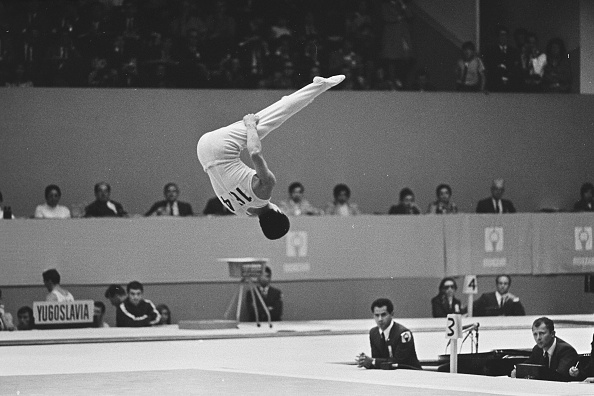
MEXICO CITY, MEXICO – OCTOBER 24: Sawao Kato of Japan competes in the Floor of the Artistic Gymnastics Men’s Individual All-Around final during the Mexico City Summer Olympic Games at the National Auditorium on October 24, 1968 in Mexico City, Mexico. (Photo by The Asahi Shimbun via Getty Images)
Categories
1970 Compulsories MAG WAG World Championships

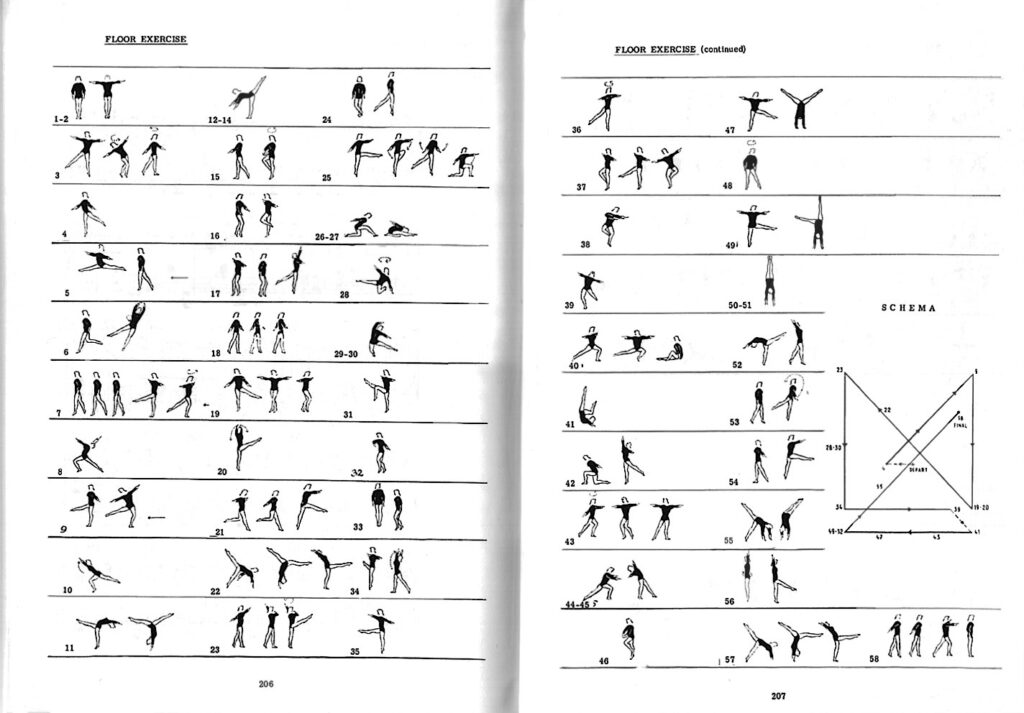
1970: The Compulsory Routines for the World Championships in Ljubljana

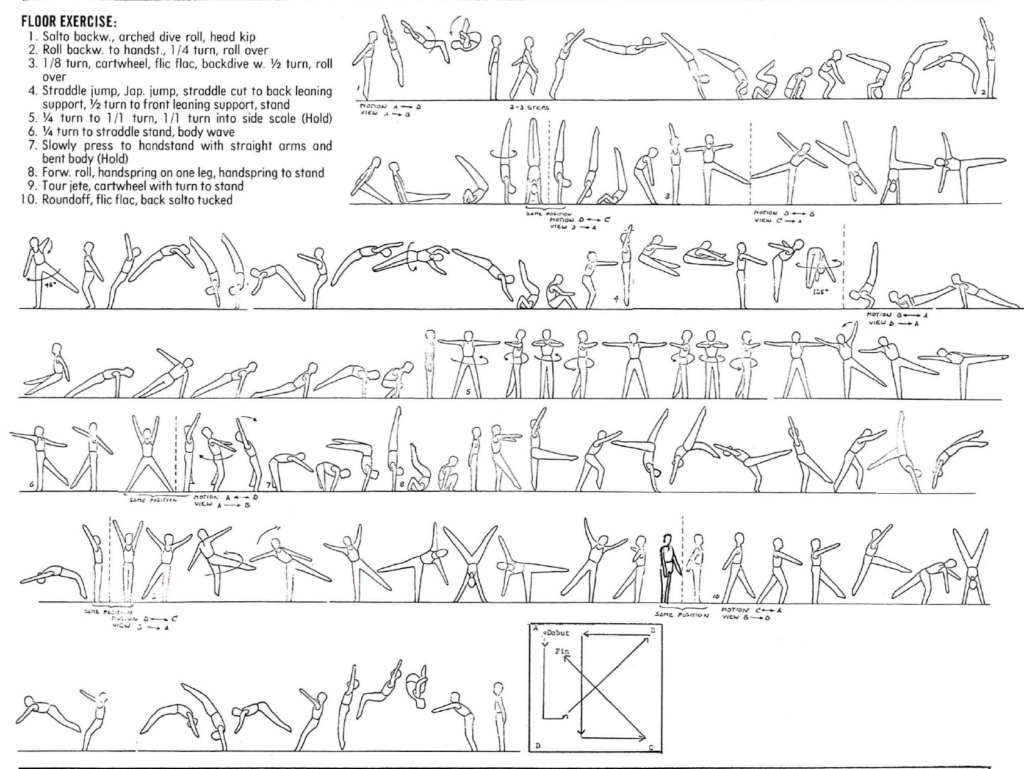
What were the compulsory routines for the World Championships in Ljubljana?

Unfortunately, at the time of this writing, there aren’t videos of the routines on YouTube. But in this post, you can find the English text and drawings for both the men’s and women’s compulsories.

Categories
1930 MAG World Championships

1930: An Abrupt End to the World Championships in Luxembourg

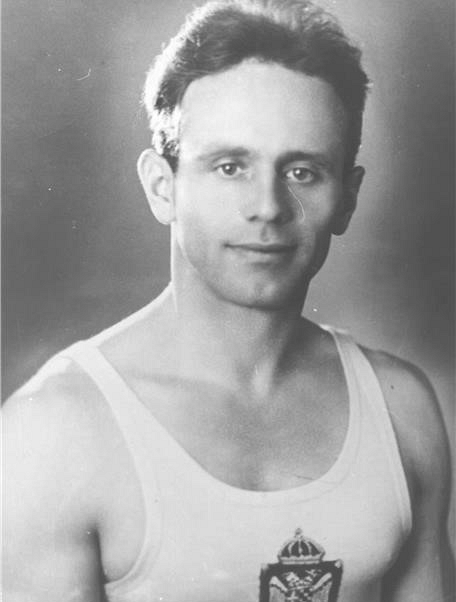
At the 1930 World Championships (originally called the International Tournament), tragedy struck. Yugoslav gymnast Anton Malej fell during his rings routine and was taken to the hospital, where he later died on July 15, 1930. He was 23.

Despite the accident, the Yugoslav gymnasts kept competing and took home third place. Fellow countryman Josip Primožič won the all-around.

The results, though, should have an asterisk next to them, given that the gymnasts didn’t compete in five of the scheduled events.

The competition was originally scheduled for July 12 and 14, 1930. However, rainy weather on July 14 resulted in a premature end to the competition, and the organizers decided to count only the scores from the first day (i.e. the scores from the apparatus gymnastics portion of the competition).

Reminder: This was not the first time that inclement weather caused problems during the International Tournament. In 1911, Cupérus, the FIG President at the time, wanted the athletes to compete in inclement weather rather than end the competition or finish it the next day. And two years prior, at the 1928 Olympics, the FIG was upset that the stadium was not prepared for inclement weather.

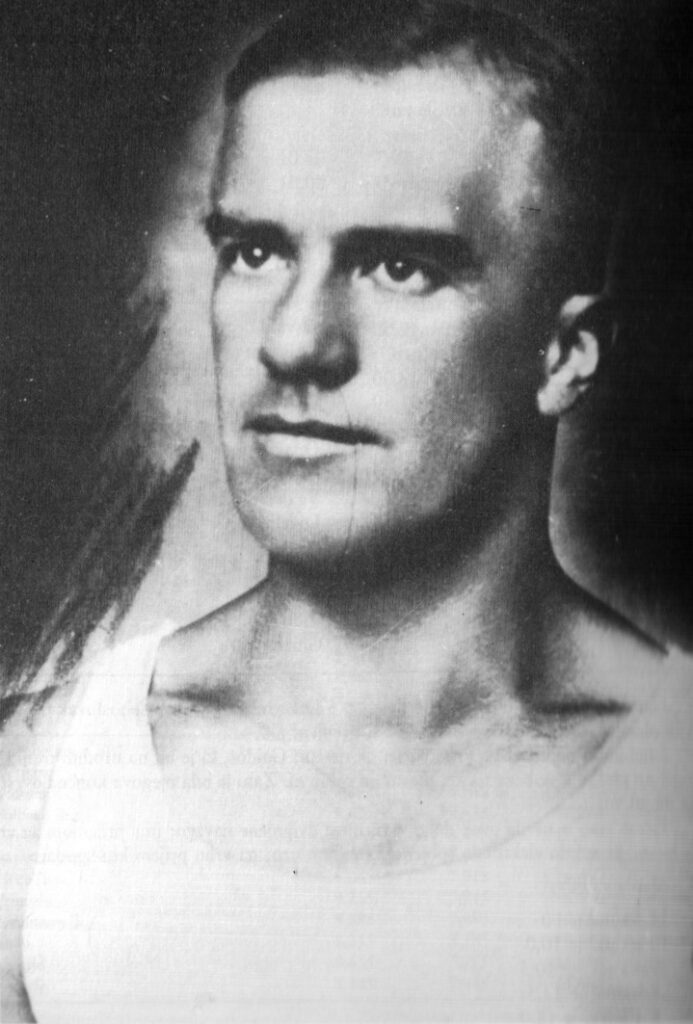
Josip Primožič
Categories
1930 MAG World Championships

1930: The Death of Anton Malej at the World Championships in Luxembourg

During the first day of the 1930 International Tournament, Anton Malej fell from the rings and later died in the hospital. His injury happened on a rather simple skill: an inverted hang. Here’s how Pierre Hentgès, Sr., recalled the injury:

On the rings, during a simple part — an inverted pike hang — the young Yugoslavian gymnast Anton Malej fell so badly that he had to be taken to the hospital immediately for professional treatment with a cervical vertebrae injury.

Olympische Turnkunst, December 1967.

An den Ringen, in einfachem Übungsteil aus dem Sturzhang, fiel der junge jugoslawische Turner Anton Malej so unglücklich, daß er sofort mit einer Halswirbelverletzung zu fachgerechter Behandlung ins Spital überführt werden mußte.

What follows is a translation of Malej’s obituary from Sokolski Glasnik (July 15, 1930).

To read more about the 1930 World Championships, head over to this post.

Categories
1926 MAG World Championships

1926: The Men’s Competition at the World Championships in Lyon

Coming into the 1926 International Tournament in Lyon, France, the Czechoslovak team had won three consecutive team titles at the International Tournament (1911, 1913, and 1922). Plus, they had won the team title at the 1924 Olympic Games in Paris. So, the 1926 World Championships (called the International Tournament at the time) were an opportunity to further demonstrate their superiority.

Here’s a quick summary of what happened on May 22 and 23, 1926, in Lyon, France.

Peter Šumi, from: Štukelj, Mojih sedem svetovnih tekmovanj
Categories
1922 MAG World Championships

1922: The First World All-Around Champion in Men’s Gymnastics

Prior to 1922, the World Championships (originally called the International Tournament) were team-only events. But in Ljubljana, an individual all-around champion was finally named. Actually, there were co-champions: Šumi of Yugoslavia and Pecháček of Czechoslovakia.

Another major storyline: France almost missed the competition, arriving on the second day of the International Tournament.

Let’s dive into what happened…

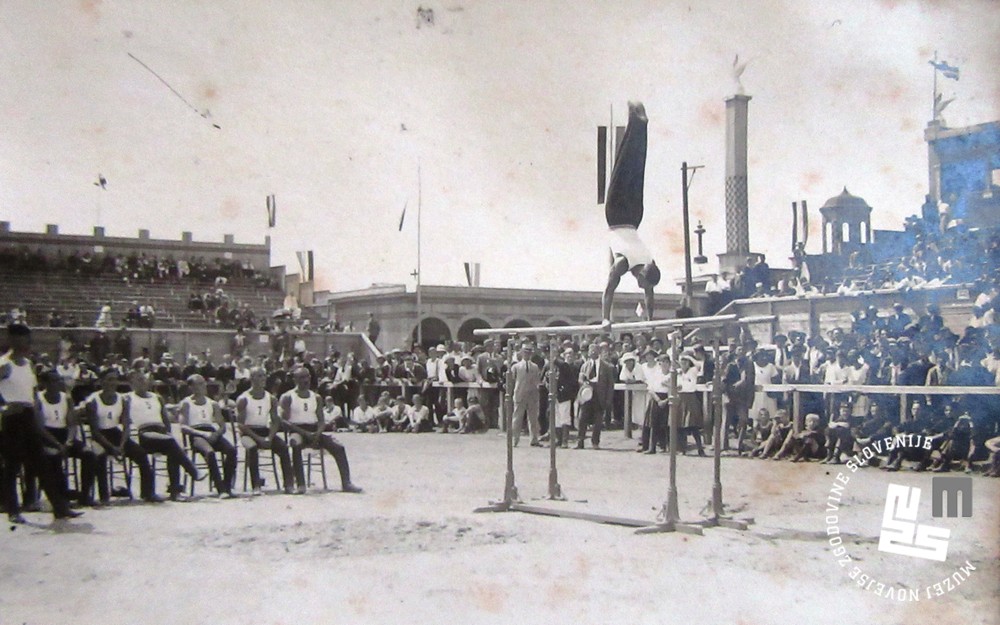
Peter Šumi on parallel bars, Muzej novejše zgodovine Slovenije
Categories
Compulsories Floor Music Olympics WAG World Championships

1958-1996: Compulsory Floor Music over the Decades

As far as FIG events are concerned, women’s individual floor exercise was first introduced at the 1950 World Championships, but at the time, gymnasts did not use floor music. In fact, at the 1950 FIG Congress, the delegates had to decide if gymnasts should perform to music at the 1952 Olympics, and they voted against it (eight votes to three).

It wasn’t until 1958 that music was introduced for individual floor routines, both compulsory and optional. 

Below, you’ll find recordings of the music for the compulsory routines from 1958 until 1996. For some of you, the music will bring back fond memories. For others, it’ll bring back nightmares. But hopefully, you’ll find a piece you enjoy listening to.

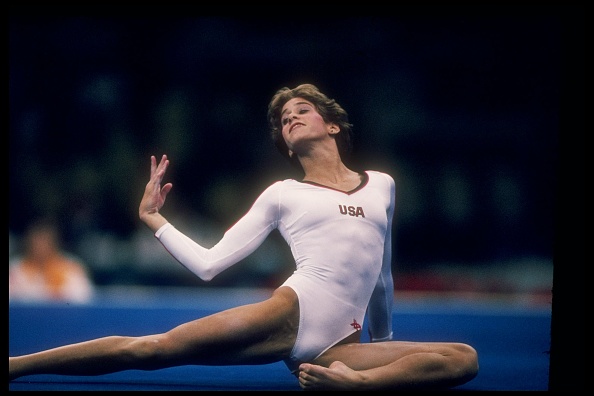
19 Sep 1988: Phoebe Mills does her floor exercise during the Olympic Games in Seoul, South Korea. Mandatory Credit: Billy Strickland /Allsport
Categories
1962 Compulsories MAG WAG World Championships

1962: The Compulsory Routines for the World Championships

What were compulsory routines at the 1962 World Championships?

Unfortunately, at the time of this writing, there aren’t videos of the routines on YouTube. But in this post, you can find the English text for the men’s compulsories, as well as the English text and drawings for the women’s compulsories.

Categories
1962 WAG World Championships

1962: Berthe Villancher’s Summary of the World Championships

After the 1962 World Championships in Prague, Berthe Villancher, the President of the Women’s Technical Committee, penned a summary for the French magazine Éducation physique et sport (November 1962). 

It’s a fascinating article, in which she calls the judges “combatants,” echoing something that Dr. Klinger wrote after the men’s competition at the 1934 World Championships.

You can find an English translation of Villancher’s article below.

100 Years of the FIG
Categories
Evolution MAG Olympics World Championships

1896-1950: The Events of Men’s Gymnastics

Male gymnasts have always competed on floor, pommel horse, rings, vault, parallel bars, and high bar, right? 

Wrong.

Male gymnasts had quite the journey to today’s competitive format. Here’s a look at events in which the men competed in the early years of the Olympic Games and World Championships.

The Official Report, 1912