Questions about the reliability of Chinese gymnasts’ reported ages emerged well before the 2008 Beijing Olympics, when allegations of age falsification erupted into an international controversy. In November 2005, the Slovak newspaper SME reported that the BBC had raised allegations of falsified birth dates and mistreatment of young gymnasts in China.
During the World Championships in Melbourne, FIG President Bruno Grandi addressed these reports, acknowledging that he had heard the allegations but characterizing the matter as an internal issue beyond the federation’s authority to investigate. He also revealed that attempts to verify gymnasts’ ages in other countries had encountered resistance from national authorities.
Grandi also expressed his desire to raise the minimum age for women’s gymnastics from sixteen to seventeen, or ideally eighteen. He argued that gymnastics should emphasize the artistry and expression of mature athletes rather than the acrobatic abilities of children.
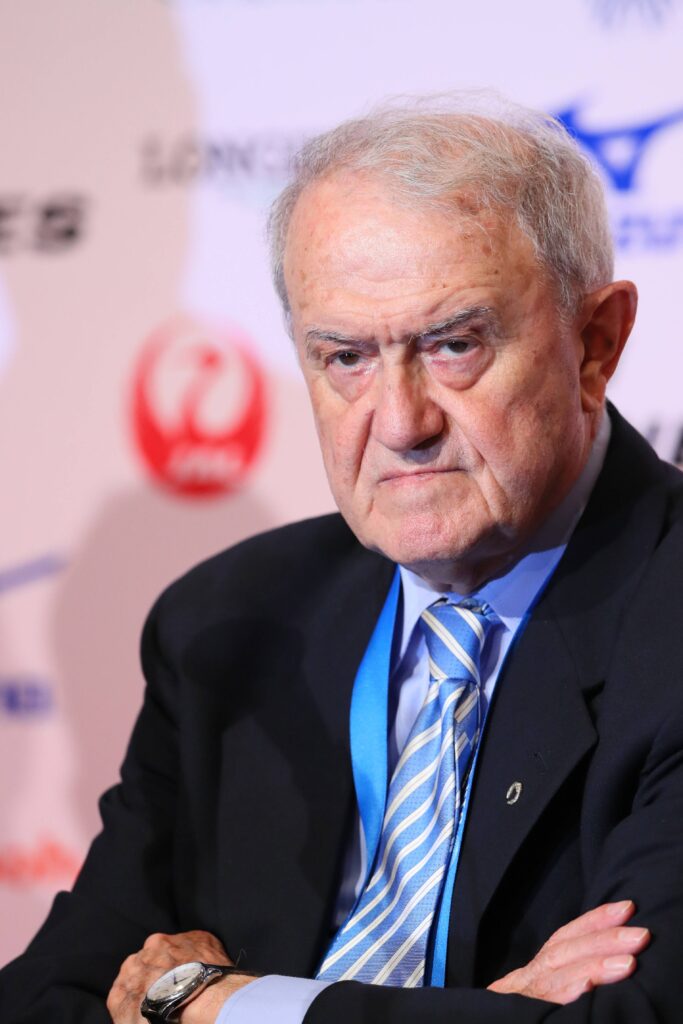
Gymnastics Chief Spoke About China
On the eve of the world championship, Grandi pledged that he wants to raise the age limit to eighteen
State Governor John Landy and Victorian Premier Steve Bracks yesterday ceremonially opened the 38th World Championships in artistic gymnastics at the government mansion in Melbourne, only the second held on Australian soil. Competition began overnight by Central European time, and with the participation of our Samuel Piasecki (his disciplines: parallel bars, horizontal bar, floor) the 24 all-around finalists and 8 apparatus finalists were determined. Women will do the same tomorrow.
At the championship venue, most discussion concerns new rules, changes, and cleaning up the sport from behind-the-scenes maneuvering. The company IRCOS presented journalists with a new video review system, to be invoked only in extreme cases of major jury disagreement, primarily on the start value, less so on deductions.
It installed 7 cameras and 25 portable computers, with each routine stored in a database and made available to national federations after the Championships.
Italian professor Bruno Grandi, head of the International Gymnastics Federation, sets great store by this first world championship since last year’s Olympics. “In Athens, we suffered shame, disappointment, and we must acknowledge a large share of responsibility,” he told us after arriving in Melbourne, adding, “For nearly twenty years now, I have been unable to win the war against clique formation and collusion among judges, score manipulation, chauvinism, and corruption. The new rules, the use of video, and the ban on judges entering training halls are substantial changes, but they are not a cure-all.”
Grandi considers it important to distinguish whether a given judge makes an error out of ignorance and incompetence, or deliberately: “We know the names of those who, despite warnings, make the same mistake four times in a row. Also, the names of those who complain of pressure from their own national federation presidents, who want clear assistance from their judges and the promotion of policy in relations with other countries. Such judges then don’t know who to obey and often give in to that pressure. Errare humanum est — to err is human. We will never completely eliminate mistakes, but we must eliminate them without mercy. Those who won’t listen have no place with us. We will punish the guilty harshly. Higher justice must be our commandment.”
We also asked the FIG president to comment on BBC television reports about falsified birth dates and harm done to children in gymnastics in China. Bruno Grandi replied with a sigh: “I have heard about this too, but it is yet another delicate matter in this sport. I don’t know the details; it is an internal problem of the country, and we cannot interfere. Doubts about gymnasts’ ages have arisen in other countries as well. But when we wanted to have the facts verified by the police of the country in question, they told us we were not competent to do so. We must act at least where we have authority.”
Grandi pushed through, raising the minimum age for women from 14 to 16. “My dream, however, is to raise it to eighteen,” he noted. “I probably won’t achieve that, but at least one more year — to seventeen — we would need. Gymnastics is called artistic for a reason, not merely acrobatic. So that adult women can shine in their full beauty and bring expression to their routines, because underage children cannot physically and psychologically feel a routine to its fullest.”
ANDREJ BUČKO, Melbourne
SME, November 22, 2005
Šéf gymnastiky hovoril o Číne
Grandi v predvečer svetového šampionátu si predsavzal, že chce dvihnúť vekový limit na osemnásť
Štátny guvernér John Landy a premiér Viktórie Steve Bracks včera vo vládnom zámočku v Melbourne slávnostne otvorili 38. majstrovstvá sveta v športovej gymnastike, iba druhé na území Austrálie. Cvičiť sa začalo v noci na dnes stredoeurópskeho času a aj za účasti nášho Samuela Piaseckého (jeho disciplíny: bradlá, hrazda, prostné) sa rozhodovalo o 24 finalistoch šesťboja a 8 finalistoch na každom náradí. Zajtra to isté absolvujú ženy.
V dejisku šampionátu sa najviac hovorí o nových pravidlách, zmenách a očistení športu od zákulisných ťahov. Firma IRCOS predstavila novinárom nový systém videorozohovania, ku ktorému sa siahne len v krajnom prípade veľkej nezhody poroty najmä vo vstupnej známke, menej v zrážkach.
Nainštalovala 7 kamier a 25 prenosných počítačov, pričom každý zostavu uloží do databázy a po MS ju poskytne aj národným federáciám.
Taliansky profesor Bruno Grandi, šéf Medzinárodnej gymnastickej federácie, si na prvom svetovom šampionáte po lanskej olympiáde velmi zakladá. „V Aténach sme utŕžili hanbu, sklamanie a veľkú časť zodpovednosti si musíme priznať,” povedal nám po prílete do Melbournu a posťažoval si: „Už varí dvadsať rokov neviem vyhrať vojnu proti skupinkárčeniu a spolčovaniu rozhodcov, špekuláciám, známkam šovinizmu a korupcii. Nové pravidlá, použitie videa a zákaz vstupu rozhodcov do tréningových hál sú podstatnými zmenami, ale nie samospasiteľnými.”
Grandi pokladá za dôležité rozoznať, či ten-ktorý rozhodca urobí chybu z nevedomosti a nekompetentnosti, alebo účelovo: „Poznáme mená tých, ktorí napriek upozorneniu urobia tú istú chybu štyrikrát za sebou. Aj mená tých, ktorí sa sťažujú na tlak vlastných predsedov národných zväzov, ktorí chcú od svojich rozhodcov jasnú pomoc a presadzovanie politiky vo vzťahoch k iným štátom. Takí rozhodcovia potom nevedia, koho poslúchnuť a často podľahnú tomuto tlaku. Errare humanum est, čiže mýliť sa je ľudské. Nikdy absolútne nevylúčime chyby, no musíme ich bez milosti eliminovať. Tí, čo si nedajú poradiť, nemajú u nás čo hľadať. Vinníkov budeme tvrdo trestať. Vyššia spravodlivosť nám musí byť prikázaním.”
Predsedu FIG sme požiadali aj o komentár k správam televíznej stanice BBC o podvodoch s dátami narodenia a ubližovaní deťom v gymnastike v Číne. Bruno Grandi s povzdychom odvetil: „Aj ja som o tom počul, no ide o ďalšiu chúlostivú záležitosť v tomto športe. Nepoznám podrobnosti, je to vnútorný problém krajiny a my nemôžeme zasahovať. Objavili sa pochybnosti o veku gymnasiek aj v iných štátoch. Keď sme však chceli dať fakty overiť na polícii konkrétnej krajiny, povedali nám, že nie sme na to kompetentní. Musíme konať aspoň tam, kde máme právomoci.”
Grandi presadil zvýšenie dolnej vekovej hranice žien zo 14 na 16 rokov. „Mojím snom je však dvihnúť ju na osemnásť,” poznamenal. „To už asi nedosiahnem, ale ešte aspoň rok – na sedemnásť – by sme potrebovali. Gymnastika sa preto volá športová, resp. artistická, aby nebola iba akrobatická. Aby dospelé ženy vynikli v plnej kráse a ponúkli výraz v cvičení, lebo maloleté deti nemôžu fyzicky a psychicky precítiť zostavu naplno.”
ANDREJ BUČKO, Melbourne
More on Age