Gymnasts from nineteen countries traveled to Landskrona, Sweden to participate in the European Championships on Saturday, May 16, 1969 and Sunday, May 17, 1969.
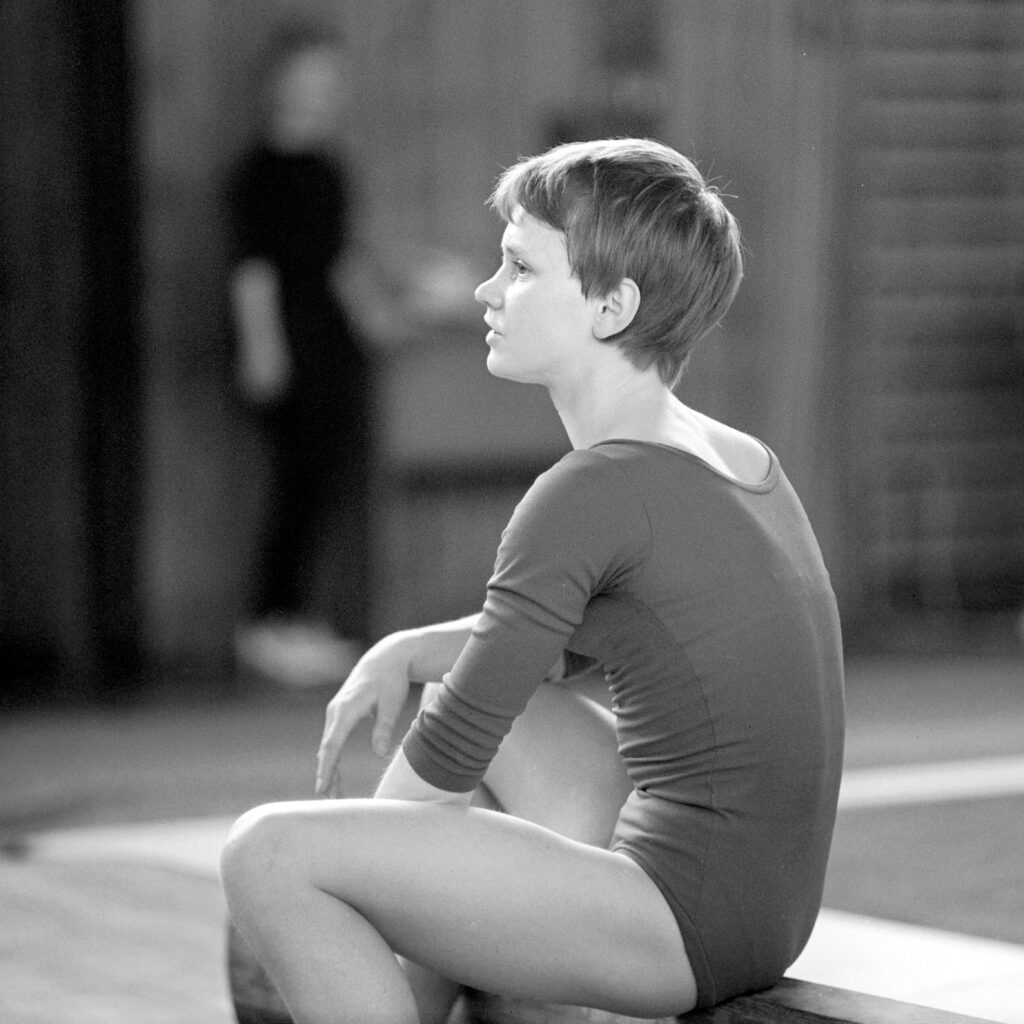
The stars of the 1968 Olympics — Čáslavská, Petrik, Voronina, Kuchinskaya — did not attend (or had retired), which gave 17-year-old Karin Janz a chance to shine and win four of the five gold medals.
Datum: 23.05.1969 Copyright: imago/Werner Schulze Karin Janz (DDR) während des Trainings; Quadrat, Geräteturnen 1969, Kunstturnen
Before the FIG created its World Cup circuit and before the American Cup came into existence, the U.S. tried to organize an annual World Cup.
On Saturday, April 26, 1969, gymnasts from Canada, Finland, Japan, Yugoslavia, and the United States gathered in Long Beach, California for the World Cup.
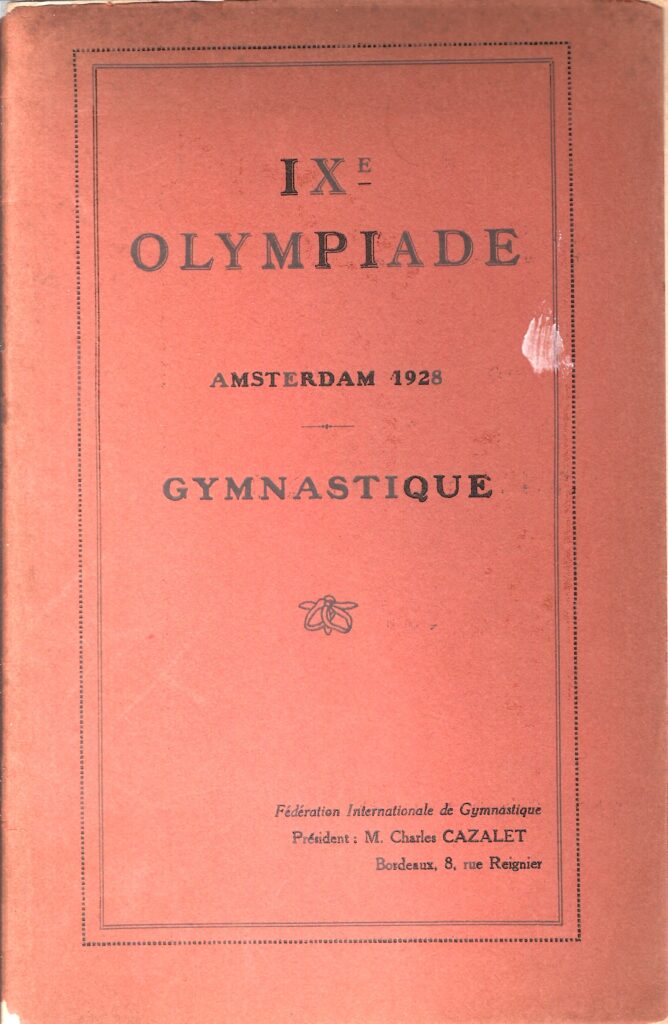
Separate from the organizing committee’s Official Report on the 1928 Olympics, the FIG published its own booklet on the gymnastics competition in Amsterdam. What follows is a translation of the report, as well as every score from every judge at the competition — both men’s and women’s.
As you’ll see by the amount of space dedicated to women’s gymnastics in the report, the FIG remained focused primarily on men’s gymnastics.
Has the balance beam always been 10 cm wide? When did balance beams start having padding? When did the uneven bars start having tension cables? How far apart were the bars in 1989? Have the landing mats always been 20 cm thick?
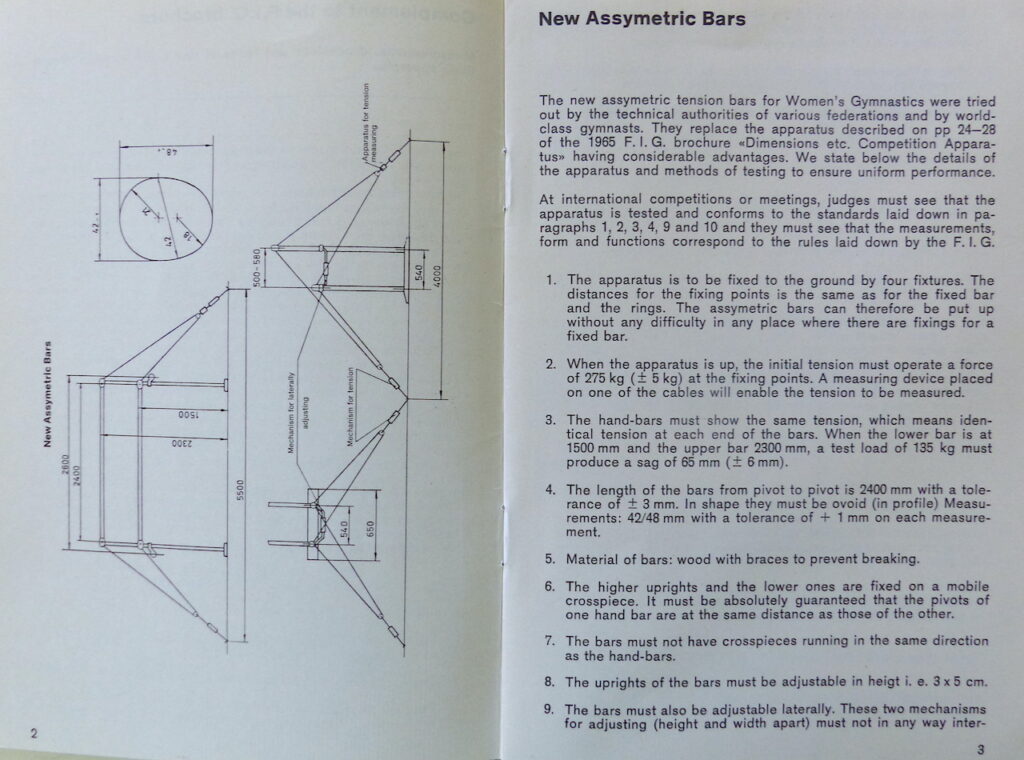
The cheat sheet below gives you the basic contours of the ever-changing apparatus norms.
The first dimensions for bars with tension cables at FIG events.
Bond, Bond, and More Bond: There was a lot of music from the group Bond during the Athens Olympics. The band’s albums Born and Shine came out in 2000 and 2002, respectively. Their music straddled the worlds of contemporary music and classical orchestral music.
The title of a 2004 article gives you an idea of how the musical group was perceived at the time: “Unbreakable Bond; They’re young. They’re sexy. And they’re turning the classical music industry on its head.” (Sarasota Herald Tribune, Nov. 26, 2004).
Movie Soundtracks: As was the case in 2000, movie soundtracks were big in 2004. Examples included Braveheart, Pirates of the Caribbean, Moulin Rouge, and Matrix Revolutions.
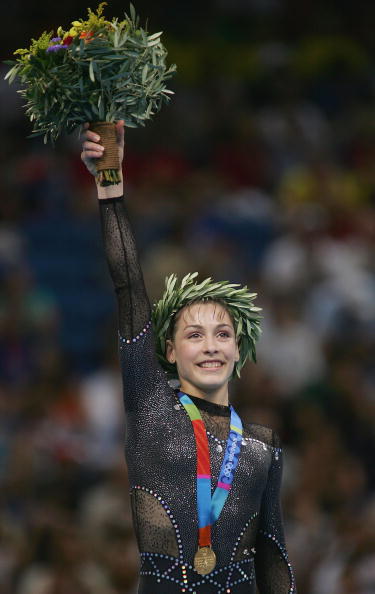
ATHENS – AUGUST 23: Catalina Ponor of Romania receives the gold medal for the women’s artistic gymnastics floor exercise event on August 23, 2004 during the Athens 2004 Summer Olympic Games at the Olympic Sports Complex Indoor Hall in Athens, Greece. (Photo by Ezra Shaw/Getty Images)
In Sydney, the floor music included songs from The Rock, Addams Family Values, The Mummy, and The Truman Show, among others.
A small surprise: In 1984, 1992, and 1996, several floor routines featured music associated with the host country. In 2000, that trend was not as pervasive. Of course, there were exceptions — like McIntosh’s use of “Waltzing Matilda” or Slater’s use of “I Still Call Australia Home,” which was contentious, by the way. (More on that below.)
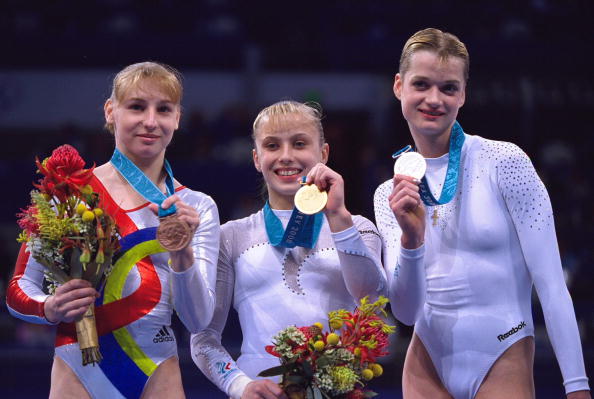
25 Sep 2000: Elena Zamolodtchikova of Russia (centre) wins Gold, Svetlana Khorkina of Russia (right) wins Silver and Simona Amanar of Romania (left) wins Bronze in the Womens Floor Exercise Final at the Sydney Superdome on Day Ten of the Sydney 2000 Olympic Games in Sydney, Australia. Mandatory Credit: Shaun Botterill /Allsport
Given that Los Angeles is the heart of American cinema, it makes sense. There were songs from movies like Night Shift, Indiana Jones, Rocky, and James Bond.
Another theme: Americana.
In addition to the emphasis on American TV and films, there were plenty of other American moments — from Szabo’s routine to “Hooked on America” to Wu’s “Stars and Stripes Forever” to Bileck’s “Rodeo” montage. (Rodeo is a ballet composed by American composer Aaron Copland.)
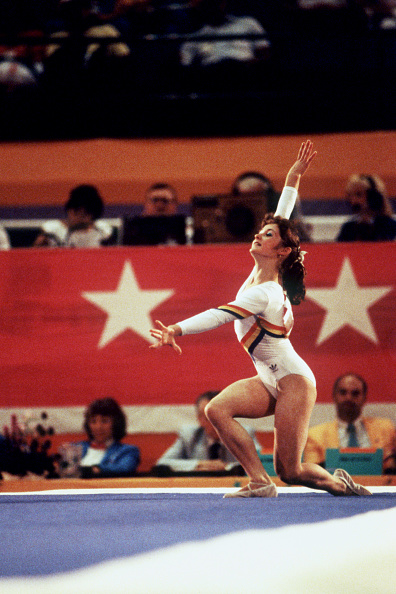
Ecaterina Szabo, Romania, gold medallist (Photo by S&G/PA Images via Getty Images)
Just as there was a lot of flamenco music during an Olympics held in Spain, there was a fair amount of U.S. music, particularly from the American gymnasts and the Romanian gymnasts.
Another Big Trend: Songs from movie soundtracks.
The French team pulled from recent movies like The Mask and Basic Instinct. But there were songs from older movies, including Galieva’s Charlie Chaplin tribute and Marinescu’s music from the Italian film Investigation of a Citizen Above Suspicion.
UNITED STATES – JULY 29: KUNSTTURNEN: BODEN/Frauen ATLANTA 1996 29.7.96, Lilia PODKPPAYEVA/UKR GOLD – MEDAILLE (Photo by Mark Sandten/Bongarts/Getty Images)
The big trend in floor music in 1992: Flamenco, flamenco, and more flamenco.
For decades, flamenco music has been a constant during women’s floor exercise, but the trend perhaps hit its crescendo during the 1992 Barcelona Olympics. (You can read a little about the politics of flamenco at the bottom of the page.)
Yello: In 2021, Billie Eilish was the big contemporary music sensation during floor routines. In 1992, it was Yello.
Throwbacks from 40ish years prior: The nostalgia machine is always alive during floor exercise, trying to target audience members and judges in their 40s and 50s and beyond. In 1992, it emerged in pieces like “Boogie Woogie Bugle Boy” and “An American in Paris Ballet.”
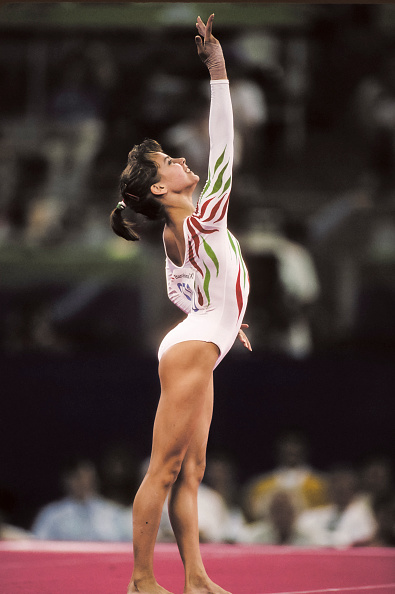
BARCELONA – AUGUST 1: Henrietta Onodi of Hungary competes in the Floor Exercise on August 1, 1992 during the Women’s Gymnastics competition of the 1992 Summer Olympics held at the Palau Sant Jordi in Barcelona, Spain. (Photo by David Madison/Getty Images)